




The four primary ceiling light formats — flush mount, semi-flush mount, pendant, and recessed — are not interchangeable choices for the same space. Each addresses a specific set of ceiling height conditions, room proportioning requirements, and illumination objectives, and selecting the wrong format for a given room produces problems that no amount of fixture quality can compensate for: a pendant that hangs too low in a compact bedroom reduces clearance and makes the room feel smaller; recessed lights that require new ceiling wiring in a retrofit installation multiply project cost; a flush mount in a room with sufficient ceiling height misses the design opportunity that the vertical space affords. Understanding the engineering and design logic behind each format is the prerequisite for making a choice that works both functionally and visually.
Parrot Uncle's flush versus semi-flush comparison draws the foundational distinction: "A flush mount is often the cleaner answer when ceiling height is tight and the room needs a simple, low-profile light. A semi-flush mount is often the better answer when you want the fixture to do more visual work and add some depth without hanging as low as a pendant or chandelier." The two formats share the same ceiling adjacency, differing primarily in whether the fixture body has a stem that drops it below the ceiling surface or sits directly against it — a distinction that sounds minor on paper but has material consequences for how the room's vertical space is experienced.
A flush mount fixture attaches directly to the ceiling surface with the fixture body sitting against or within 1 to 2 inches of the ceiling plane. As The Lived In Look's lighting type analysis observes, flush mounts "are typically encased in glass housing which allows light to diffuse or spread throughout an entire space" — the enclosed housing shape determines both the light distribution pattern and the visual character of the fixture at the ceiling. Room for Tuesday's interior design guide identifies the ceiling height threshold: "If your ceilings are under eight feet, flush mount lighting is usually your best bet. For eight-foot ceilings or higher, a semi-flush mount can add dimension without feeling too low."
A semi-flush mount introduces a short stem — typically 3 to 8 inches — between the ceiling canopy and the fixture body, which allows the fixture to hang slightly into the room's vertical space and creates a visual transition between ceiling and light that the flat flush mount profile does not. Ferguson Home's fixture type guide notes that semi-flush fixtures "are generally more ornate and decorative than flush mount lighting" and characterizes them as the right choice "when the lighting is in a prime décor spot, like over a dining table, or when you don't want to go all the way to a pendant or chandelier." The semi-flush mount is the format that bridges the gap between practical ambient ceiling lighting and the decorative statement that a pendant or chandelier makes at full ceiling height.
Pendant lights and chandeliers hang on a cord, chain, or rod that extends substantially below the ceiling — typically a minimum of 7 feet clearance from fixture bottom to floor for walkable spaces. Lightopia's fixture type comparison identifies pendants as appropriate for 9-foot-or-higher ceilings in most residential applications, where the drop allows the fixture to activate the vertical volume without encroaching on occupied headroom. The format is most conventionally used over dining tables (30 to 36 inches above the table surface), kitchen islands, and as statement entryway installations where the full ceiling height provides visual context for the fixture's scale. Pendants and chandeliers are the format category where the fixture itself becomes the room's primary visual focal point rather than a functional ceiling element that blends with the architectural surface.
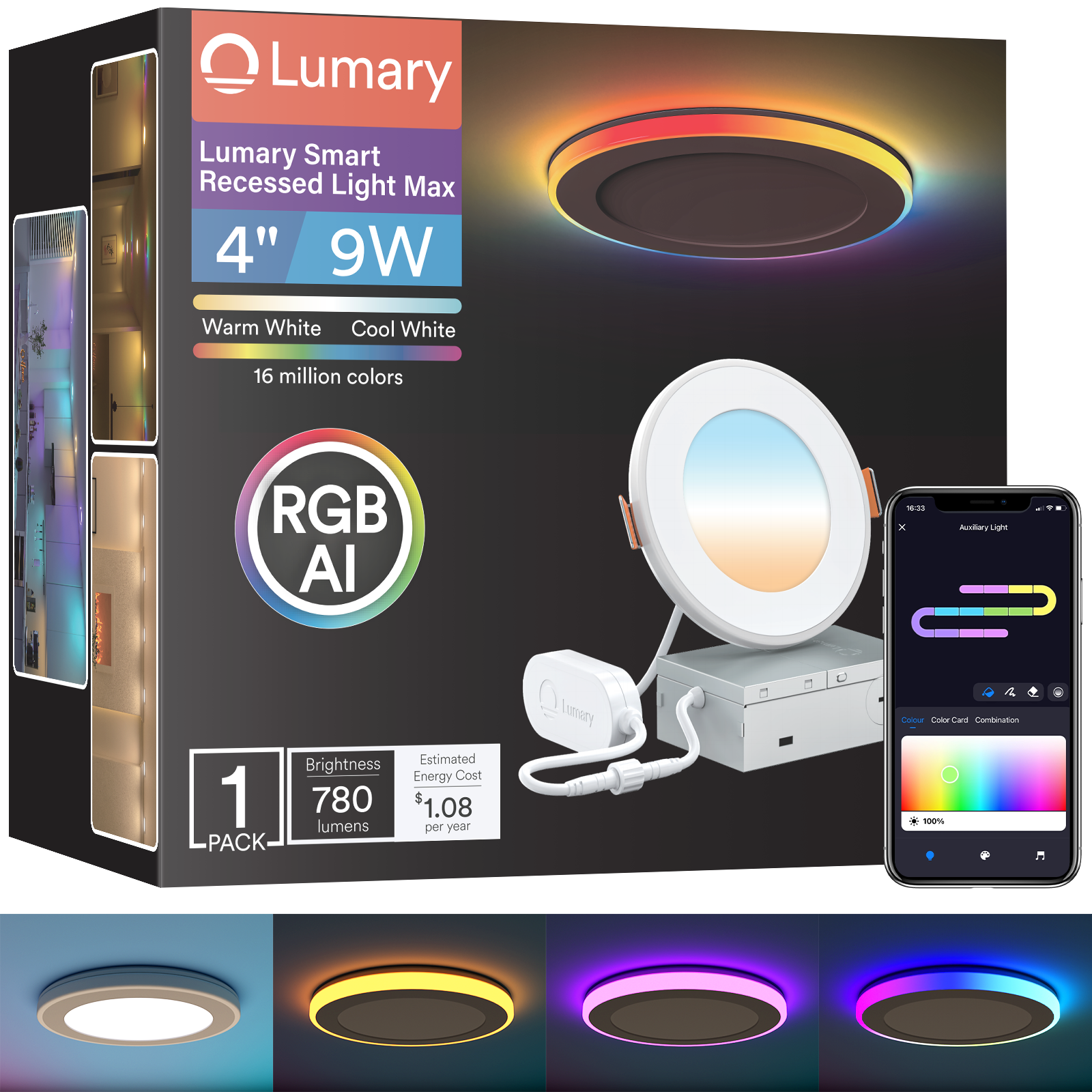
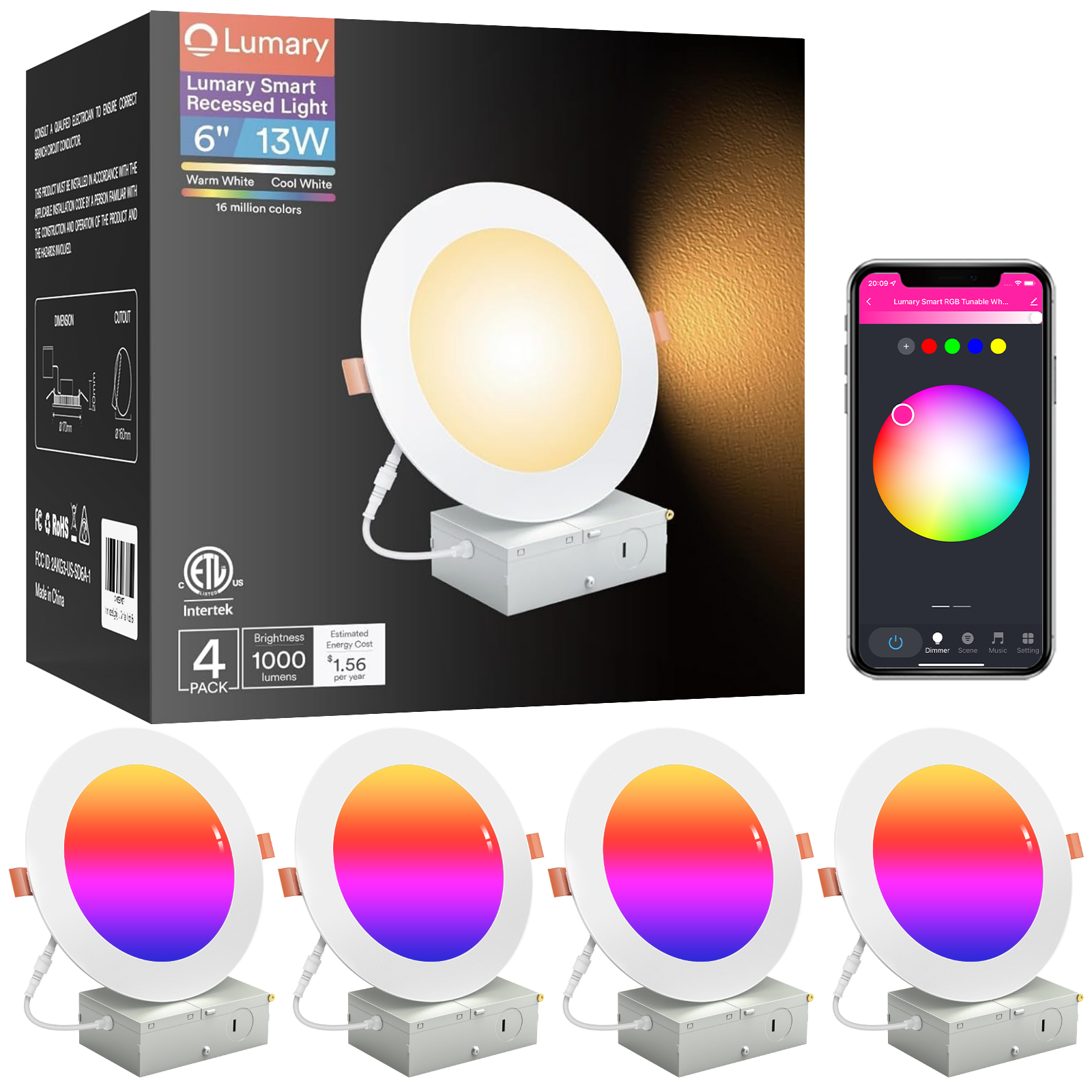
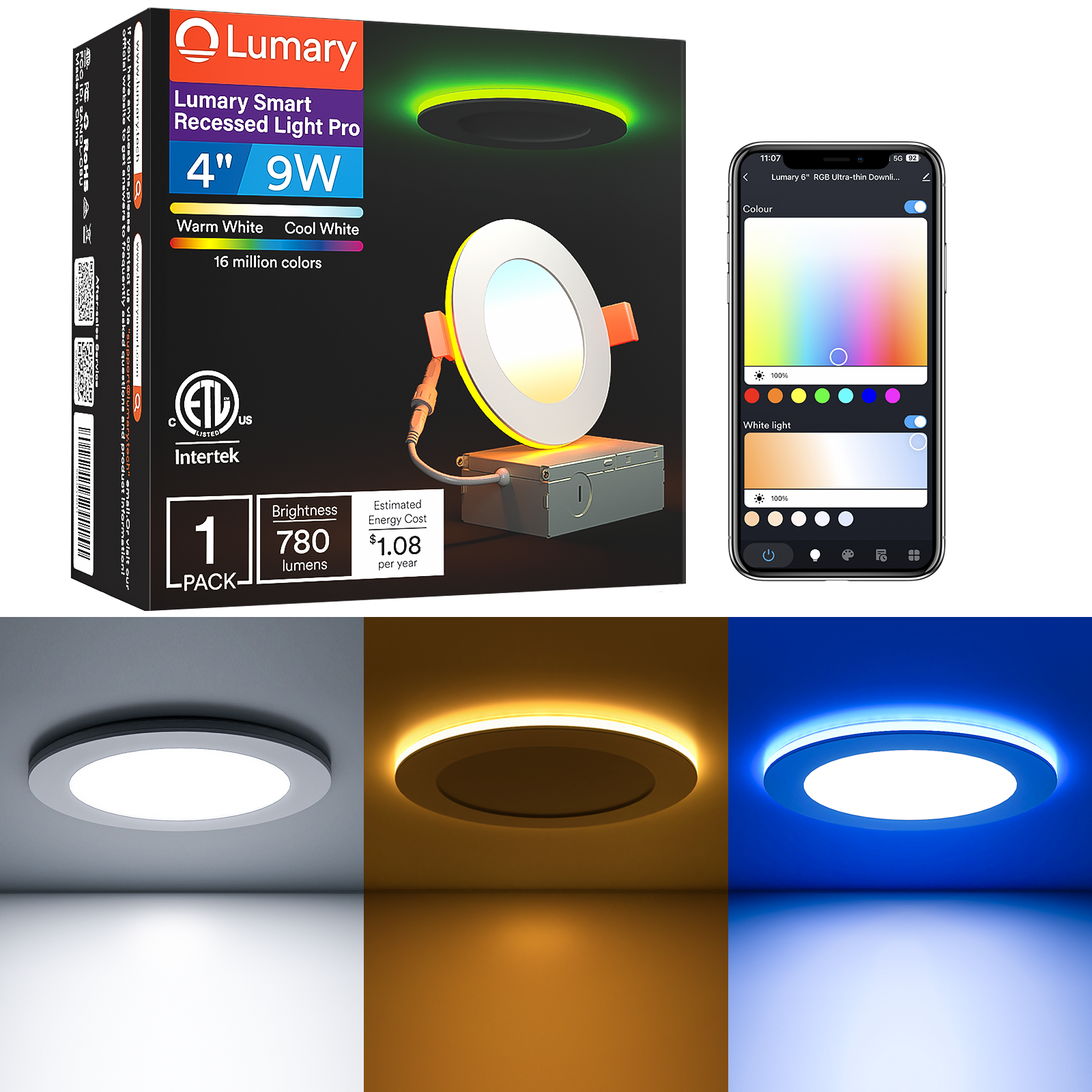
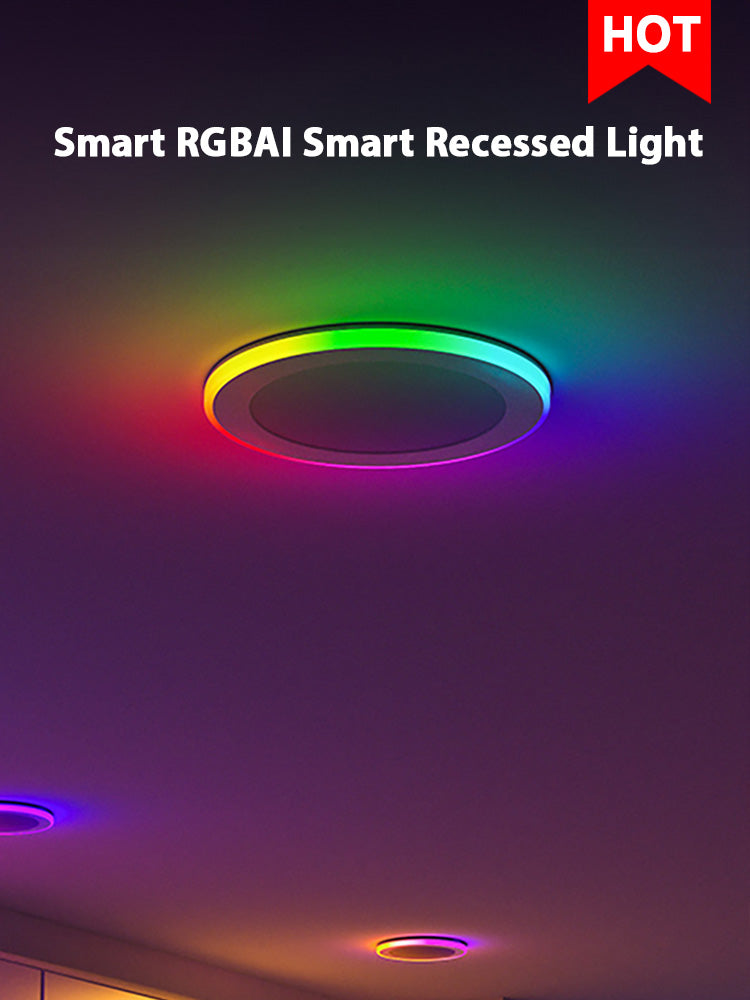
Recessed lighting is architecturally the most invasive format — the fixture housing is installed inside the ceiling cavity, completely invisible except for the trim ring that sits flush with the ceiling surface. Riverbend Home's comparison notes that "recessed lighting creates a clean, modern look by housing the light fixture within the ceiling itself, eliminating any visual protrusion and maintaining smooth ceiling lines." The practical limitations are proportional to the visual cleanliness: recessed installations require ceiling access for housing installation, electrical work to connect each fixture, and in retrofit projects, either attic access or drywall work to run new cable. The lighting distribution is directional rather than ambient — Lightopia's analysis confirms that "recessed lighting provides focused rather than ambient lighting, meaning multiple fixtures may be needed to achieve even illumination throughout a room, which can increase overall costs."
The format that addresses the functional strengths of flush mounting — low profile for standard ceilings, broad ambient diffusion, single-source room coverage — while extending beyond conventional flush mount limitations in terms of light quality, color temperature range, and circadian intelligence is the architectural ceiling panel format, of which the Lumary Smart Skylora Sky Light is a specific contemporary expression.
Product Recommendation Analysis
The Lumary Smart Skylora Sky Light (model L-SL16A1, $249.99) is a 60W flush-ceiling architectural panel producing 4,000 lumens from an 18.9" × 19.3" dual-layer diffusion surface enclosed in an architectural metal frame with a 4.21-inch profile depth. The 4.21-inch depth makes it a flush or near-flush ceiling mount appropriate for 8-foot-and-above standard residential ceiling heights, preserving the full headroom that semi-flush, pendant, and chandelier formats reduce by their hanging dimension.
The skylight-inspired panel format represents a specific design category within flush mounting: rather than a dome, drum, or bowl fixture that projects downward from the ceiling surface as a visible object, the square skylight panel sits within its metal frame in a way that reads architecturally as a ceiling aperture — a feature of the ceiling plane rather than a fixture attached to it. At 10000K to 12000K color temperature at high brightness, the visual impression is of a panel of daylight at the ceiling, approaching the perceptual experience of an actual skylight opening to a blue sky.
The SKYLORA × AI dual engine delivers 1800K–12000K continuously adjustable color temperature with AI-based circadian automation that transitions output through the day in sync with the local solar schedule, CRI ≥ 98 color rendering, RG0 blue light certification, and ≤0.05% flicker performance. Control operates through the Lumary app over 2.4GHz Wi-Fi, Alexa, Google Assistant, and the included RF remote. Full specifications and pricing are available on the Lumary Smart Skylora Sky Light product page.
Technical Specification Table
| Specification | Lumary Smart Skylora Sky Light L-SL16A1 |
|---|---|
| Model designation | Lumary Smart Skylora Sky Light L-SL16A1 |
| Price | $249.99 |
| Fixture category | Flush-mount architectural ceiling panel |
| Panel dimensions | 18.90" × 19.29" square |
| Profile depth | 4.21 inches — flush ceiling installation |
| Installation type | Flush ceiling mount — no hanging element, no stem |
| Minimum ceiling height | 8 feet (full headroom preserved) |
| Visual format | Skylight-inspired square panel — reads as ceiling aperture, not fixture object |
| Brightness | 4,000 lumens |
| Wattage | 60W |
| Color temperature | 1800K–12000K, continuously adjustable |
| Color rendering index | CRI ≥ 98 |
| Blue light safety | RG0 — lowest photobiological risk group |
| Flicker performance | FPF ≤ 0.05% — clinically flicker-free |
| AI circadian engine | SKYLORA × AI — daily auto-transition with global solar sync |
| Weight | 9.00 lbs |
| Wireless connectivity | 2.4GHz Wi-Fi |
| Voice assistant support | Alexa, Google Assistant |
| Control methods | Lumary app, Alexa, Google Assistant, RF remote |
Fixture Type Decision Framework: Which Format Fits Which Room
The table below maps the primary selection criteria — ceiling height, room type, illumination objective, installation complexity, and visual design role — to each fixture format, establishing when the Lumary Skylora panel is the correct choice and when other formats may be more appropriate.
| Decision Criterion | Flush Mount | Semi-Flush Mount | Pendant / Chandelier | Recessed Lighting | How This Lumary Smart Skylora Sky Light Fits |
|---|---|---|---|---|---|
| Ceiling height requirement | Under 8 feet — the primary use case | 8–9 feet — adds dimension without reducing headroom | 9+ feet — requires significant vertical space for correct proportion | Any height — the fixture is inside the ceiling | 4.21" profile: correct for 8 feet and above; optimal above 8'6" where the panel reads as a ceiling feature rather than a ceiling object |
| Illumination distribution | Broad ambient — enclosed housing diffuses light across the room | Broad ambient with some directional character depending on shade design | Focused downward toward the surface below; ambient only at chandelier scale | Directional downward — requires multiple fixtures for even room coverage | Dual-layer diffusion panel: broad, even ambient distribution across room from a single source; no recessed installation required |
| Installation complexity | Low — single junction box; retrofit-friendly | Low — single junction box; requires minimal ceiling height tolerance | Moderate — requires ceiling junction box rated for fixture weight; may need chain length adjustment | High — requires housing inside ceiling cavity; new wiring run; attic access preferred; multiple fixtures multiplies cost | Low to moderate — single flush ceiling mount to standard junction box; no ceiling penetration; no housing installation; comparable to standard flush mount installation |
| Visual design role | Functional background — blends with ceiling; low visual impact | Transitional — adds some decorative character without commanding the ceiling | Statement focal point — the fixture is a primary design element | Architecturally invisible — the ceiling reads as uninterrupted plane | Architectural aperture — reads as a ceiling feature rather than a fixture object; visually distinctive without competing with room furnishings |
| Room proportion suitability | Compact rooms and hallways where ceiling presence is minimal | Medium rooms where some visual depth is desired without pendant scale | Large rooms, dining zones, and double-height spaces where the fixture anchors the vertical space | All room sizes, but particularly suited to open-plan layouts with many fixtures | Rooms in the 100–300 square foot range at standard ceiling heights where a proportionally appropriate single-source ceiling panel is the correct format |
| Smart feature integration | Available in some smart flush mounts at limited CCT range | Available in some smart semi-flush mounts; typically limited to 2700K–6500K | Limited smart integration outside premium brands; primarily aesthetic format | Available through smart retrofit bulbs or smart drivers; limited CCT range | 1800K–12000K CCT, CRI 98, RG0, ≤0.05% flicker, AI circadian automation, Alexa, Google Assistant — clinical lighting specification set unavailable in comparable flush mount formats |
Competitive Landscape
The smart ceiling panel and flush mount light category includes several brands whose format choices and feature sets address the same ceiling mounting context from different architecture and price positions.
Philips Hue's Surimu ceiling panel is available in 16-inch and 24-inch circular formats as a flush-mount LED panel within the Hue Bridge ecosystem, with Matter protocol support and a 2200K–6500K color temperature range. The Surimu's flush profile and circular format address the same standard ceiling height installation context as the Skylora, with the Hue ecosystem's protocol depth as its primary differentiator over the Skylora's 1800K–12000K CCT range and CRI 98 specification.
Nanoleaf's ceiling light product uses a modular panel system where a base flush-mount panel can be expanded with additional connected sections, allowing the installed ceiling footprint to be customized. This modular approach addresses rooms where a single standard-size panel is insufficient and where a larger custom coverage area is needed, at the cost of a more complex installation and a more visually prominent ceiling presence.
WiZ ceiling panels provide tunable white flush-mount illumination within the Signify ecosystem at accessible price points. WiZ's ceiling panels address the standard flush-mount market with reliable 2.4GHz connectivity and SpaceSense presence automation, targeting buyers who want straightforward smart ambient lighting without the extended CCT range or clinical specification depth of the Skylora.
Govee's smart ceiling light products emphasize RGBIC multi-color addressable zones across the panel surface, appealing to buyers whose primary ceiling light objective is entertainment-oriented color display. The Govee format competes in the smart ceiling panel segment with a different feature emphasis — visual scene complexity over clinical lighting quality.
Within this competitive field, the Lumary Skylora sky panel is positioned at the intersection of flush-mount ceiling installation accessibility and the clinical lighting specification set — CRI 98, 1800K–12000K range, RG0 blue light rating, and ≤0.05% flicker — that standard flush-mount and ceiling panel products do not publish at equivalent measured values.
Application Scenarios
Bedroom: Why Flush Mount Is the Correct Format and Why the Skylora's Circadian Capability Matters
The bedroom ceiling light decision is the one where format choice and photobiological function most directly intersect. In a standard bedroom with 8-foot ceiling height, the format decision is already resolved by the ceiling height constraint: a pendant requires approximately 9 feet of ceiling height to maintain the 7-foot floor clearance that safety standards and comfortable living require at the hanging element's lowest point. A chandelier occupies more vertical space than a pendant and amplifies the problem. The correct formats at standard ceiling height are flush and semi-flush mount, with the flush choice appropriate for the tightest ceiling heights and the semi-flush adding 3 to 6 inches of vertical fixture dimension that reduces clearance proportionally.
At 8 feet exactly, the Skylora's 4.21-inch flush profile leaves 91.6 inches of clear headroom below the fixture bottom — comfortably above the 84-inch (7-foot) minimum clearance standard for residential occupied spaces. A semi-flush with a 6-inch stem at 8 feet leaves 85.8 inches — marginally above the minimum but perceptibly tighter. The format decision at 8 feet favors the flush-profile panel for clearance comfort, and the AI circadian ceiling light's circadian automation makes the format choice doubly correct for bedroom use: the 1800K lower CCT limit reduces melatonin-suppressing blue light in the evening hours when the bedroom ceiling light is most active, and the global solar sync automates the evening color temperature descent without requiring the occupant to remember to switch scenes before sleeping.
At 9-foot and higher bedroom ceilings, the semi-flush format becomes available as an option, and the visual depth it adds can contribute positively to the room's proportional sense of height. For buyers who prefer the flush ceiling panel's architectural aperture visual over the semi-flush's decorative depth, the Skylora's 4.21-inch profile installs cleanly at 9 feet as well, with additional clearance margin that makes the low-profile choice more a design preference than a ceiling height necessity.
Home Office: When Flush Mount Beats Pendant and Recessed on Every Practical Dimension
The home office ceiling light selection involves a specific conflict between the design appeal of recessed lighting's clean invisible aesthetic and the practical reality of what recessed installation requires in a retrofit residential context. A recessed lighting plan for a 10×12-foot home office — installing 4 to 6 fixtures at the spacing required to produce even illumination — involves cutting 6 holes in the ceiling, running new wiring between each junction, routing cable to a switch, and ideally accessing the ceiling cavity from the attic side to position the housing before patching from below. In a finished home without attic access directly above the home office, this project requires a licensed electrician, ceiling drywall work, and potentially a week's access disruption to a space where daily work is occurring.
A flush-mount ceiling panel at the same square footage installs in a standard single junction box — a process that an electrician completes in one to two hours at the installation location — and produces broad, even ambient illumination from a single source that four to six recessed downlights achieve only through distributed directional coverage. For a home office user whose CRI and color temperature specifications matter for accurate color work, screen calibration consistency, or video call appearance quality, the single smart ceiling panel at CRI 98 from a flush mount position provides a superior color rendering environment to a recessed array at unspecified CRI. The pendant format is largely irrelevant to the home office context: pendant lighting over a desk surface interferes with above-desk monitor positioning and provides downward-directional task lighting rather than the broad ambient illumination that overhead ceiling lighting provides.
Living Room: Choosing Between Pendant, Semi-Flush, and the Flush Panel Based on Ceiling Height and Function
The living room is the space where all four fixture formats compete most directly — it is large enough for a chandelier or pendant in high-ceiling versions, appropriate for semi-flush at standard height, and adequately served by flush mount when ceiling height is constrained. Riverbend Home's layered lighting guide provides the correct design framework for living rooms: "Ambient lighting from recessed or flush fixtures for general light; decorative lighting from flush or semi-flush mount lights for style and character; task lighting from pendants, sconces, or track lights for focused illumination." The living room is best served by layered lighting rather than a single format attempting to satisfy all three functions simultaneously.
Within that layered approach, the ceiling fixture's role is ambient and character-defining rather than task-specific. At 8-foot ceiling height, the flush-mount format correctly handles the ambient role with no clearance penalty. At 9 to 10 feet, the semi-flush mount's decorative depth adds visual interest to the ceiling zone without the over-commitment of a full chandelier. At 10 feet and above, the pendant or chandelier correctly scales to activate the vertical volume and serve as the room's primary visual focal point. The Skylora's 4.21-inch flush profile serves the 8-foot living room as the architectural ceiling feature that the ambient ambient layer requires, with 4,000 lumens providing the primary ambient coverage and the 1800K–12000K range allowing the living room's lighting character to transition from afternoon functional neutral through evening warm amber across the same single fixture installation.
Children's Room: Format Safety Plus Clinical Specification
Children's rooms present a ceiling light selection decision where the format choice has a direct safety implication. Pendant and chandelier fixtures in children's rooms introduce a hanging element that, if disturbed by active play or climbing — behaviors common in children's bedrooms — creates both a physical strike hazard from the hanging fixture and a potential electrical hazard at the canopy. Flush-mount and semi-flush fixtures do not have hanging elements that a child can reach, pull, or swing from standard floor level, making them the format that residential safety guidelines consistently recommend for children's spaces. The clearance concern is also particularly relevant: a child's room used for active play across the full floor area benefits from the maximum available ceiling-to-floor volume that flush mounting preserves.
The Lumary Skylora's flush 4.21-inch profile addresses the format safety dimension while the RG0 blue light certification addresses the photobiological safety dimension specific to young occupants. Children's eyes transmit a higher proportion of blue-wavelength light to the retina than adult eyes, making RG0 certification more consequential for children's spaces than for adult rooms. The ≤0.05% flicker performance addresses the secondary concern: research has associated high-frequency flicker — below the threshold of conscious perception but detectable by the nervous system — with increased headache frequency and reduced concentration in children's study environments. A ceiling fixture that is format-safe, RG0-certified, and flicker-free addresses all three photobiological dimensions that children's room ceiling light selection involves.
Open-Plan Space: Using the Correct Format for Each Zone
An open-plan kitchen-dining-living space is the clearest illustration of how different ceiling light formats serve different zones within a single continuous room. The dining table zone is conventionally served by a pendant or chandelier at the correct drop height above the table — 30 to 36 inches from the table surface — where the hanging fixture serves the functional task of concentrating light on the dining surface and the visual task of anchoring the dining zone as a distinct spatial identity within the open plan. The kitchen zone is conventionally served by recessed downlights over work surfaces or under-cabinet lighting for task illumination. The living zone is served by a ceiling fixture that provides broad ambient coverage and, in open-plan layouts, helps define the living zone visually.
In this zoning framework, the Skylora's flush-mount ceiling panel format is the correct choice for the living zone — broad ambient coverage, architectural ceiling feature without competing with the dining pendant that is already performing the focal point role, and no ceiling penetration required. Lumens.com's sizing and format guide identifies exactly this role for ceiling panels in open-plan spaces: "A flat panel or flush mount provides the ambient base layer without competing visually with the pendant that defines the dining zone." The Lumary app's group and scheduling controls allow the living zone Skylora and any other Lumary fixtures installed elsewhere in the open plan to be coordinated under different scene commands appropriate to each zone's concurrent function — the dining pendant at 3000K warm white during a dinner, the Skylora at 2700K ambient during after-dinner relaxation in the same physical space but a different functional moment.
Editorial Assessment
The four ceiling light formats address four different sets of conditions, and the correct choice is determined by ceiling height first, installation complexity second, illumination distribution objective third, and visual design role fourth. Flush mount is the correct format for ceiling heights at or below 8 feet, for rooms where headroom preservation is a priority, and for retrofit installations where a single junction box is the available connection point. Semi-flush mount adds decorative dimension at 8- to 9-foot ceiling heights without the vertical commitment of pendant formats. Pendant and chandelier formats activate 9-foot-and-higher ceiling volumes and serve as room focal points in proportion to their scale. Recessed lighting delivers the cleanest architectural ceiling line but at the highest installation cost and complexity for retrofit applications.
Within the flush-mount format category, the Lumary Smart Skylora Sky Light differentiates through the specification dimensions that most flush-mount ceiling lights do not publish: CRI ≥ 98, 1800K–12000K color temperature range, RG0 blue light certification, ≤0.05% flicker performance, and the AI circadian automation that transitions those clinical specifications automatically through the day. For buyers who have determined that the flush-mount format is correct for their room — ceiling height, headroom requirement, and single-source ambient coverage all pointing toward that format — and who want a flush-mount panel that goes beyond decorative function into genuine clinical lighting quality, the Skylora is the specification that closes that gap.
Frequently Asked Questions
Is 8 feet too low a ceiling for anything other than flush mount lighting?
Eight feet is the conventional threshold where flush mount is the standard recommendation, but the decision has more nuance than a binary at-or-below rule. A semi-flush with a 3-inch stem at an 8-foot ceiling leaves 84 inches of clearance — exactly at the 7-foot minimum standard. For rooms where occupants are consistently above 5'10" in height, or where furniture or activity frequently occurs under the fixture's hanging element, the marginal clearance of a semi-flush at 8 feet may feel uncomfortably tight. The Skylora's 4.21-inch flush profile at an 8-foot ceiling leaves 91.6 inches of clearance — a 7.6-inch advantage over the semi-flush 3-inch stem scenario. For buyers on the boundary between formats at exactly 8 feet, the flush ceiling panel's clearance margin is a meaningful comfort factor.
When should I choose recessed lighting over a flush-mount ceiling panel?
Recessed lighting is the correct choice when the architectural priority is a completely uninterrupted ceiling plane — when no visible fixture at the ceiling surface is the design objective, typically in minimalist modern interiors where the ceiling is a design element rather than a surface to which elements are attached. It is also the better choice when the room's layout calls for distributed directional lighting over a large area — a long kitchen where task lighting is needed at multiple counter positions simultaneously, or a gallery-style space where adjustable spots illuminate specific wall sections. A flush-mount ceiling panel is the better choice when a single primary ambient source is sufficient for the room's square footage, when the installation must be retrofit-feasible from a cost and access perspective, and when clinical light quality (CRI, CCT range, flicker performance) is a selection criterion.
What is the practical difference between a flush-mount ceiling panel and a standard flush-mount dome or bowl fixture?
A conventional flush-mount dome or bowl fixture — typically a glass or acrylic enclosure over one to several LED bulbs — produces ambient light that emanates from a point or cluster source within the enclosure, which creates visible hot spots at the glass surface at the location of the bulbs and a brightness gradient from center to edge across the glass face. A ceiling panel with a dual-layer diffusion surface distributes the LED output evenly across the full panel area before any light exits the fixture, eliminating visible hot spots and producing a uniform luminance across the entire panel face. The practical consequence is that the panel reads as a glowing architectural surface rather than as a visible light source behind a translucent cover, which produces a qualitatively different and more visually comfortable ceiling element at any brightness level.
Can I use a pendant-format light over my dining table and the Skylora in the same room without the two fixtures conflicting visually?
Yes — this is a standard layered lighting approach for open-plan and dining-adjacent spaces. A pendant over the dining table and a flush-mount ceiling panel in the adjacent living or family zone serve distinct visual and functional roles that complement rather than conflict with each other: the pendant defines and anchors the dining zone, the ceiling panel provides the ambient floor for the living zone. Visually, the two formats are distinguishable enough that they read as designed choices rather than inconsistent selections — the pendant's vertical hanging element and the panel's flat ceiling-surface integration are architecturally distinct design languages that coexist in the same room without competition. The design principle is that the pendant is the focal point in its zone and the panel is the ambient base in its zone, and the spatial separation of the two zones is what allows both to occupy the same room without either format over-asserting.
Does the Skylora require the same electrical junction box as a standard ceiling fixture, or does its size require a different mounting infrastructure?
The Skylora mounts to a standard residential ceiling junction box — the same electrical box that any conventional flush-mount ceiling fixture uses. The mounting hardware accommodates standard junction box dimensions without modification. The fixture's 9-pound weight (within standard junction box load ratings for ceiling fixtures), the single-source power connection to the junction box wiring (no daisy-chaining or sub-wiring required), and the 2.4GHz Wi-Fi and Bluetooth connectivity (requiring no additional cable runs for smart control) all mean the installation uses the same ceiling infrastructure as a basic flush-mount replacement. If the installation is replacing an existing flush-mount fixture in the same location, the junction box is already in place and the Skylora installation is a direct swap.

