




A smart ceiling fan can transform a living space in seven practical ways: it can create more precisely controlled personal airflow, make air circulation useful across seasons, replace fixed-color overhead lighting with tunable white light, add a separate ambient color layer, automate recurring comfort routines, give households several ways to control the room, and combine airflow plus two forms of lighting in one central fixture. These changes are meaningful only when the fan is correctly sized, safely supported, mounted at an effective height, and configured around real activities. “Smart” should describe how the room responds throughout the day, not merely the presence of an app.
The first transformation is immediate physical comfort. A ceiling fan does not work like an air conditioner; it moves air around occupants, so placement and speed determine whether the breeze is actually felt. The Pacific Northwest National Laboratory’s Building America ceiling-fan guide explains that air motion improves comfort only when someone is present and identifies room size, blade span, ceiling clearance, and mounting location as core performance variables. A smart fan improves this experience when several speed levels, schedules, or temperature-linked controls let the household adjust air movement to an occupied room rather than leaving one coarse setting in place all day.
The second change is year-round circulation. Reversible airflow allows a fan to create a direct breeze in warm conditions and a gentle updraft at low speed in cooler conditions, helping redistribute warm air that collects overhead. The same Building America guidance recommends reversing direction and using a low setting in winter. Energy performance still depends on behavior: ENERGY STAR notes that certified ceiling fans are evaluated against defined efficiency requirements, but no fan saves energy merely by running in an empty room. The practical transformation comes from pairing appropriate direction and speed with thermostat strategy and occupancy, not from treating continuous operation as automatically efficient.
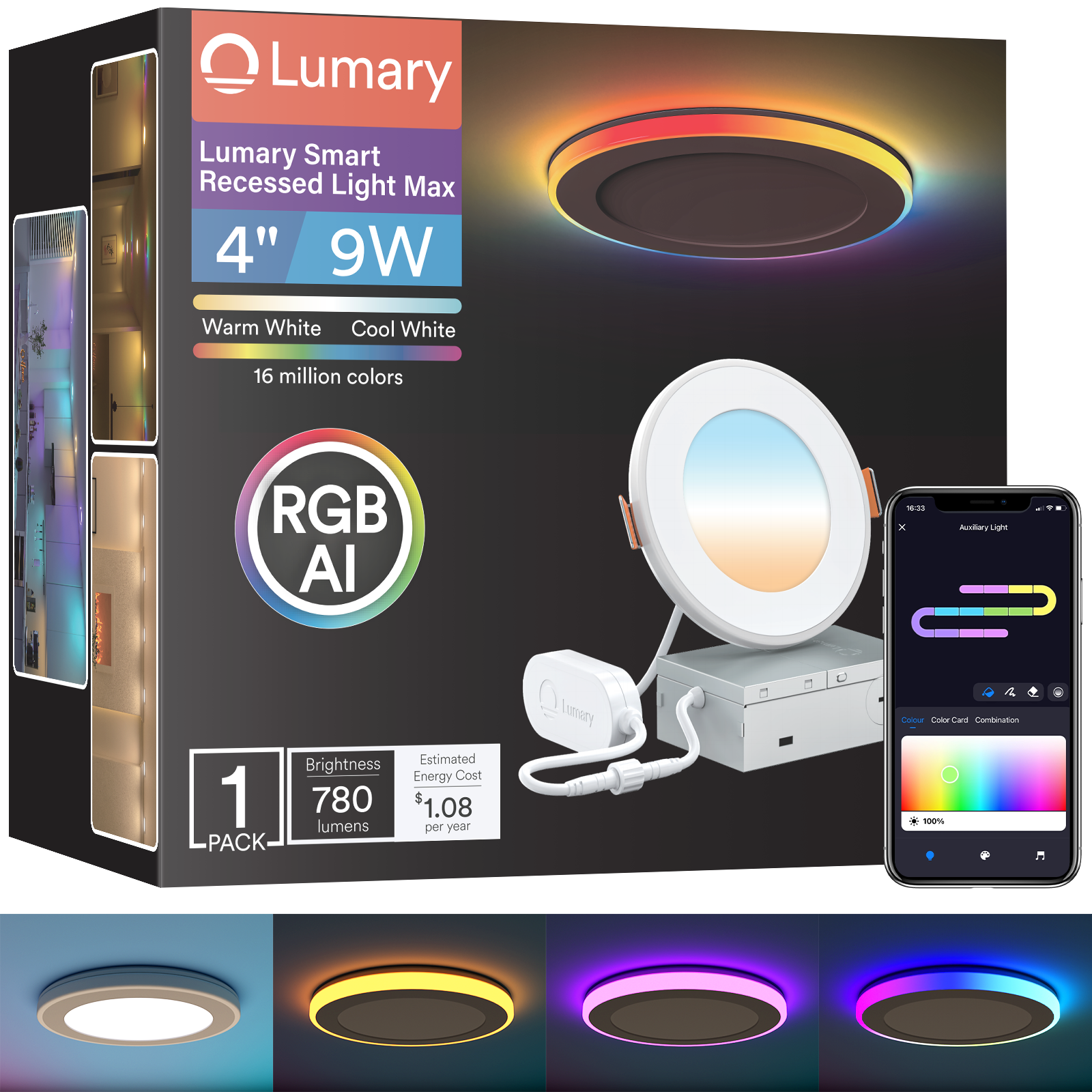
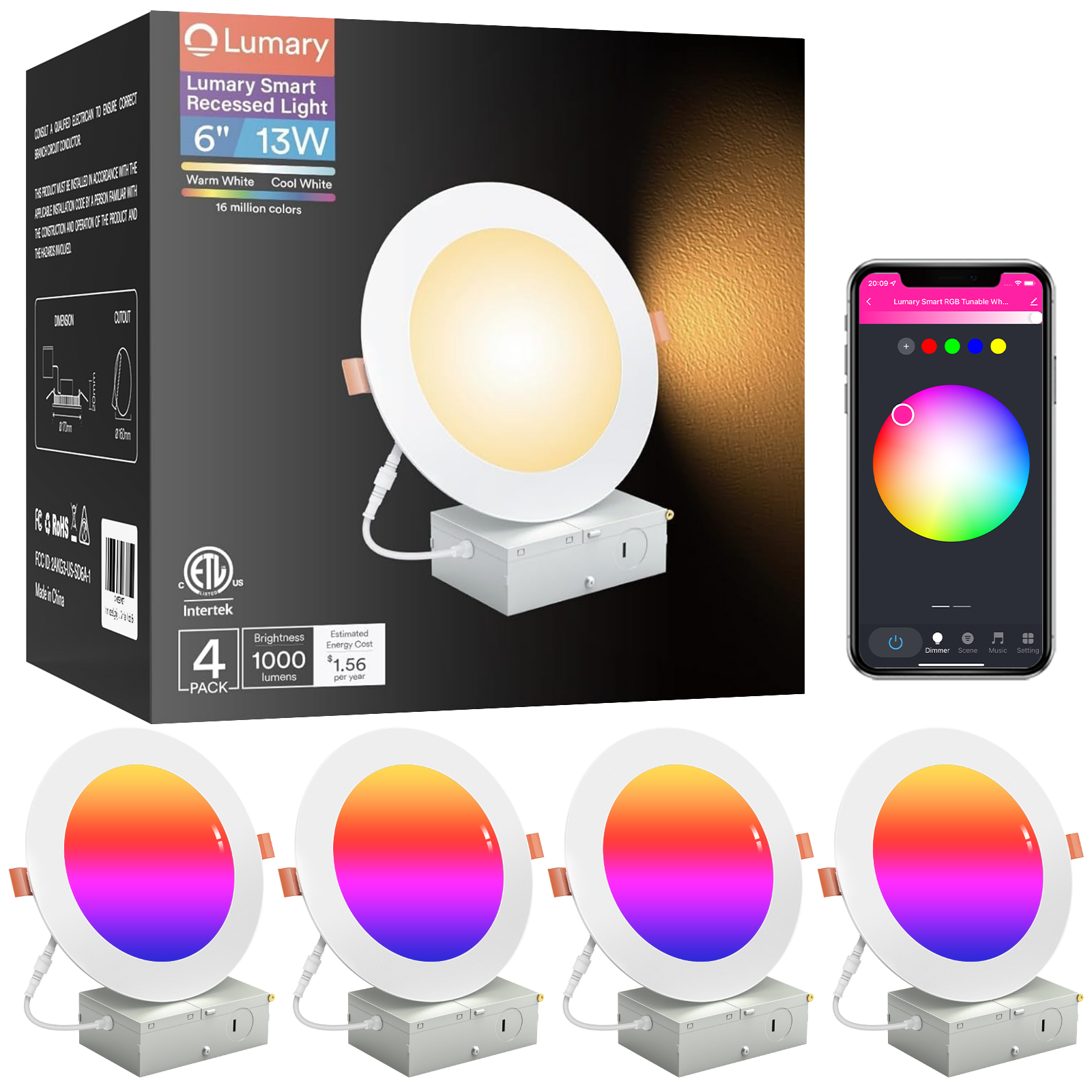
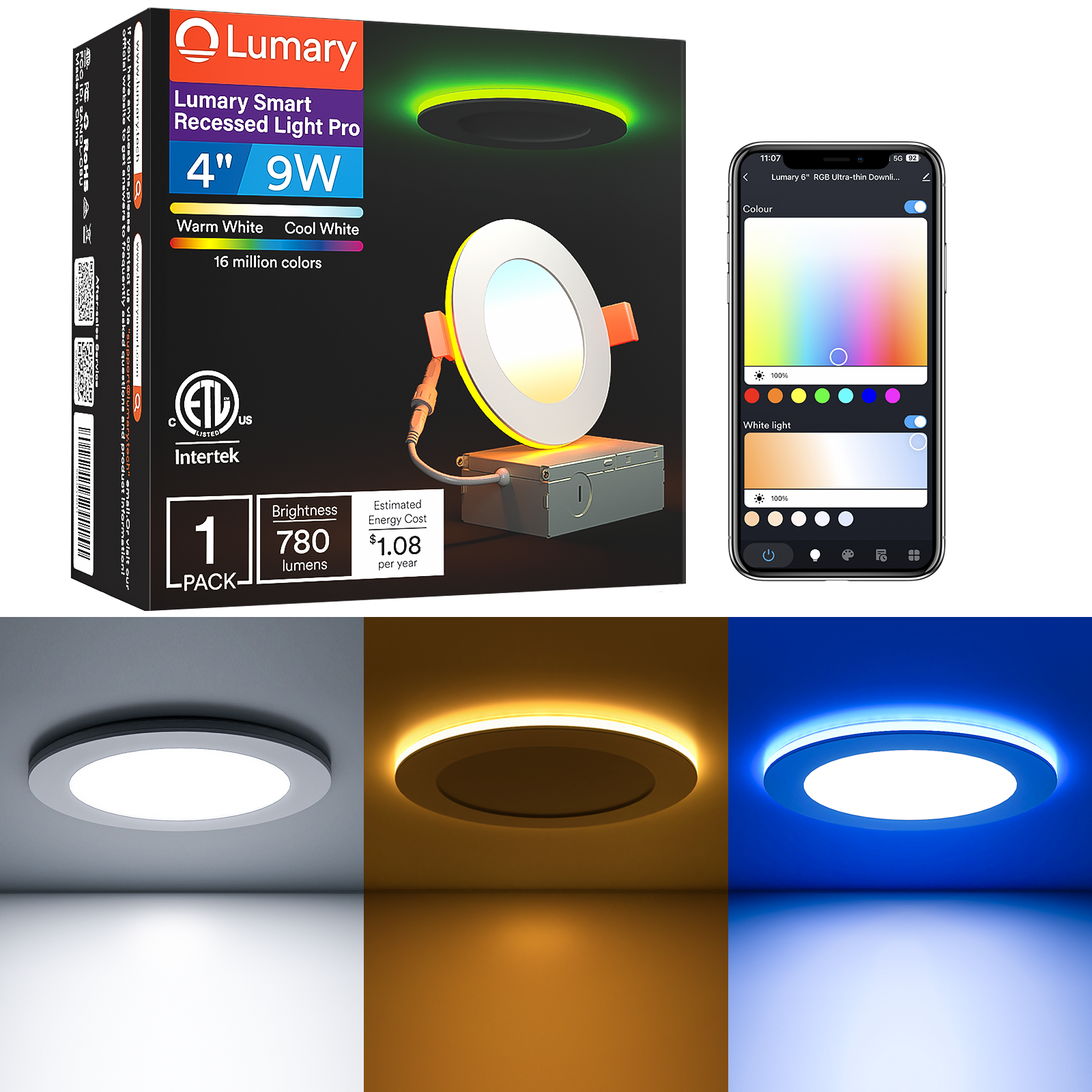
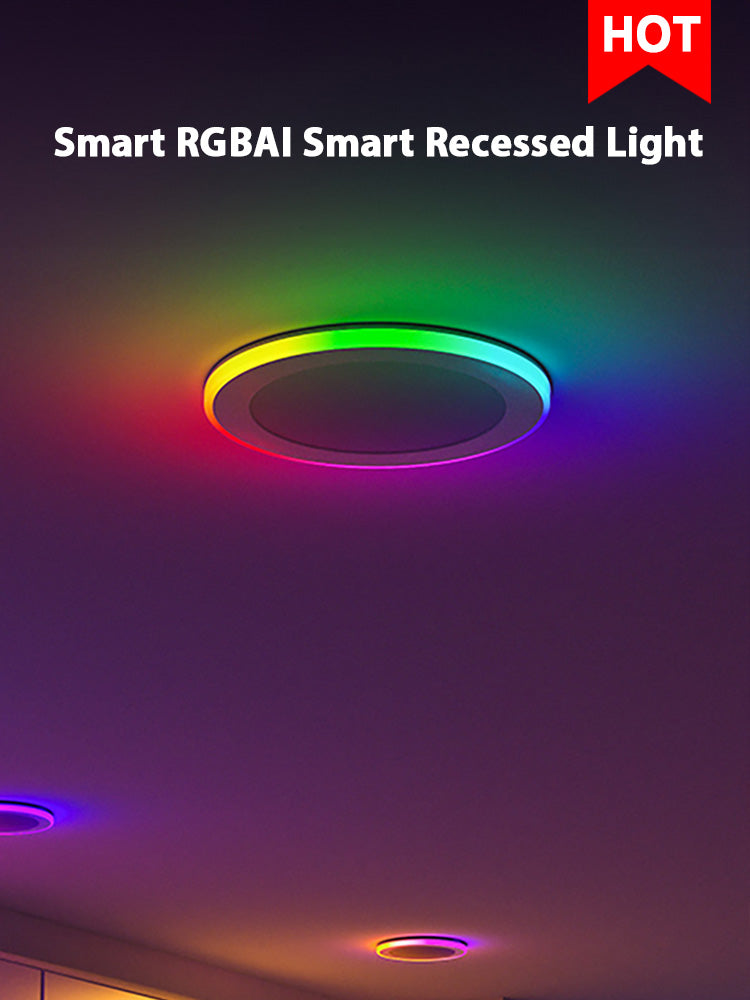
The third and fourth changes concern light. A fan with a properly specified white-light engine can become the room’s general lighting layer, while a separate color ring can handle atmosphere without forcing decorative color into daily tasks. ENERGY STAR’s brightness guidance defines light output in lumens rather than watts, and its color-temperature criteria explain that lower Kelvin values appear warmer while higher values appear cooler. This distinction matters because 2600 lumens describes quantity, 2700K to 6500K describes white-light appearance, and an RGBAI accent ring describes a different visual function. A stronger room plan keeps those variables separate.
The fifth and sixth transformations are behavioral. Schedules, countdowns, voice control, app control, and a physical remote can reduce repeated micro-decisions: starting a moderate fan speed before work, warming the light before bed, or ending both after a fixed period. Smart-control design also creates a potential failure point when wall power, app state, a remote, and a voice platform disagree. A home-automation community discussion about ceiling fans illustrates recurring concerns about maintaining power, controller fit, physical remotes, and mismatched device state. The buyer implication is clear: automation should sit above a dependable local-control method rather than replace it.
The seventh change is spatial consolidation. One well-chosen fixture can provide air movement, white general light, and an accent-light layer from a single ceiling location, reducing the need to solve those three needs with unrelated devices. Consolidation does not remove installation rules. ENERGY STAR’s ceiling-fan sizing and mounting guidance recommends matching fan span to room area, keeping blades at least 7 feet above the floor and 18 inches from walls, and targeting an 8- to 9-foot mounting height when the ceiling permits. ABB’s explanation of a fan-rated ceiling box and Leviton’s summary of NEC fan-support provisions reinforce that the outlet box and framing must be suitable for fan weight, vibration, and movement.
The Lumary 52-inch model brings all seven ideas into one system: maximum airflow of 6500 CFM, six speeds, a reversible DC motor, 2600-lumen adjustable white light, a separate 16-million-color RGBAI ring, schedules and countdowns, and control through the Lumary app, remote, Alexa, Google Assistant, Wi-Fi, and Bluetooth. Its specification page also creates an important planning task: the description uses low-profile and flush-mount language, while the specification block lists 5- and 10-inch downrods and an overall height of 18.9 inches. The transformation therefore begins with verifying the exact mounting configuration, clearances, electrical support, and non-dimmer wall-control requirement for the intended room.
Product Recommendation Analysis
The Lumary 52-inch smart ceiling fan with RGBAI lighting combines a reversible DC fan, a downward white-light module, and a separate multicolor outer ring. Black and white models are listed as L-CFL52H1 and L-CFL52H2. Airflow is published at 6500 CFM maximum and 5500 CFM average, with six speeds, 180 RPM, and Fresh, Natural, Forward, and Reverse modes. The description states less than 45 dB at maximum, while the specification block lists 45 dB. Those figures support a broad comfort range, but the practical value comes from selecting a lower routine speed for sleep or conversation and reserving maximum output for hotter or more crowded conditions.
The Lumary smart fan with tunable white and color light treats lighting as two coordinated layers. Its main downward light is listed at 2600 lumens, adjustable from 2700K to 6500K and dimmable from 1% to 100%. The RGBAI ring can display multiple colors simultaneously from 16 million colors. Forty-two presets, four DIY scenes, music synchronization, and a 0.1- to 60-second switch-gradient setting support transitions from practical white light to low-brightness ambience without implying that the color ring replaces task lighting.
The control hierarchy is as important as the effects. The included remote supports local use without the app, although its battery is not included. The Lumary app connects through 2.4 GHz Wi-Fi and Bluetooth, while Alexa and Google Assistant add hands-free control. Schedule, countdown, last-setting memory, post-outage Do Not Disturb behavior, and app/remote reversal turn the fan into a routine-driven fixture. Temperature-based speed synchronization requires a separate Lumary temperature/humidity sensor. Installation should be confirmed from the current manual because the page combines flush/low-profile wording with 5-/10-inch downrod specifications. It also states that the fan does not work with dimmer switches.
Technical Specification Table
| Specification | Lumary 52-Inch Smart Ceiling Fan With RGBAI Lights |
|---|---|
| Model designation | Lumary 52" Smart Ceiling Fans with RGBAI Lights — L-CFL52H1 (Black) / L-CFL52H2 (White) |
| Fixture functions | Ceiling fan + downward tunable-white light + outer RGBAI accent ring |
| Published dimensions | 51.9 in D × 51.9 in W × 18.9 in H |
| Mounting information | Description uses low-profile / flush-mount wording; specification block lists 5-inch / 10-inch downrod mount |
| Motor and direction | Reversible DC motor; forward and reverse control through remote or app |
| Published airflow | 6500 CFM maximum; 5500 CFM average |
| Speed settings | 6 speeds; 180 RPM listed |
| Fan modes | Fresh / Natural / Forward / Reverse |
| Published sound | Less than 45 dB at maximum in description; 45 dB in specification block |
| Main white light | 2600 lumens; 2700K-6500K; 1%-100% dimming |
| Ambient light | RGBAI outer ring; 16 million colors; simultaneous multicolor display |
| Lighting content | 42 preset scenes + 4 DIY scenes; music synchronization |
| Connectivity | 2.4 GHz Wi-Fi and Bluetooth direct connection |
| Control methods | Lumary app / included remote / Alexa / Google Assistant |
| Routine functions | Schedule, countdown, last-setting memory, Do Not Disturb after power restoration, 0.1-60 second switch gradient |
| Electrical details | 120V; published wattage 24W; not compatible with dimmer switches |
Seven Living-Space Transformations and Their Design Conditions
Use the seven rows below as a transformation checklist rather than a feature scorecard. Each benefit depends on a physical or behavioral condition: airflow needs correct placement, seasonal circulation needs direction changes, useful light needs sufficient distribution, ambience needs separation from task light, automation needs reliable power and networking, shared control needs a local fallback, and fixture consolidation needs verified mounting support. Evaluate every row against the same room, ceiling, occupants, and daily schedule. A product should be rejected for a room if the condition cannot be met, even when the corresponding feature looks attractive in an app demonstration.
| Key Purchasing Criterion | Common Sign of a Poor-Quality Unit | How This Lumary 52-Inch Smart Ceiling Fan Addresses It | Long-Term Usage / Performance Impact |
|---|---|---|---|
| 1. Personalized airflow | Speed count is listed but CFM is omitted, making output difficult to compare | Publishes 6500 CFM maximum, 5500 CFM average, six speeds, and Fresh/Natural modes | Occupants can choose a repeatable breeze for sleep, work, or gatherings instead of alternating between insufficient and excessive airflow |
| 2. Year-round circulation | Reversal requires climbing to a motor switch, so the function is rarely used | Uses a reversible DC motor with forward/reverse selection through the app or remote | Seasonal direction changes become part of normal operation rather than an overlooked maintenance task |
| 3. Tunable daily white light | One fixed CCT or missing lumen data forces the same light into every activity | Lists 2600 lumens, 2700K-6500K white light, and 1%-100% dimming | The room can shift from brighter daytime general light to warmer, lower evening light without replacing the fixture |
| 4. Independent atmosphere lighting | Decorative color is mixed into the only functional light source | Adds a separate RGBAI outer ring with simultaneous multicolor output, 42 presets, and 4 DIY scenes | Entertainment ambience can change while the white-light layer remains appropriate for navigation or tasks |
| 5. Routine automation | Smart control offers on/off commands but no scheduling or restoration behavior | Provides schedule, countdown, memory, Do Not Disturb, music sync, and adjustable switch gradients | Repeated transitions require fewer manual adjustments and are less likely to create unwanted light after an outage |
| 6. Household-wide control | Ordinary operation depends on one phone, account, or internet path | Includes a remote plus Lumary app, Bluetooth/Wi-Fi, Alexa, and Google Assistant control | Guests and household members retain a practical local method while advanced users can build voice and app routines |
| 7. Ceiling-level consolidation | Fan, general light, and decorative effects require separate fixtures without a unified control plan | Combines a 52-inch fan, 2600-lumen white light, and RGBAI ring in one ceiling system | The central ceiling point can support comfort, daily light, and entertainment modes with fewer unrelated interfaces |
Competitive Landscape
The smart-ceiling-fan market ranges from traditional fan makers with connected variants to premium sensor-led systems and lighting-forward models. Comparing brands requires more than counting app functions. Span, CFM, mounting architecture, light output, local controls, ecosystem support, and the relationship between functional and decorative light determine which product actually changes a room for the better.
Hunter represents the traditional fan-first approach. Bob Vila’s hands-on Hunter coverage describes tested models built around familiar styling, reversible circulation, and conventional control patterns. Hunter is relevant to buyers who want a ceiling fan to remain visually and operationally traditional, with smart connectivity selected only where needed. Lumary takes a more lighting-led route by integrating tunable white and RGBAI ambience into the same 52-inch fixture.
Dreo is a close competitor in the app-controlled, RGB-accented smart-fan category. A Bob Vila review of a Dreo smart ceiling fan focuses on installation, connected operation, natural-breeze behavior, lighting, and room integration. Dreo suits buyers who prioritize polished app-led comfort and accent-light functions. A Lumary comparison should therefore use the exact model’s CFM, span, main-light lumens, color architecture, mounting drop, and control hierarchy rather than treating all RGB smart fans as interchangeable.
Big Ass Fans’ Haiku line occupies the premium design-and-automation segment. A Haiku L Series review describes a system with carefully developed mounting choices, connected control, and sensor-oriented smart functions. Haiku is relevant when architectural finish and integrated environmental automation justify a higher project budget. Lumary addresses a different value proposition: strong published airflow plus a prominent dual-lighting system and multiple control paths in a mainstream 52-inch format.
Modern Forms combines an extensive design catalog with app, voice, wall-control, and smart-home integrations. The Modern Forms ceiling-fan review documents both physical fan quality and the practical importance of wiring, network reliability, wall control, and accurate device state. That architecture appeals to users who want a design-led fan embedded in a broader automation system. It also demonstrates why local control should be evaluated independently from the app experience.
Smafan emphasizes connected DC fans with tunable white lighting across multiple sizes and finishes. A hands-on Smafan smart-fan review discusses assembly, speed control, warm-to-cool white light, voice integration, and remote operation. This makes Smafan relevant to buyers who prioritize adjustable white light and straightforward smart functionality. Lumary differentiates its use case through the additional RGBAI ring and simultaneous multicolor ambience layered around a 2600-lumen main light.
Lumary sits in the lighting-forward middle of the field. Its 6500 CFM maximum airflow, six speeds, reversible DC motor, 2600-lumen white light, RGBAI ring, remote, app, voice control, and routines support a room that changes between work, relaxation, and entertainment. It is strongest when all three fixture roles—airflow, general light, and accent light—are needed. A fan-first competitor may be a better fit when the project instead prioritizes another span, mounting system, architectural style, or smart-home platform.

Application Scenarios
1. Primary Bedroom: Turning One Ceiling Fixture Into a Bedtime Sequence
Consider an illustrative 15-by-20-foot primary bedroom, or 300 square feet, with an 8.5-foot flat ceiling and two occupants who prefer different nighttime conditions. One wants stronger airflow while reading; the other wants low air movement and minimal light once asleep. The transformation is not simply replacing a light fixture with a fan. It is creating a repeatable sequence in which white light, accent light, airflow, and shutoff timing change independently as the room moves from evening activity to sleep.
The 300-square-foot area falls within the 225- to 400-square-foot range that Building America associates with 50- to 54-inch fans. Its sizing and clearance guidance also calls for adequate floor, wall, and blade-to-ceiling clearance. Before installation, the homeowner should identify the fan-rated box and verify the exact blade and light height for the supplied Lumary mount. The product page’s 18.9-inch overall height and 5-/10-inch downrod specification do not independently reveal every required clearance.
Thirty minutes before bed, the Lumary smart bedroom ceiling fan can begin at a medium speed with the downward light set to a warm CCT within its 2700K-6500K range. While reading, the main light—not the RGBAI ring—provides usable white illumination. At lights-out, the main light can dim toward the low end of its 1%-100% range, the accent ring can turn off, and the fan can move to a lower speed. A countdown can end operation later, while the remote gives either person an immediate adjustment method without opening the app.
The published maximum condition is less than 45 dB in the description and 45 dB in the specification block, but bedroom comfort should be judged at the actual installed speed. Air rush, balance, ceiling construction, and room acoustics remain field variables. After a power interruption, the listed Do Not Disturb function should be tested to confirm that restoration behavior matches expectations. When the mount and acoustics work, the transformation is behavioral: the room no longer depends on one bright switch state and one fixed fan speed for the entire evening.
2. Open Living Room: Moving From Daily White Light to Movie and Gathering Modes
Imagine an illustrative 20-by-20-foot living room at the upper edge of the common 50- to 54-inch sizing band. A sectional sofa faces a television, while an open doorway connects to the dining area. The family needs moderate airflow and neutral white light on ordinary evenings, lower glare during movies, and greater circulation plus a more social atmosphere when six or eight people gather. The challenge is creating these states without turning every occasion into a manual sequence across separate devices.
Before use, the homeowner should treat the 400-square-foot calculation—20 ft × 20 ft = 400 ft²—as the defined room, not automatically include the adjoining dining zone. The Lumary 52-inch fan with dual lighting publishes 6500 CFM maximum and 5500 CFM average airflow, but one center point may not distribute air evenly around an L-shaped or much larger open plan. Furniture, beams, ceiling height, and the position of occupied seats still affect the experience.
For daily use, the main 2600-lumen light can operate at a neutral white setting while the fan runs at one of six moderate speeds. Before a movie, a saved action can dim the downward light and move the RGBAI ring to a low-brightness accent color that does not compete with the screen. Before guests arrive, the fan can increase gradually and the ring can switch to one of 42 presets or a DIY scene. Voice control becomes useful when someone is carrying food, while the remote remains available to guests who do not use the Lumary account.
After the gathering, a countdown can return the room to an off state instead of leaving the fan and color effect running overnight. The constraint is the existing wall control: the product page expressly says the fan is not compatible with dimmer switches, so smart dimming must remain within the supported fan controls. The long-term transformation is not a permanently colorful ceiling. It is a living room with three well-defined operating states—daily, cinema, and social—using one fixture while preserving white light as the functional baseline.
3. Kitchen and Dining Zone: Coordinating Hands-Free Control With Real Task Lighting
Consider an illustrative 18-by-22-foot open kitchen and dining area, or 396 square feet, with the fan centered over the dining half rather than directly over the cooking surface. The household wants air circulation during meal preparation, comfortable conversation at dinner, and hands-free control when someone is carrying dishes. It also needs accurate task light at the counters. The tension is that a bright ceiling-fan light may improve general visibility without replacing under-cabinet or countertop-focused illumination.
ENERGY STAR’s brightness guidance separates lumens from wattage, while its CCT explanation distinguishes warmer and cooler white appearance. Applied here, the Lumary fan’s 2600 lumens describe total emitted light, not the illumination at a cutting board. The room should retain dedicated task lights where precision is required. The fan’s 2700K-6500K range can then be used to coordinate the ambient layer with those fixtures rather than forcing one central source to perform every lighting job.
Before cooking, the Lumary smart ceiling fan with voice control can start at a lower or medium speed and use a clear white setting. During food preparation, Alexa or Google Assistant can change the fan or light without touching a remote. At dinner, the fan can slow to protect conversation comfort and the main light can warm and dim. The RGBAI ring may use a restrained static or gradient scene for a birthday or casual gathering, while ordinary meals can leave it off.
After cleanup, a countdown can turn the system off, and last-setting memory can restore the normal daily state the next time it is used. The fan should not be assumed to control cooking heat or ventilation; its role is comfort and air circulation in the occupied dining zone. Mounting support, clearances, 2.4 GHz coverage, and the non-dimmer wall-control requirement still need verification. Used with those boundaries, the transformation is a smoother activity sequence: hands-free comfort during preparation, quieter circulation during dinner, and a deliberate return to the room’s standard state.
4. Teen Bedroom and Creative Room: Separating Study, Gaming, Music, and Sleep
An illustrative 14-by-16-foot teen room totals 224 square feet, placing it near—but just below—the published 225-square-foot transition into a 50- to 54-inch sizing recommendation. The user wants a black fixture, strong airflow, colorful gaming ambience, and music-responsive light. The parent wants useful study light, a dependable bedtime routine, and basic controls that do not depend on a personal phone. The first decision is therefore whether a 52-inch fan is proportionate to this specific ceiling and furniture layout.
If centered across the 14-foot width, an illustrative clearance calculation leaves 84 inches from center to wall - 26-inch fan radius = 58 inches from blade tip to each side wall. That exceeds the general 18-inch wall-clearance guidance, assuming no loft bed, tall wardrobe, sloped ceiling, or off-center box changes the geometry. Physical clearance does not automatically settle visual scale or preferred airflow. A smaller fan may still suit the room better, and the current mounting diagram should establish the blade height.
When the 52-inch choice fits, the Lumary RGBAI fan for a creative bedroom can create four distinct states. Study mode uses the downward white light at an appropriate neutral setting and a comfortable fan speed. Gaming mode lowers the main light and activates the separate multicolor ring. Music mode can use synchronization for a limited session. Sleep mode turns the ring off, warms and dims the main light, reduces airflow, and uses a countdown. These modes rely on verified independent layers rather than asking RGB ambience to serve as task light.
The remote provides local control for the teenager, parent, or guest, while schedules remain in the app and voice control is optional. The remote battery is not included, so it should be available during setup. Music effects and 42 presets should be treated as selectable content rather than an always-on design. The practical transformation is a room whose ceiling responds to different activities without adding separate color strips, a freestanding fan, and another main light—provided the larger span is physically and visually appropriate.
5. Tall Family Room: Making Seasonal Automation Depend on the Right Mount
Consider an illustrative 18-by-18-foot family room with an 11-foot ceiling, a fan-rated center box, and reliable 2.4 GHz Wi-Fi nearby. The family wants stronger summer airflow, winter circulation, adjustable daily light, and control that works for both smart-home enthusiasts and visiting relatives. This is where smart features can genuinely improve repeated behavior, but only after the fan is placed at an effective height.
Building America’s mounting guidance for ceiling fans targets an 8- to 9-foot fan height where possible and explains that blade-to-ceiling clearance affects circulation. The Lumary listing identifies 5- and 10-inch downrods while also describing the fan as low profile. Under an 11-foot ceiling, those specifications may not place the blades at the general target height. The homeowner should request the current dimensional drawing and ask whether a manufacturer-approved longer mounting configuration applies. An improvised downrod would undermine the installation plan.
If an approved mount works, the Lumary reversible smart ceiling fan can use forward operation and stronger speeds in warm conditions, then switch to reverse and a low speed in cooler weather without requiring someone to climb to the motor housing. A daily schedule can cover the occupied evening window. Temperature-linked speed adjustment is possible only with the separately referenced Lumary temperature/humidity sensor, so the household should decide whether that additional component adds value or whether a simple schedule is clearer.
The remote should be verified before app setup so visiting relatives always have a local option. Then the fan and light can be named distinctly in Alexa or Google Assistant, schedules can be tested, and power-restoration behavior can be checked. The community experience around multi-fan automation and device state is a useful reminder that manual and automated controls must remain understandable together. If the mounting system cannot place the fan appropriately, a different fan is the right decision. If it can, the room gains seasonal circulation and shared automation without making one phone the only control point.
Editorial Assessment
From a hardware-editor perspective, the most important transformation is not visual; it is operational. A strong smart fan changes the room predictably as activities change, while remaining a correctly sized and safely supported ceiling appliance. The Lumary system offers a coherent set of verified inputs for that role: 6500 CFM maximum and 5500 CFM average airflow, six speeds, reversible DC operation, 2600-lumen 2700K-6500K white light, a separate RGBAI ring, and remote, app, voice, schedule, countdown, and restoration controls.
Its strongest fit is a 225- to 400-square-foot bedroom, living room, dining area, or work space that genuinely benefits from both everyday white light and entertainment ambience. The buyer should still confirm whether the 52-inch span serves the occupied zone, whether the main light reaches the necessary surfaces, and whether lower speeds are comfortable in the installed acoustic environment. A separate task-light layer remains appropriate where work requires focused illumination.
Who Should Buy This Product: Choose the Lumary 52-inch smart fan with lights when one central fixture needs to coordinate airflow, tunable white light, color ambience, and routine control. Choose a smaller span for a compact room, a larger or multi-fan layout for an irregular great room, or another mounting architecture when the page’s listed 5-/10-inch downrods cannot place the fan effectively. Verify the fan-rated box and replace any incompatible dimmer-control plan before installation.
Frequently Asked Questions
Q1. What Are the Most Useful Smart Features in a Ceiling Fan?
The most useful features are those that reduce repeated adjustments without removing local control: independent fan and light commands, several speed settings, schedules, countdowns, a physical remote, and clearly named voice controls. Decorative scenes matter only when the household will use them. Lumary adds six speeds, reversible operation, schedule and countdown functions, memory, Do Not Disturb after power restoration, and an adjustable switch gradient. Its remote covers ordinary operation without the app, while Alexa and Google Assistant support hands-free changes. Start by creating one daily routine and one bedtime or entertainment routine. Test both for a week before adding more automation; complexity that household members cannot remember does not improve the room.
Q2. Can a Smart Ceiling Fan Help Reduce Air-Conditioning Use?
It can support a higher thermostat setting while occupants feel air moving, but it does not cool an empty room or replace air conditioning during unsafe heat. The Building America ceiling-fan guide explains that comfort depends on people being present and recommends adjusting the thermostat when the fan is used. Lumary’s six speeds and 6500 CFM maximum give the household multiple airflow choices, while schedules and countdowns can limit unnecessary operating time. Use the lowest comfortable speed, turn the fan off when the room is empty, and treat the product page’s published 24W as a listed value rather than calculating a precise savings claim without measured whole-system data and an actual HVAC baseline.
Q3. How Should I Use Tunable White and RGBAI Lighting Together?
Use tunable white for seeing and RGBAI for atmosphere. Lumary’s downward light is listed at 2600 lumens, 2700K-6500K, and 1%-100% dimming, while the outer ring handles simultaneous multicolor effects, presets, DIY scenes, and music synchronization. ENERGY STAR’s lighting guidance confirms that lumens measure light output, while Kelvin describes appearance rather than brightness. Begin with the white-light level required for navigation or the activity. Then add the color ring at a lower intensity so it supports rather than overwhelms the room. For reading, food preparation, or detailed work, retain focused task lighting when the central diffuser does not deliver enough light to the surface.
Q4. Can a 52-Inch Smart Fan Work in Every Bedroom or Living Room?
No. A 52-inch fan commonly aligns with rooms around 225 to 400 square feet, but room shape, ceiling height, furniture, occupied zones, and blade clearances still matter. The ENERGY STAR sizing guide recommends smaller spans for smaller areas and minimum clearances from floors and walls. Measure the room, mark the fan radius on the ceiling, and verify the lowest blade and light points from the current manual. Lumary’s listing combines low-profile wording with 5-/10-inch downrod information and an 18.9-inch overall height, so the exact mounting configuration should be confirmed before purchase. A feature-rich fan is still the wrong fan when it cannot be mounted safely or proportionately.
Q5. What Happens if Wi-Fi Is Unavailable or the Power Goes Out?
The included remote provides a local control path without relying on the app, although its battery is not included. The Lumary app uses 2.4 GHz Wi-Fi and Bluetooth direct connection, while Alexa and Google Assistant depend on their associated setup. After installation, verify remote operation first, then Bluetooth/Wi-Fi, then voice control. The page lists last-setting memory and a Do Not Disturb function for power-restoration behavior, but the household should test the actual result after setup. Keep the wall power arranged according to the manufacturer’s instructions and do not connect the fan to a dimmer switch. A smart routine is dependable only when users understand which control remains available in each network and power state.

