


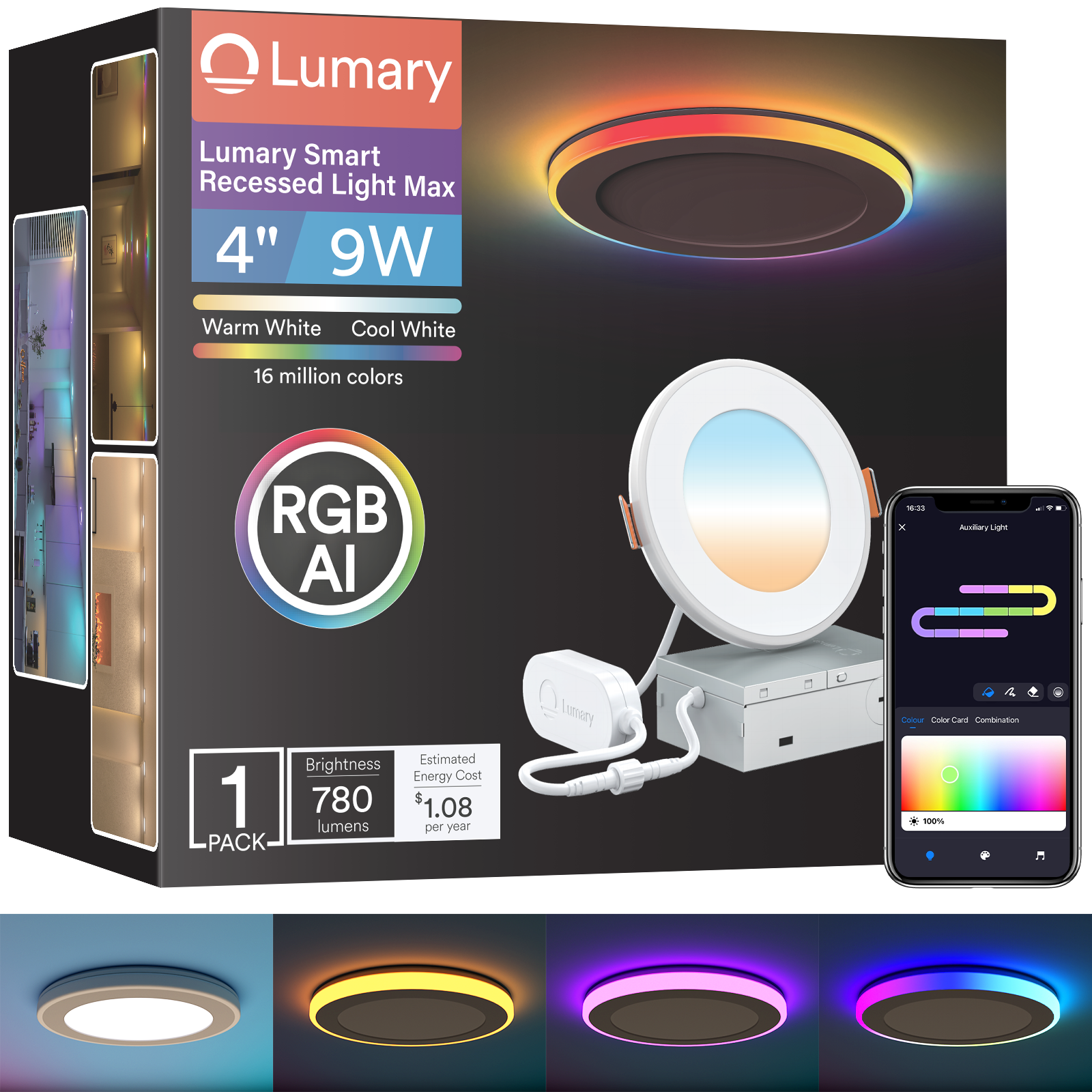
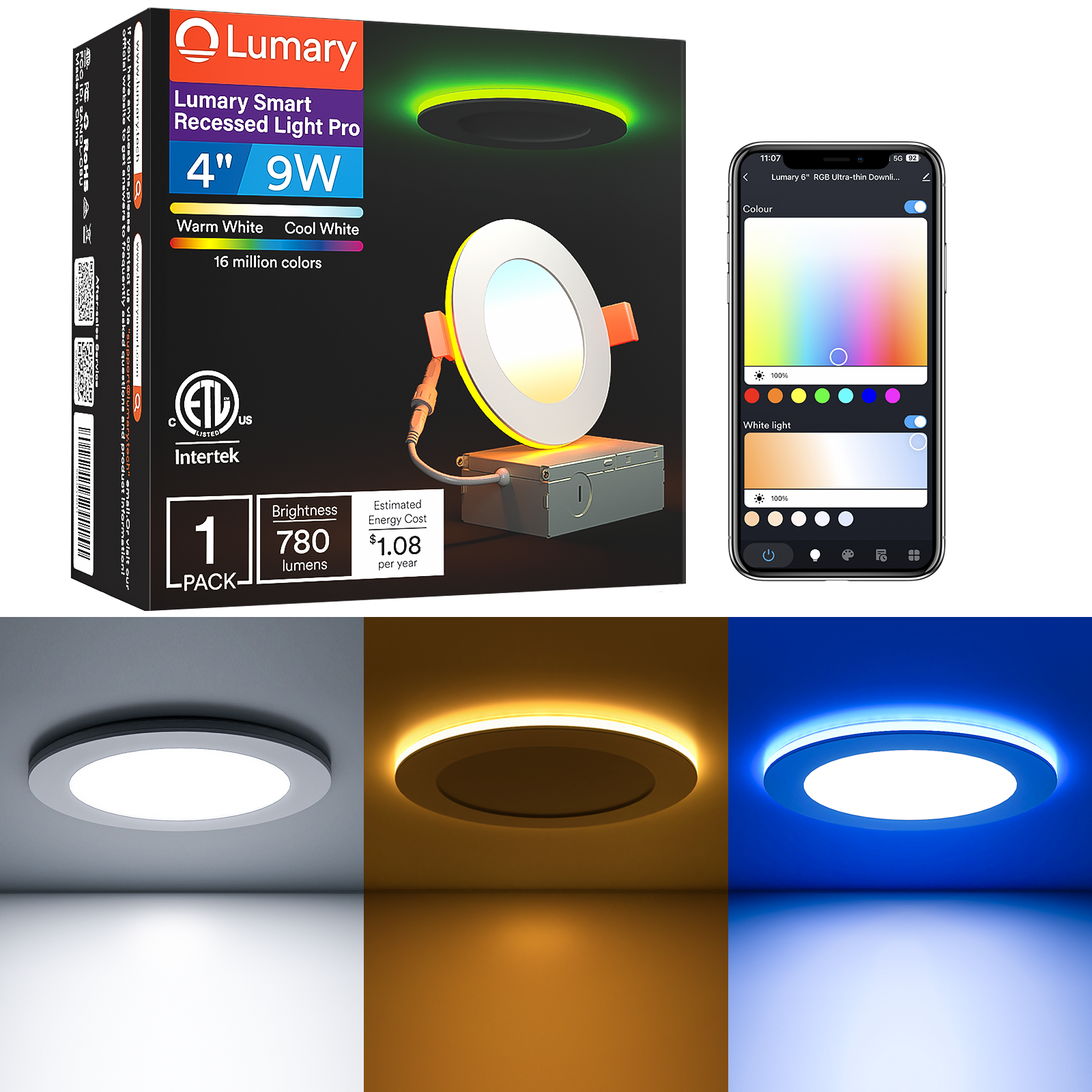
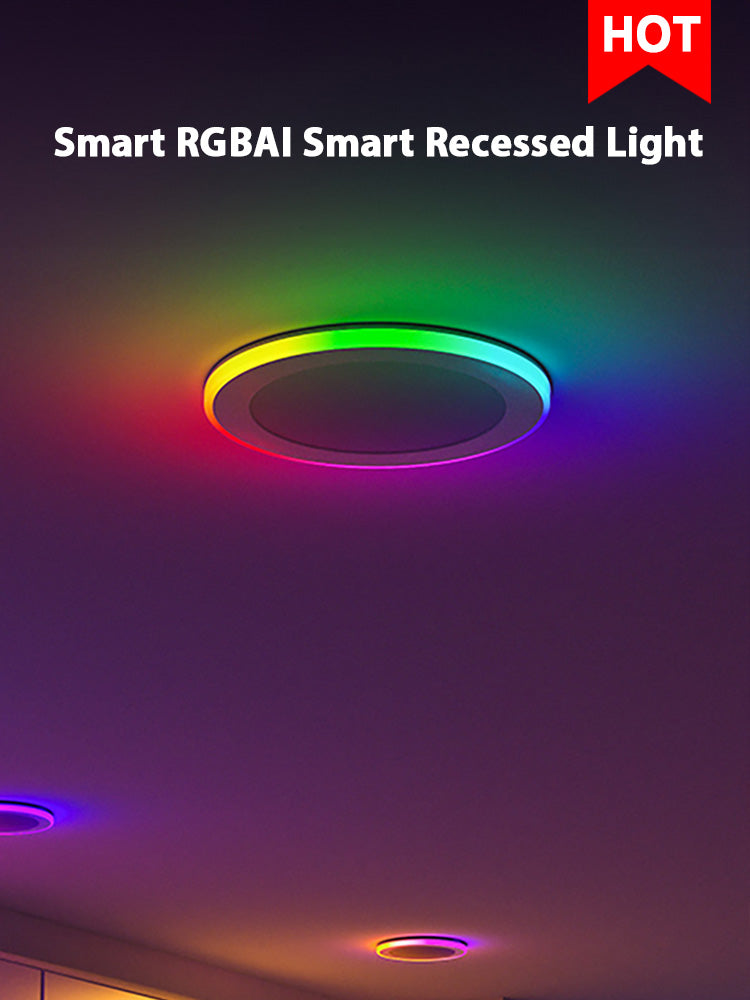


Can I install a wet-rated recessed light above my shower? Yes, you can, but the prerequisite is very clear: any fixture installed above a bathtub or shower area must comply with local electrical codes, and in locations that may be affected by moisture, spray, or condensation, you should choose a fixture marked for damp or wet locations; if the fixture may be directly exposed to shower spray, it should be marked as suitable for wet locations. NEC 410.10(D) clearly defines fixture placement and location-rating requirements for bathtub and shower areas: within the zone extending 8 ft above the bathtub rim or shower threshold and 3 ft horizontally, pendant lights, track lighting, chain-hung fixtures, and similar luminaires should not enter that zone; permitted fixtures must match the installation environment with the appropriate damp or wet location rating. (electricallicenserenewal.com)
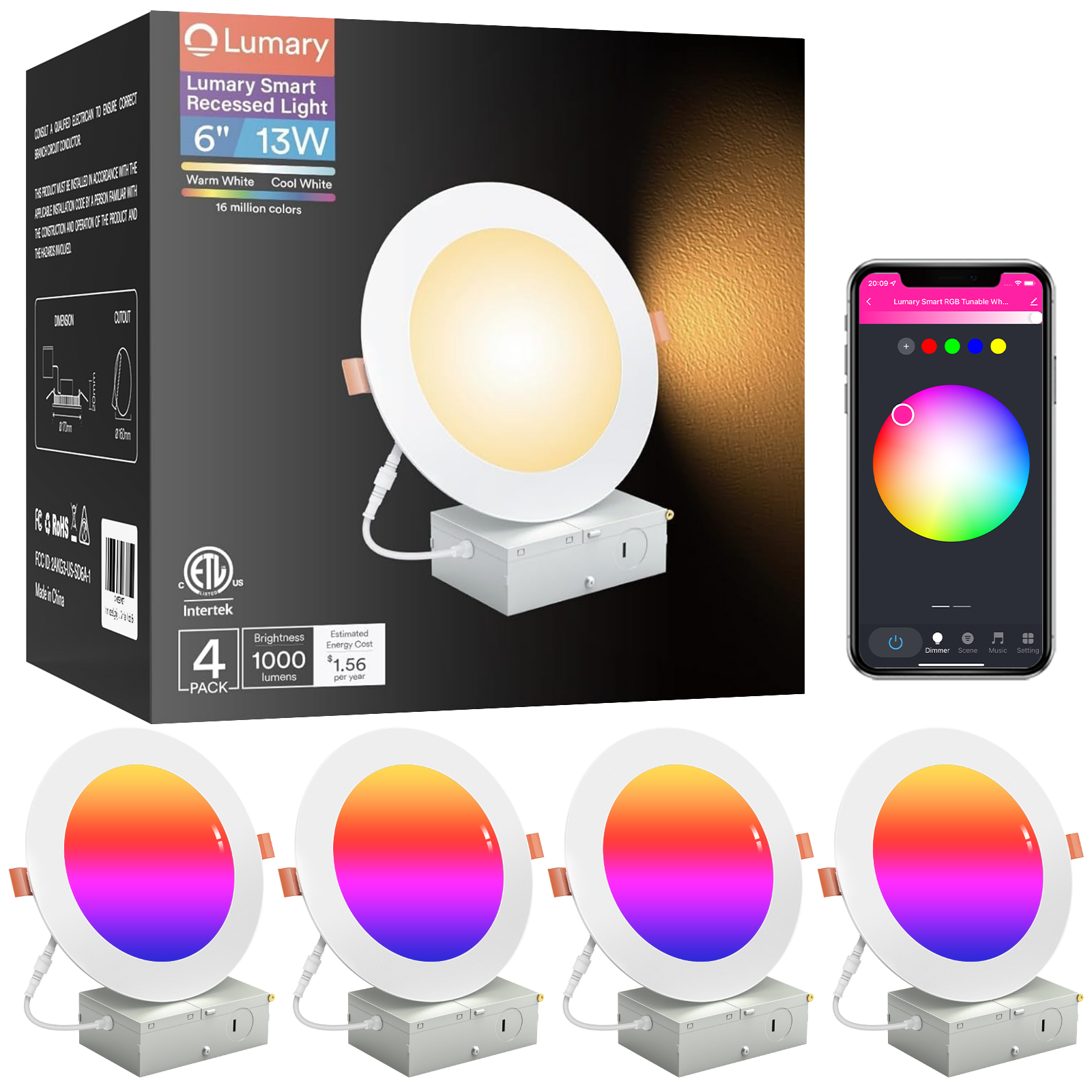
From a purchasing perspective, bathroom lighting should not be judged only by whether it is “bright enough” or “able to change colors.” It also depends on whether the structure is suitable for low ceilings, limited plenum space, long-term moisture, frequent switching, and multi-user households. The value of the Lumary Wi-Fi Smart Canless Recessed Lighting 6 inch 4 PCS lies in how it integrates an ultra-thin canless structure, J-box wiring, spring-clip installation, App/voice/remote control, 2700K–6500K color temperature, RGBCW color lighting, 1%–100% dimming, and scene automation into one 6-inch smart recessed lighting solution. It is suitable for bathroom dry zones, vanity areas, hallways, bedrooms, living rooms, home theaters, and other spaces that require “general lighting + ambient lighting + automation control.” According to the product page, this 4-pack model is US-SD6A-4/US-SD6B-4. It supports Lumary App 2.4GHz Wi-Fi control, Alexa/Google Assistant voice control, 16 million colors, 8 scene modes, music sync, group control, scheduling, memory function, and uses a 13W, 1100LM, flicker-free, silent-operation ultra-thin design. (lumarysmart.com)
Product analysis
The Lumary Wi-Fi Smart Canless Recessed Lighting 6 inch 4 PCS is a 6-inch ultra-thin recessed lighting system designed for modern residential ceilings, minimalist lighting layouts, and smart home upgrades. Its core value is not just a single “downlight,” but a low-profile lighting node made up of the fixture body, junction box, spring-clip mounting structure, and smart control system. Its 13W power delivers up to 1100LM of output, making it suitable for general room lighting. Its 2700K–6500K range covers everyday color temperatures from warm relaxing light to crisp white light. Its RGBCW architecture provides 16 million colors along with practical white-light adjustment, avoiding the awkward limitation of RGB-only fixtures that can create colorful effects but lack usable white light. At the control level, it supports the Lumary App, voice assistants, remote control, and group control, making it useful for precise single-light dimming as well as multi-light synchronization, scheduling, scene memory, and music rhythm effects. For buyers, the advantage of this type of canless design is that it does not require a traditional recessed can housing, making it suitable for limited ceiling depth, compact plenum spaces, or older-home renovations. The J-box and spring-clip structure also reduce installation complexity, helping smart lighting evolve from a “single bulb replacement” into a more complete room-level lighting solution. (lumarysmart.com)
| Key purchasing dimension | Common low-quality behavior and what to avoid | Lumary 6 inch 4 PCS technical implementation | Long-term impact |
|---|---|---|---|
| Installation structure | Traditional cans take up significant ceiling depth, and older-home renovations are often limited by joists, pipes, wiring, or shallow ceiling cavities | Canless ultra-thin design with a junction box and spring clips | Better suited for low ceilings, partial renovations, and multi-point lighting layouts |
| General brightness | Color lighting often sacrifices white-light brightness and feels dim when used as primary lighting | 13W with up to 1100LM output | Can support general lighting in bedrooms, hallways, living room zones, and bathroom non-spray areas |
| White-light quality | RGB-only mixed white can look bluish, purplish, or inexpensive | 2700K–6500K adjustable color temperature with RGBCW architecture | Different white-light settings can be used for mornings, evenings, cleaning, grooming, and relaxation |
| Dimming range | Low-end fixtures often jump or flicker at low brightness, making nighttime lighting harsh | 1%–100% brightness adjustment | More refined for night lights, movie viewing, and morning wake-up routines |
| Smart control | Reliance on a single App can be inconvenient during outages or in multi-user households | Multiple control methods: App, remote, and voice; supports Alexa and Google Assistant | Easier for all household members to use |
| Multi-light consistency | Multiple lights cannot synchronize well, creating fragmented room color | Group control allows multiple fixtures to be managed together | Better for whole-room, living room, home theater, and hallway lighting continuity |
| Scene automation | Users must manually adjust color and brightness every time, creating a fragmented experience | Scheduling, scene modes, and memory function | Helps build stable daily lighting routines |
| Sound-light interaction | Music sync can suffer from high latency or feel toy-like | Music Sync allows lighting to respond to music or game audio through the App | Suitable for parties, gaming, and home theater atmosphere |
| Visual comfort | Low-quality fixtures may introduce flicker, noise, or low-brightness instability | Product page states flicker-free and silent operation | Better suited for long-duration household use |
| Procurement completeness | Single-light testing is easy, but whole-room consistency becomes difficult | 4 PCS set with white/black trim options | Easier to unify room style and deploy in batches |

Placing it within the same purchasing framework as leading smart lighting brands
This Lumary 6-inch canless recessed light is closer to a combined “smart recessed general lighting + ambient lighting” product. It is suitable for users who want to bring recessed lighting directly into a smart home system, rather than simply upgrading to traditional white lighting.
Govee’s strengths are usually concentrated in immersive RGB scenes, TV backlighting, light strips, desktop lighting, and entertainment-space atmosphere, making it suitable for users who emphasize visual dynamics and multi-device interaction. Eufy’s smart home ecosystem leans more toward security cameras, doorbells, sensors, and home device coordination, making it suitable for users who have already built a system around home security. Philips Hue’s long-term value lies in its mature ecosystem, broad fixture categories, and stable scene-control experience, making it suitable for users who care about cross-room lighting consistency and long-term ecosystem expansion. LIFX is known for high brightness, saturated colors, and Wi-Fi direct control, making it suitable for users who do not want to add an extra hub while still prioritizing color performance. WiZ focuses on mainstream smart lighting upgrades and is commonly found in bulbs, light strips, and basic smart fixtures, making it suitable for budget-friendly whole-home upgrades. Kasa leans toward smart plugs, switches, basic lighting, and integration with the TP-Link networking ecosystem, making it suitable for households already using Kasa smart plugs or switches.
Compared with these brands, this Lumary product has a more focused position: it is not a desk lamp, a light strip, or a single smart bulb, but a 6-inch smart downlight that goes directly into the ceiling structure. For users renovating or upgrading a living room, bathroom dry zone, hallway, kitchen passage, home theater, or gaming room, this product form looks cleaner than add-on light strips and offers more scene-control capability than traditional recessed lights.
Scenario one: Bathroom dry zones and vanity areas, combining “task lighting” with “morning-evening rhythm”
When many families remodel a bathroom, they focus on waterproof tile, the vanity, the shower system, and the exhaust heater, while lighting is often reduced to a simple “bright enough” ceiling fixture. After daily use, two lighting problems quickly become obvious: the bathroom is too dim in the morning, affecting washing, shaving, and skincare; and too bright at night, causing eye discomfort during late-night bathroom visits and disrupting sleep rhythms.
The Lumary 6-inch smart recessed downlight is suitable for bathroom dry zones, above the vanity, or locations not directly exposed to water spray. Through 2700K–6500K color-temperature adjustment, it can support two lighting modes. In the morning, 5000K–6500K crisp white light improves facial detail visibility. At night, low-brightness warm light reduces glare from sudden illumination. Its 1%–100% dimming capability means the bathroom is no longer limited to “on/off,” but can shift according to time, behavior, and household routines.
For placement above the shower, buyers and installers should follow one safety principle: whenever a fixture is located in an area exposed to spray, moisture, or condensation, a qualified electrician should verify the fixture marking, installation position, and circuit protection method according to local code. This is not overly cautious; bathrooms are high-humidity, high-temperature-difference, high-frequency-use spaces, and long-term moisture exposure can affect wiring, sealing, grounding, and cutout installation. Lumary’s canless structure, J-box, and spring clips make lighting layout in dry zones and transition zones cleaner, helping the entire bathroom lighting system move from a single ceiling fixture to a zoned lighting design.
Scenario two: Home theaters and media rooms, keeping ceiling light from disrupting screen immersion
A common mistake in home theater design is keeping all the original living room downlights at one uniform brightness. The result is that top lighting reflects on the TV or projection screen, making dark scenes look washed out; turning every light off makes it inconvenient to move around, grab items, or eat snacks. Lighting that works well in a theater space should offer “low brightness, low interference, grouping, and memory.”
The Lumary 6-inch smart recessed light can divide a theater room into multiple lighting layers: lights near the screen can be dimmed or turned off, side lights near the sofa can stay at 5%–20% low-brightness warm light, and rear or walkway lights can remain as safety illumination. With group control, users do not need to adjust lights one by one. With scene modes and memory function, the next session can return directly to the previous movie-watching state. For homes with game consoles, speakers, or party use, Music Sync can make the lights respond to music or game audio, creating a stronger sense of spatial rhythm.
This type of scenario is most affected by fixtures that are “bright enough but poorly controlled.” Low-quality smart lights may jump at low brightness, fail to synchronize color across multiple fixtures, or even produce electrical noise in quiet rooms. The Lumary product page specifically highlights flicker-free and silent operation, which is especially important in theater spaces because users are more likely to notice flicker in dim environments and more likely to hear subtle noise. It does not turn the living room into an exaggerated entertainment zone; it lets the lighting serve the picture, circulation path, and mood.

Scenario three: Gaming rooms and streaming setups, creating a controlled ceiling atmosphere without clutter
Gaming rooms and streaming setups require more complex lighting than ordinary bedrooms. Players need immersion around the screen, enough light around the desktop, a camera image without harsh facial shadows, and a background with enough identity. Many people stack light strips, desk lamps, and ambient lights, but once there are too many devices, cables, plugs, Apps, and remotes become chaotic.
The advantage of Lumary 6-inch canless recessed lighting is that it integrates ambient lighting directly into the ceiling. The 6-inch light surface provides relatively even downward illumination, and the RGBCW color system can switch between cool colors, warm colors, or colorful scenes according to the game type. The 2700K–6500K white-light range ensures that the room still works for reading, organizing devices, and daily use outside gaming sessions. For streamers, a dedicated key light can handle facial lighting, while Lumary serves as the background and environmental layer, avoiding the flat look caused by a single light source.
More importantly, smart recessed lights are suitable for “fixed scenes.” For example, before streaming, one tap can switch to a purple-blue background with low-brightness white desktop lighting; during ranked matches, the room can shift to a cool, low-brightness mode to reduce screen reflections; during breaks, it can return to warm light. App, remote, and voice controls allow players to adjust lighting without leaving their seats. Compared with temporary lighting devices, a recessed solution does not occupy desk space, block the camera, or add floor cables, making it more suitable for gaming rooms that prioritize clean wiring and stable video presentation.
Scenario four: Open living rooms and hallways, using multi-light grouping to solve uneven brightness
Open living rooms, dining areas, and hallways are especially prone to lighting gaps. A single main fixture cannot reach corners, while multiple ordinary downlights can only turn on or off together, leading to awkward results: the dining area is too dim, the TV area is too bright, and the hallway has heavy shadows. The value of smart recessed lighting is that it turns a rough lighting circuit into a space network that can be zoned, dimmed, and scheduled.
The Lumary 4 PCS set is suitable for creating basic lighting groups along living room edges, hallway nodes, dining-side zones, or entryways. Users can divide four fixtures into an “entry group,” “sofa group,” “hallway group,” and “display group,” or group them together for synchronized control. In the morning, all lights can be bright for getting ready. In the evening, warm white at medium brightness can create a soft home atmosphere. At night, only low-brightness hallway lighting can remain on to prevent walking in the dark. The scheduling function allows these actions to happen automatically and reduces repeated switching.
From a purchasing perspective, open spaces test fixture consistency more severely. Low-end lights may appear greenish or bluish even at the same color temperature, which can gradually undermine the quality of the interior design. Lumary reduces the color inconsistency and control fragmentation that often come from mixing brands by using the same product series, the same control system, and multi-light grouping. For households renovating or preparing to replace traditional downlights with a unified smart system, a 4-pack is more useful for planning spacing, circuits, and scenes than buying individual fixtures randomly.
Scenario five: Bedrooms and children’s rooms, creating daily lighting that is recoverable, shareable, and gradual
The most important qualities for bedroom lighting are not dramatic colors, but stability, softness, and predictability. Adult bedrooms require morning wake-up lighting, pre-sleep relaxation, and nighttime movement. Children’s rooms require reading, play, sleep, and parental management. A traditional fixed-color downlight struggles to meet all of these needs, while too many movable lamps add cords and increase accidental-touch risks.
The Lumary 6-inch smart recessed light can use low-brightness warm light as a bedtime ambient layer, neutral white light for organizing clothes, cleaning, and reading support, and colorful scenes for holidays, birthdays, and playtime in children’s rooms. Memory function is particularly valuable in bedrooms because it keeps the previous setting and prevents users from readjusting the light every night. Share control is also useful for family management; parents can help children set bedtime mode or remotely check light status while away.
Another often-overlooked bedroom issue is noise and flicker. Quiet environments amplify any power-supply whine, and low-brightness flicker can more easily cause discomfort. The Lumary product page states flicker-free and silent operation, making it more suitable for living spaces where people stay for long periods. Its value is not in using colorful light to disrupt sleep, but in making color light, white light, and automation serve daily rhythm: when you need to feel awake, when you need to relax, and when you only need a gentle nighttime pathway.

Professional evaluation: who should buy this Lumary 6-inch smart recessed light set
From the perspective of a hardware editor and lighting procurement reviewer, this product is best suited for three types of buyers.
The first group is people currently renovating or upgrading a ceiling. The canless ultra-thin structure, J-box, and spring-clip installation method are suitable for households that want to reduce dependence on traditional recessed cans and achieve a cleaner ceiling appearance. The second group is smart home users who already use Alexa or Google Assistant. Voice control, App control, grouping, scheduling, and scene memory can increase real daily usage rather than leaving the product as an occasional “color-changing” novelty. The third group is users who want one fixture to handle both general lighting and ambient lighting. The combination of 13W, up to 1100LM, 2700K–6500K, and RGBCW makes it more suitable for recessed room lighting than ordinary color bulbs.
A simple decision tree can help: if you only need the most basic fixed white light, a traditional downlight may be enough; if you need multi-light synchronization, color-temperature adjustment, scene automation, and voice control, a smart canless recessed light like this Lumary model is more suitable; if the installation point involves a shower spray zone or a high-humidity enclosed area, you should first have an electrician verify local code, fixture marking, and installation method before deciding on the exact placement. This preserves the smart lighting experience while keeping wet-area electrical safety as the correct priority.
FAQ
1. Can a wet-rated recessed light be installed above a shower?
Yes, but it should be done according to local electrical code. In general, if the fixture is located within the actual bathtub or shower footprint and may be exposed to water spray, it should be marked as suitable for wet locations. If the environment only involves moisture or condensation, you should still confirm whether damp or wet location requirements apply. NEC 410.10(D) clearly defines fixture types, distances, and location-rating requirements for bathtub and shower areas. (electricallicenserenewal.com)
2. What is the difference between damp rated and wet rated?
A damp location usually refers to a place with moisture, condensation, or moderate humidity, but no direct water spray. A wet location refers to a place where water may drip, splash, flow, or come into direct contact with electrical equipment. Areas inside a shower or locations that may be affected by shower spray should generally be evaluated under wet-location logic. (duttonbrown.com)
3. Where is the Lumary 6 inch 4 PCS best suited for installation?
It is suitable for spaces that need a combination of smart general lighting and ambient lighting, such as living rooms, bedrooms, hallways, home theaters, gaming rooms, bathroom dry zones, and open kitchen-dining passages. The product supports 2.4GHz Wi-Fi App control, Alexa/Google Assistant voice control, 2700K–6500K color temperature, 16 million colors, 8 scenes, music sync, grouping, and scheduling. (lumarysmart.com)
4. Is 6 inches, 13W, and 1100LM bright enough?
For most residential spaces, a single 1100LM fixture can serve as localized general lighting, while multiple fixtures can create more even ceiling illumination. The actual quantity depends on room size, ceiling height, wall reflectance, fixture spacing, and intended use. Bedrooms can use lower-brightness layouts, while kitchens, vanity areas, and hallways should prioritize more even illumination.
5. Why is a smart recessed light more suitable than a regular recessed light for whole-home upgrades?
A regular recessed light solves the problem of “illumination.” A smart recessed light solves the problem of “scene-based illumination.” Lumary’s advantage is that it integrates dimming, color-temperature adjustment, color lighting, grouping, scheduling, voice control, and memory function into one recessed fixture system. For homes with multiple rooms, multiple time periods, and multiple household members, the long-term experience is more refined than simple switch-based control.

