




The residential lighting market in 2025 and 2026 contains products that look identical on a product listing — same wattage, same color temperature, same smart control specifications — but differ in one dimension that determines whether the fixture is safe to install in your home or a potential electrical and fire hazard: independent third-party safety certification. Understanding what safety certifications mean, which ones are legally required for residential ceiling lights sold in the United States, and what the absence of those marks actually implies for the fixture you install in your home is the single most consequential piece of due diligence a residential lighting buyer can perform.
Non-ETL-certified ceiling lights may have faulty wiring or poor insulation, increasing the risk of electrical shocks and short circuits. Without ETL certification, recessed ceiling lights might be made from poor materials that can overheat or catch fire, especially if installed near insulation or other flammable materials. These lights may use inferior materials that will melt and overheat due to improper thermal heat dissipation. Using non-ETL-certified lights can result in non-compliance, affecting insurance claims and property value. NuWatt Lighting
These are not hypothetical risks. The National Fire Protection Association consistently identifies electrical distribution and lighting equipment as one of the leading causes of residential home fires. The safety certification process exists specifically to catch the failure modes — insufficient insulation, inadequate thermal management, wiring shortcuts, and substandard component materials — that produce those outcomes before the product reaches a home rather than after.
When a lighting product is ETL certified, it means that it has been thoroughly tested for safety, performance, and compliance with applicable electrical codes and standards. ETL certification is recognized across North America and assures consumers and professionals that a product meets strict safety and quality requirements. In the context of lighting, ETL certification confirms that the luminaires comply with national safety standards such as: UL 1598 (Standard for Luminaires), UL 8750 (Standard for LED Equipment), and the National Electrical Code (NEC). Faro
The ETL mark is issued by Intertek, a global testing and certification organization. ETL was founded in 1896 by Thomas Edison to ensure the performance and safety of his invention — the light bulb. To understand why ETL is accepted by inspectors across the US and Canada, you need to understand one acronym: NRTL (Nationally Recognized Testing Laboratory). Under US Federal Law (29 CFR 1910.7), certifications from any OSHA-recognized NRTL carry the exact same legal authority. Whether the sticker says UL or ETL, it signifies that the fixture has passed the same safety tests (such as UL 1598 for luminaires) and is safe for installation. Ceramiclite
The parallel mark — UL, from Underwriters Laboratories — is the other NRTL whose certification carries the same legal standing. "UL-Listed" means that the organization has tested samples of the product and that they meet its standards. "UL-Recognized" means that parts of the product have been tested and approved for use. UL can also tell you where you can use a light: indoors, outdoors, or in dry, damp, or wet locations. Both UL and ETL are Nationally Recognized Testing Laboratories (NRTLs) and are non-governmental labs that work independently. Along with this, both the labs are recognized by OSHA, which confirms that both are suitable to test products on safety standards. Revolve LEDLEDMyPlace
The FCC certification addresses a separate but equally mandatory dimension for smart lighting specifically. The Federal Communication Commission (FCC), an independent agency of the United States government, regulates the radiation standards of electronic devices. The certification process involves extensive testing of the device's electromagnetic emissions and susceptibility to interference. FCC regulations cover consumer technology, lighting, appliances, industrial devices, and wireless devices with Bluetooth or Wi-Fi. Any ceiling light with Wi-Fi, Bluetooth, or any wireless communication capability must carry FCC certification — the mark confirms that the device's electromagnetic emissions fall within the legal limits that prevent interference with other electronic devices in the same environment, including medical devices, routers, and other smart home equipment. Lumos Controls
UL or ETL marks address electrical safety, DLC listing supports commercial rebate eligibility and performance screening, ENERGY STAR applies to many consumer products, FCC covers electromagnetic interference, and IP ratings describe dust and water protection. Match the mark to the job, then verify the exact model number. A good LED fixture is a system: LEDs, driver, housing, optics, wiring, thermal path, controls, and mounting hardware. LED Light Expert
The Lumary Smart RGBAI Recessed Light with Gradient Auxiliary Night Light carries both ETL and FCC certification — the two marks that cover the complete safety requirement set for a Wi-Fi-connected residential ceiling light in the North American market.
Product Recommendation Analysis
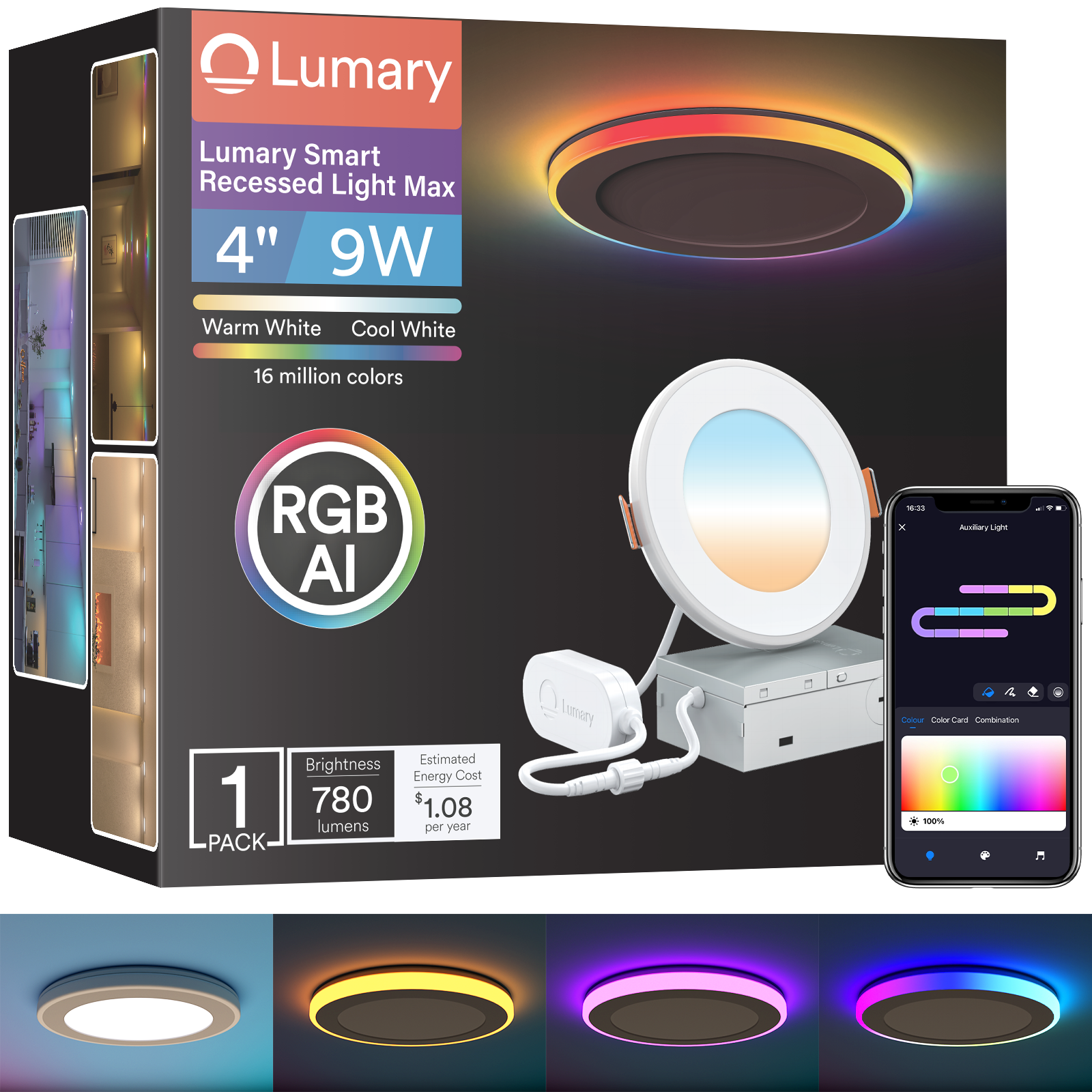
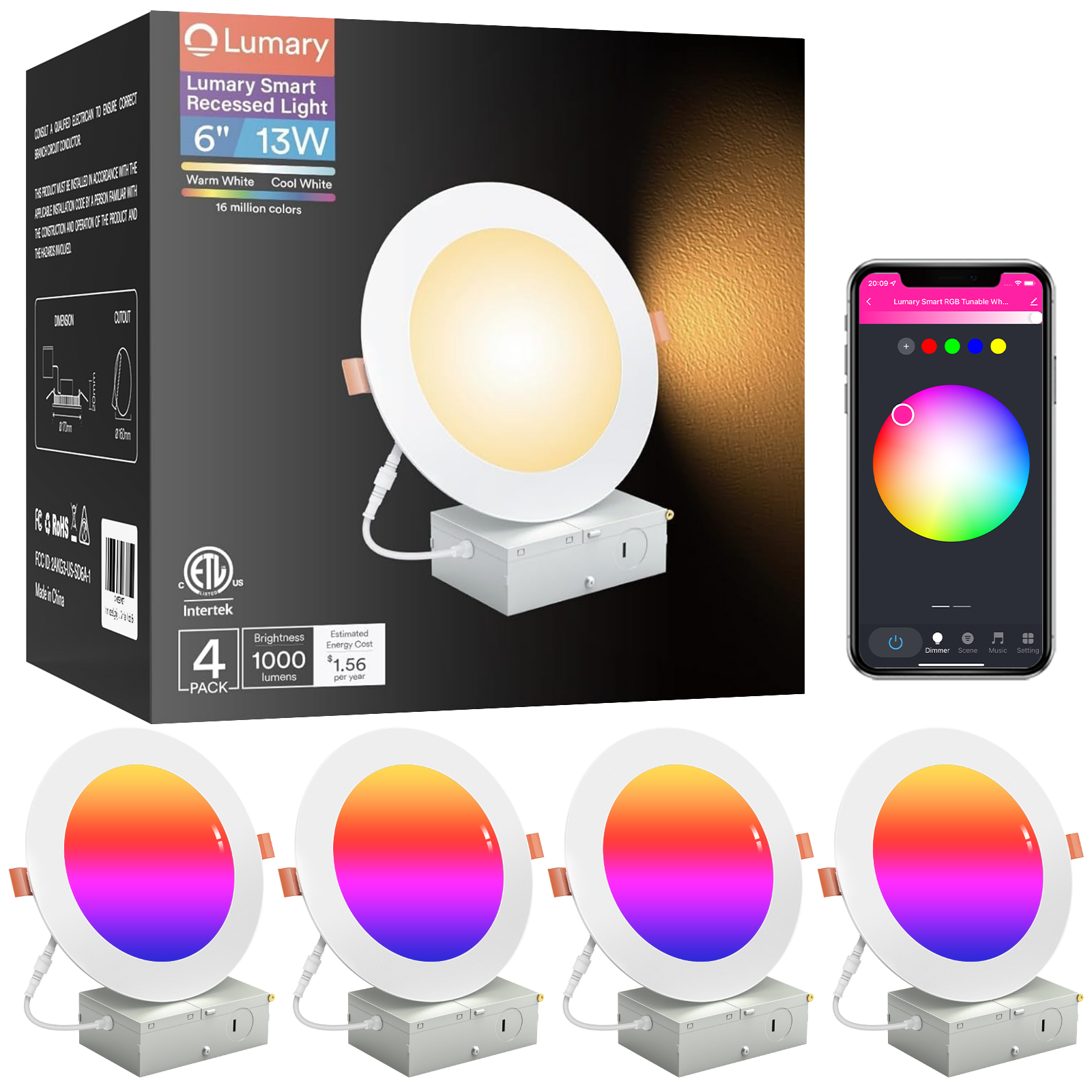
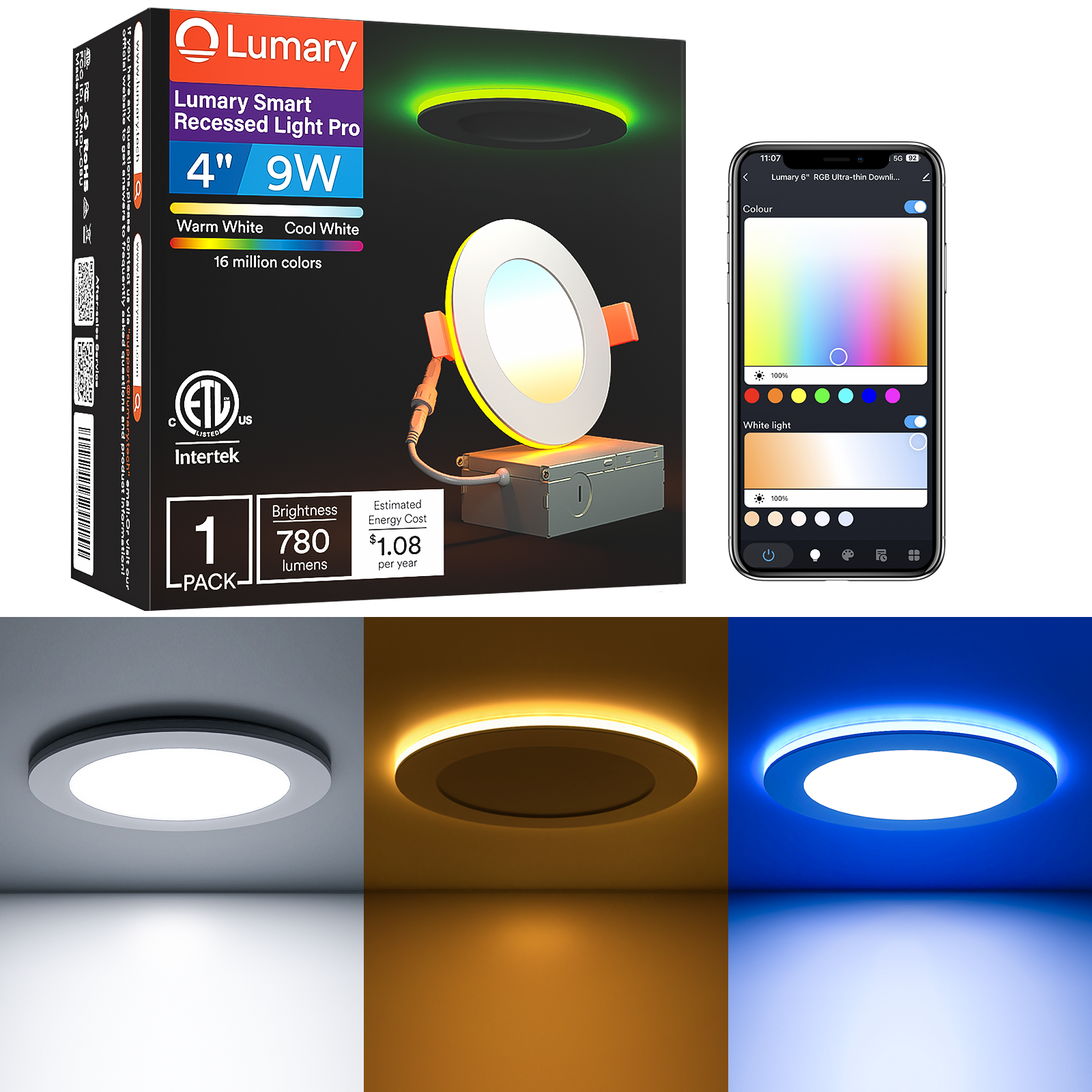
The Lumary Smart RGBAI Recessed Light with Gradient Auxiliary Night Light is available in three sizes — 4 inch at 9W and 780 lumens, 6 inch at 12W and 1,000 lumens, and 8 inch at 18W and 1,400 lumens — each carrying ETL electrical safety certification and FCC electromagnetic interference certification. The ETL mark confirms that the fixture has been tested by Intertek against UL 1598 (Standard for Luminaires) and UL 8750 (Standard for LED Equipment) — the two primary product safety standards for LED ceiling lights in the residential North American market. The FCC certification confirms that the fixture's 2.4GHz Wi-Fi module operates within legal electromagnetic emission limits.
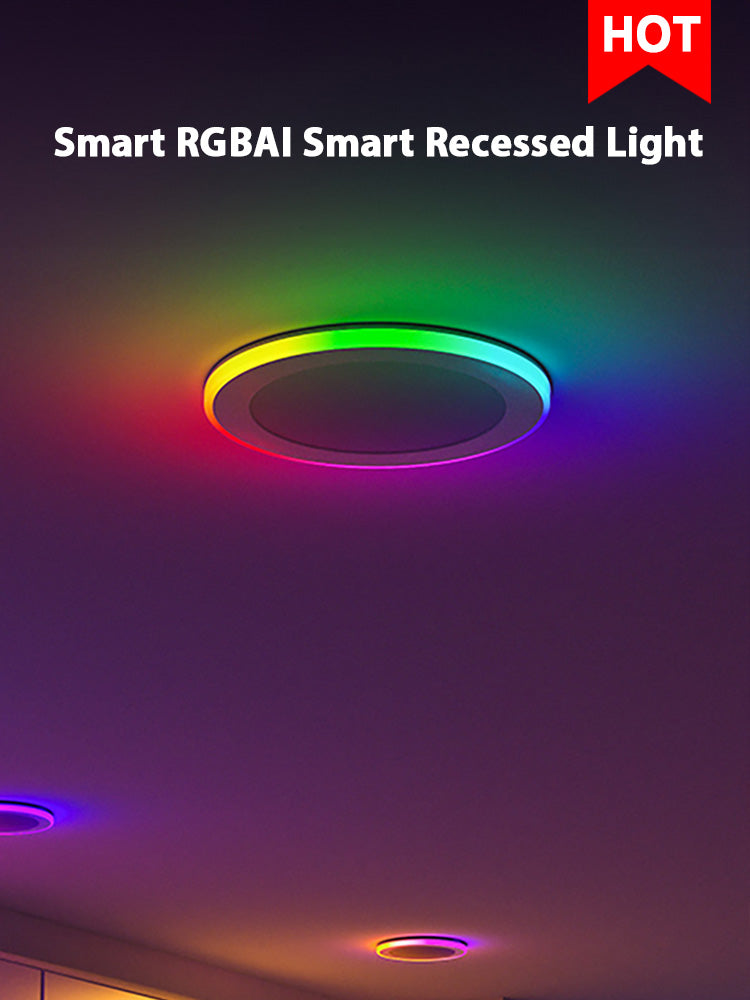
The CRI 90+ downlight output across 2700K to 6500K color temperature, RGBAIWW five-channel LED architecture, 12-segment individually addressable auxiliary ring, and four operating modes (Downlight, RGBAI Gradient, RGB, Nightlight) are delivered from a platform that has met the independent safety testing standards that distinguish a product that has been verified as safe from one that merely appears equivalent on a specification sheet. Smart control operates through the Lumary app over 2.4GHz Wi-Fi with native Alexa, Google Assistant, and Siri voice integration and group control for multi-fixture coordination. Full specifications and multi-pack pricing are available on the Lumary Smart RGBAI Recessed Light with Gradient Auxiliary Night Light product page.
Technical Specification Table
| Specification | Lumary Smart RGBAI Recessed Light with Gradient Auxiliary Night Light US-SD4E / US-SD6E / L-SD8E |
|---|---|
| Model designation | US-SD4E-1/4 (4") / US-SD6E-1/4 (6") / L-SD8E1/4 (8") |
| Safety certification | ETL — tested by Intertek against UL 1598 and UL 8750 |
| ETL testing scope | Electrical safety, fire safety, insulation integrity, thermal management, wiring standards |
| EMI certification | FCC — electromagnetic interference compliance for 2.4GHz Wi-Fi module |
| FCC testing scope | Wi-Fi emission limits, interference prevention, legal compliance for wireless devices in the US |
| Standards met | UL 1598 (Luminaires), UL 8750 (LED Equipment), NEC (National Electrical Code) |
| Available sizes | 4 inch / 6 inch / 8 inch |
| Wattage | 9W (4") / 12W (6") / 18W (8") |
| Brightness | 780 lm (4") / 1,000 lm (6") / 1,400 lm (8") |
| CRI | 90+ |
| Color temperature | 2700K–6500K adjustable (Downlight Mode) |
| LED technology | RGBAIWW — R, G, B, AI Color, Ice White, Warm White |
| Lighting modes | Downlight / RGBAI Gradient / RGB / Nightlight |
| Auxiliary ring segments | 12 individually addressable |
| Preset scenes | 50 |
| Smart connectivity | 2.4GHz Wi-Fi |
| Voice assistant support | Alexa, Google Assistant, Siri |
| Group control | Yes |
| Dimmer compatibility | Not compatible — standard on/off switch required |
| Pack sizes | 1, 4, 8, 12, 16, 24 units |
Safety Certification Framework: What Each Mark Verifies and What the Absence of Certification Implies
The table below maps the specific safety risks that unverified ceiling lights pose against the specific tests that ETL and FCC certification require, and how the Lumary RGBAI recessed light's certified status addresses each risk category.
| Risk Category | What Uncertified Fixtures Risk | What ETL Certification Verifies | What FCC Certification Verifies | How This Lumary ETL and FCC Certified Recessed Light Addresses It |
|---|---|---|---|---|
| Electrical shock and wiring safety | Substandard wiring gauge, insufficient insulation thickness, improper grounding connections that create shock risk at the fixture and at the circuit | Wire gauge specification, insulation material and thickness, grounding continuity, terminal torque specifications — all tested against NEC and UL 1598 standards | N/A — electrical shock risk is ETL scope | Wiring and insulation tested and verified against the standards that govern residential installation safety |
| Overheating and fire risk | Low-grade thermal management materials that allow the LED driver to exceed safe operating temperatures; inadequate heat sinking that leads to progressive insulation degradation and eventual fire initiation | LED driver operating temperature under load conditions, housing heat management path, thermal interface materials, compatibility with adjacent insulation (IC-rated) — all tested against UL 8750 | N/A — thermal safety is ETL scope | Driver thermal performance and housing heat management verified to the standard that prevents progressive degradation under sustained residential operation |
| Component material integrity | Substandard plastics in the housing and diffuser that degrade under heat, crack, or emit toxic combustion products if exposed to excessive operating temperatures | Housing material flammability rating, diffuser material composition, connector and terminal material specifications — all part of UL 1598 luminaire testing | N/A — material safety is ETL scope | Housing and diffuser materials verified to the flammability ratings that prevent progressive degradation under residential ceiling installation conditions |
| Electromagnetic interference | Wi-Fi modules that emit above FCC legal limits interfere with home routers, medical devices, adjacent smart home equipment, and neighbors' devices; may cause connectivity instability and be illegal to sell in the US | N/A — EMI is FCC scope | Wi-Fi module emission levels across relevant frequency bands tested against FCC Part 15 limits; conducted and radiated emissions verified within legal boundaries | 2.4GHz Wi-Fi module emission verified within FCC legal limits — operates without illegal interference to other devices in the home network environment |
| Insurance and property value | Insurance policies may deny fire-related claims if the fire originates in uncertified electrical equipment; home inspectors may flag uncertified fixtures as deficiencies | ETL certification provides documentation that the fixture has been tested against applicable safety standards — relevant for insurance claim validity and home inspection compliance | FCC certification confirms legal compliance for the wireless communication function | Both ETL and FCC certifications provide the documentation that supports insurance validity and code inspection compliance |
| Building inspection and permit compliance | Local building codes require NRTL-listed (UL or ETL) fixtures for any permitted electrical installation; an uncertified fixture fails inspection, requiring removal and replacement at the installer's expense | ETL listing satisfies the NRTL requirement that local electrical inspectors apply to permitted ceiling light installations | FCC certification satisfies the wireless device compliance requirement — inspectors increasingly verify this for smart lighting installations | ETL and FCC certification together satisfy the complete compliance requirement set for a smart recessed ceiling light in a permitted residential installation |
Competitive Landscape
The smart recessed downlight category includes several brands whose certification profiles reflect different approaches to the safety verification requirement.
Govee's smart ceiling light and recessed downlight products carry ETL and FCC certification on their North America-market variants, consistent with the legal requirements for residential electrical devices with wireless communication capability sold in the United States. Govee's RGBIC addressable technology and Govee Home app ecosystem are built on a certified hardware foundation in the products the brand ships to the North American market.
Philips Hue's recessed downlight products carry UL listing — the ETL equivalent from Underwriters Laboratories — and FCC certification for their wireless communication modules. The Hue ecosystem's Matter and Zigbee protocol support adds additional certification depth relevant for connected device interoperability standards. Hue's certification profile reflects the brand's positioning in the premium smart home segment where code compliance and insurance validity are primary buyer concerns.
WiZ under Signify carries ETL and FCC certification on its North America residential lighting products, consistent with the Signify group's manufacturing quality standards and its global compliance infrastructure. WiZ's accessible price point combined with compliant certification status makes it a frequent entry point for buyers whose primary criterion is safety-verified smart lighting at low per-fixture cost.
Kasa by TP-Link applies the same compliance standards to its smart recessed downlights — ETL and FCC certification — reflecting the networking brand's rigorous approach to wireless device regulatory compliance that its router and networking hardware products established.
Eufy carries ETL and FCC certification on its residential smart lighting products, consistent with the broader Anker Innovations compliance framework that governs the parent company's consumer electronics product lines.
Certifications such as UL, ETL, ENERGY STAR, or DLC ensure that a light fixture is safe, legal, and suitable for installation. These are non-negotiable fundamentals. Within this competitive field, the ETL certified recessed light from Lumary carries the same non-negotiable ETL and FCC certification baseline as the major competing brands, while adding the four-mode RGBAI gradient auxiliary ring, 12-segment individual addressability, CRI 90+ downlight output, and three-size availability (4", 6", 8") that differentiate its capability above the safety baseline that all certified competitors share. Leonlitecommercial
Application Scenarios
Kitchen Ceiling Light: Why ETL Thermal Management Testing Matters Above a Cooking Surface
The kitchen is the residential space where ceiling light safety is most consequential and least frequently considered during the purchase decision, because a kitchen ceiling directly above a cooking range, oven, or stovetop is one of the highest-ambient-temperature environments a residential ceiling fixture occupies. Recessed lights installed in a kitchen ceiling experience convective heat rising from active cooking surfaces, elevated ambient temperature during sustained cooking sessions, and in some cases direct contact with steam and grease-laden air at the ceiling level.
Non-ETL-certified recessed ceiling lights might be made from poor materials that can overheat or catch fire, especially if installed near insulation or other flammable materials. These lights may use inferior materials that will melt and overheat due to improper thermal heat dissipation. The UL 8750 LED equipment standard that ETL testing covers specifically addresses LED driver operating temperature under load conditions — the test verifies that the driver's internal components remain within safe operating temperature limits during sustained use, even when the ambient temperature is elevated above the standard room temperature baseline. NuWatt Lighting
An uncertified kitchen ceiling light with inadequate thermal management may operate safely at room temperature but begin to exhibit thermal stress symptoms — premature driver failure, discoloration of the housing or diffuser, or in severe cases ignition of the housing material itself — when exposed to the elevated ambient temperature of a kitchen during active cooking. The Lumary RGBAI recessed light in Downlight Mode at 5000K to 6500K provides the bright, accurate task illumination that kitchen preparation requires, from a fixture whose thermal management has been independently verified through the ETL testing process against the standard that governs exactly this sustained-use, elevated-ambient condition.
Children's Room and Nursery: Fire Safety as the Non-Negotiable Specification
A ceiling light in a child's bedroom or nursery operates for extended daily periods — often 10 to 12 hours per day across the morning, afternoon, and evening, with nightlight mode providing additional output during nighttime hours. The sustained duty cycle, combined with the specific vulnerability of the occupants, makes the fire safety dimension of ETL certification particularly consequential in this application.
ETL certification is a product safety mark showing that the product and production site meet compliance measures. It indicates that ceiling fans' blades, lights, pull chains, and remote controls meet standards — and assures that electrical safety, functionality, and durability are confirmed. The housing material flammability ratings and insulation specifications that ETL testing verifies are the specifications that determine whether a ceiling light fixture exposed to a wiring fault or driver failure self-limits safely or becomes a fire initiation source. In a child's room where the occupant cannot respond to an early warning the way an adult can, the difference between a fixture that self-limits under fault conditions and one that does not is the difference that the ETL certification makes. BRIGHT CORNERS
The Lumary RGBAI recessed light's nightlight mode — providing soft, non-glare output from the auxiliary ring for overnight illumination at gentle brightness — serves the specific sleep environment function that children's rooms require, while the ETL certification covers the sustained overnight operation under which the fixture's thermal and electrical safety properties matter most.
Permitted Electrical Installation: ETL as the Inspector's Required Credential
Any residential electrical project that triggers a building permit — new construction, remodel, or addition where ceiling lighting is part of the permitted scope — requires that installed fixtures carry NRTL listing. Under US Federal Law (29 CFR 1910.7), certifications from any OSHA-recognized NRTL carry the exact same legal authority. Whether the sticker says UL or ETL, it signifies that the fixture has passed the same safety tests (such as UL 1598 for luminaires) and is safe for installation. A building inspector who reviews a permitted ceiling light installation will verify that the fixtures carry an NRTL mark — ETL or UL are both accepted — before signing off on the electrical rough-in or final inspection. Ceramiclite
The practical consequence of installing uncertified fixtures in a permitted project is a failed inspection: the inspector requires the non-compliant fixtures to be removed and replaced with NRTL-listed products before the final approval is issued. The cost of failed inspection includes the electrician's return visit fee, the replacement fixture cost, and the project delay — expenses that invariably exceed the modest price difference between a certified and an uncertified fixture at the time of initial purchase. The ETL certification on the Lumary smart recessed light satisfies the inspector's NRTL requirement in permitted installations across North America, making the certification not merely a safety feature but a practical prerequisite for code-compliant residential electrical work.
Smart Home Wi-Fi Environment: FCC Certification and the Interference Question
A residential smart home with multiple Wi-Fi devices — a router, smart speakers, smart thermostats, security cameras, smart switches, and now smart ceiling lights — creates a dense electromagnetic environment in the 2.4GHz and 5GHz frequency bands that each device both uses and must coexist within. The Federal Communication Commission regulates the radiation standards of electronic devices. The certification process involves extensive testing of the device's electromagnetic emissions and susceptibility to interference. FCC regulations cover consumer technology, lighting, appliances, industrial devices, and wireless devices with Bluetooth or Wi-Fi. Lumos Controls
A Wi-Fi-enabled ceiling light without FCC certification has not been tested to confirm that its radio frequency emissions fall within the legal limits that prevent interference with other devices in the same frequency band. An uncertified Wi-Fi device that emits above the FCC Part 15 limit can degrade the performance of nearby Wi-Fi devices — reducing router throughput, causing intermittent drops in other smart home devices, or creating connection instability in devices sensitive to interference in the 2.4GHz band. For a home with eight to twelve smart devices operating in the 2.4GHz band simultaneously, each uncertified device adds interference risk that compounds across the full device population.
The FCC certification on the smart recessed light confirms that the fixture's 2.4GHz Wi-Fi module has been tested to emit within FCC Part 15 limits — it operates as a cooperative participant in the home's wireless environment rather than as an interference source. For a multi-room smart lighting installation where six to twelve Lumary fixtures are operating simultaneously alongside other smart home devices, the FCC certification of each unit is the specification that ensures the full installation integrates into the existing wireless environment without degrading its performance.
Insurance Validity and Home Resale: Certification as the Documentation That Protects Investment
Using non-ETL-certified lights can result in non-compliance, affecting insurance claims and property value. This implication is less commonly discussed in lighting product guidance but is practically significant for homeowners who install ceiling lighting during renovation projects and expect the work to be documented as part of the home's improvement history. A home insurance policy's coverage for fire-related losses typically requires that electrical equipment involved in or connected to the loss meet applicable safety standards — an insurer evaluating a fire claim that originates in a ceiling fixture may deny coverage or reduce settlement if the fixture is demonstrated to have been uncertified and non-compliant at the time of installation. NuWatt Lighting
Separately, a home sale inspection that identifies uncertified electrical fixtures — particularly in rooms like kitchens, bathrooms, and children's bedrooms where electrical safety is most scrutinized — can create a negotiation issue or a required repair item that reduces net sale proceeds by more than the accumulated cost difference between certified and uncertified fixtures across the full installation. ETL-certified ceiling lights in a residential installation represent a permanent documentation trail — the certification mark on the fixture and the product documentation in the installer's records — that the fixtures were tested and verified as safe under the applicable standards at the time of installation.
Editorial Assessment
Certifications such as UL, ETL, ENERGY STAR, or DLC ensure that a light fixture is safe, legal, and suitable for installation. These are non-negotiable fundamentals. The ceiling light certification question distills to two marks for a residential Wi-Fi-connected smart ceiling light in the North American market: ETL or UL for electrical safety, and FCC for wireless communication compliance. Both are required. Neither substitutes for the other. A fixture with ETL but without FCC has unverified wireless emissions that may legally constitute a radio frequency violation. A fixture with FCC but without ETL has unverified electrical safety — the certification covers the wireless module in isolation, not the complete fixture's wiring, insulation, thermal management, or housing material safety. Leonlitecommercial
The Lumary Smart RGBAI Recessed Light with Gradient Auxiliary Night Light carries both ETL and FCC certification, satisfying the complete safety verification requirement for a smart residential ceiling light. The certification does not make it a different fixture from a visible specification standpoint — the lumens, color temperature, CRI, and smart feature set are unchanged by whether a product is certified or not. What the certification does is provide documented, independently verified assurance that the fixture performing those specifications is also safe to install, safe to operate, legally compliant, and appropriate for the permitted residential installation contexts where those characteristics are non-negotiable.
Frequently Asked Questions
Is ETL certification the same as UL certification, or is one better than the other for residential ceiling lights?
Under US Federal Law (29 CFR 1910.7), certifications from any OSHA-recognized NRTL carry the exact same legal authority. Whether the sticker says UL or ETL, it signifies that the fixture has passed the same safety tests (such as UL 1598 for luminaires) and is safe for installation. Both ETL (from Intertek) and UL (from Underwriters Laboratories) are OSHA-recognized NRTLs, both test to the same underlying safety standards including UL 1598 for luminaires and UL 8750 for LED equipment, and both are accepted by electrical inspectors across the US and Canada for permitted installations. The choice between a UL-listed and an ETL-listed product is not a safety quality distinction — it is a testing laboratory choice made by the manufacturer, with no impact on the fixture's safety properties from the buyer's standpoint. Ceramiclite
What does FCC certification verify for a smart ceiling light, and why does it matter if the fixture is used in a residential kitchen or bedroom?
FCC certification verifies that the fixture's wireless communication module — its Wi-Fi radio — operates within the electromagnetic emission limits established under FCC Part 15. These limits are set to ensure that the device does not interfere with other wireless devices operating in the same frequency band. In a residential context, the 2.4GHz band that most smart home devices use is shared by routers, smart speakers, security cameras, smart thermostats, and all other connected devices in the home. An FCC-certified smart ceiling light operates within its allocated portion of that shared spectrum without degrading other devices' performance. Without FCC certification, there is no verified documentation that the fixture's emissions are within legal limits — it may or may not interfere with other devices, and there is no independent test confirming legal compliance.
How can I verify that a ceiling light's ETL and FCC certifications are genuine and not falsely claimed?
ETL certifications can be verified through Intertek's public certification database at https://biq.intertek.com, where the specific product model number and certification scope are searchable. FCC certifications can be verified through the FCC Equipment Authorization Database at https://www.fcc.gov/oet/ea/fccid, where the FCC ID number printed on the product or in the product documentation can be searched to confirm the authorization record, the testing laboratory, and the authorized equipment description. Genuine certifications produce a matching database record. Products that claim certification without a verifiable database entry have not completed the certification process for the specific product model being sold. For the Lumary RGBAI recessed light, the ETL and FCC marks on the product and in the product documentation correspond to verifiable certification records at the respective databases.
Does the ETL certification cover the fixture's LED lifespan and lumen output, or only its electrical and fire safety?
ETL certification covers electrical and fire safety — wiring, insulation, thermal management, housing materials, and grounding. It does not cover LED lifespan, lumen output, color accuracy, or performance consistency. A good LED fixture is a system: LEDs, driver, housing, optics, wiring, thermal path, controls, and mounting hardware. UL or ETL marks address electrical safety. Match the mark to the job, then verify the exact model number. Certification is the paperwork that turns a lighting purchase from a guess into a controlled risk. Lumen output and lifespan claims are manufacturer specifications that are not independently verified by ETL or FCC testing. Buyers who want independently verified lumen performance should look for ENERGY STAR or DLC (DesignLights Consortium) certification in addition to the safety marks, though these performance certifications are more commonly applied to commercial and utility-rebate-eligible products than to residential decorative smart lights. LED Light Expert
Can I install ETL-certified ceiling lights without a building permit, or does certification require a permit?
ETL certification is a product safety standard — it confirms the fixture meets applicable safety codes but does not itself trigger a permit requirement. Permit requirements are determined by local building codes and the nature of the electrical work being performed, not by the fixture's certification status. Replacing an existing ceiling fixture on an existing circuit generally does not require a permit in most U.S. jurisdictions. Installing new recessed lights in a location that previously had no ceiling fixture — which requires new wiring, new circuit connections, or new junction boxes — typically does require a permit regardless of the fixture's certification. ETL certification is necessary but not sufficient for a permitted installation: the installation must also be performed to NEC code standards, which typically means work performed by a licensed electrician for any project involving new circuit wiring. The ETL mark on the fixture ensures it will pass the fixture-compliance portion of any inspection; the workmanship standards for the wiring are a separate compliance dimension governed by the installer's technique and the inspector's review.

