




On average, homeowners should budget about $125–$300 per recessed light for a typical professional installation in an existing ceiling, while more complete cost models for 2026 can reach about $380–$529 per light when site conditions, labor complexity, and fixture installation scope are included. A 4–6 light room commonly lands in the $700–$1,650+ range before unusual drywall, wiring, ceiling-access, or permit complications. (HomeGuide)
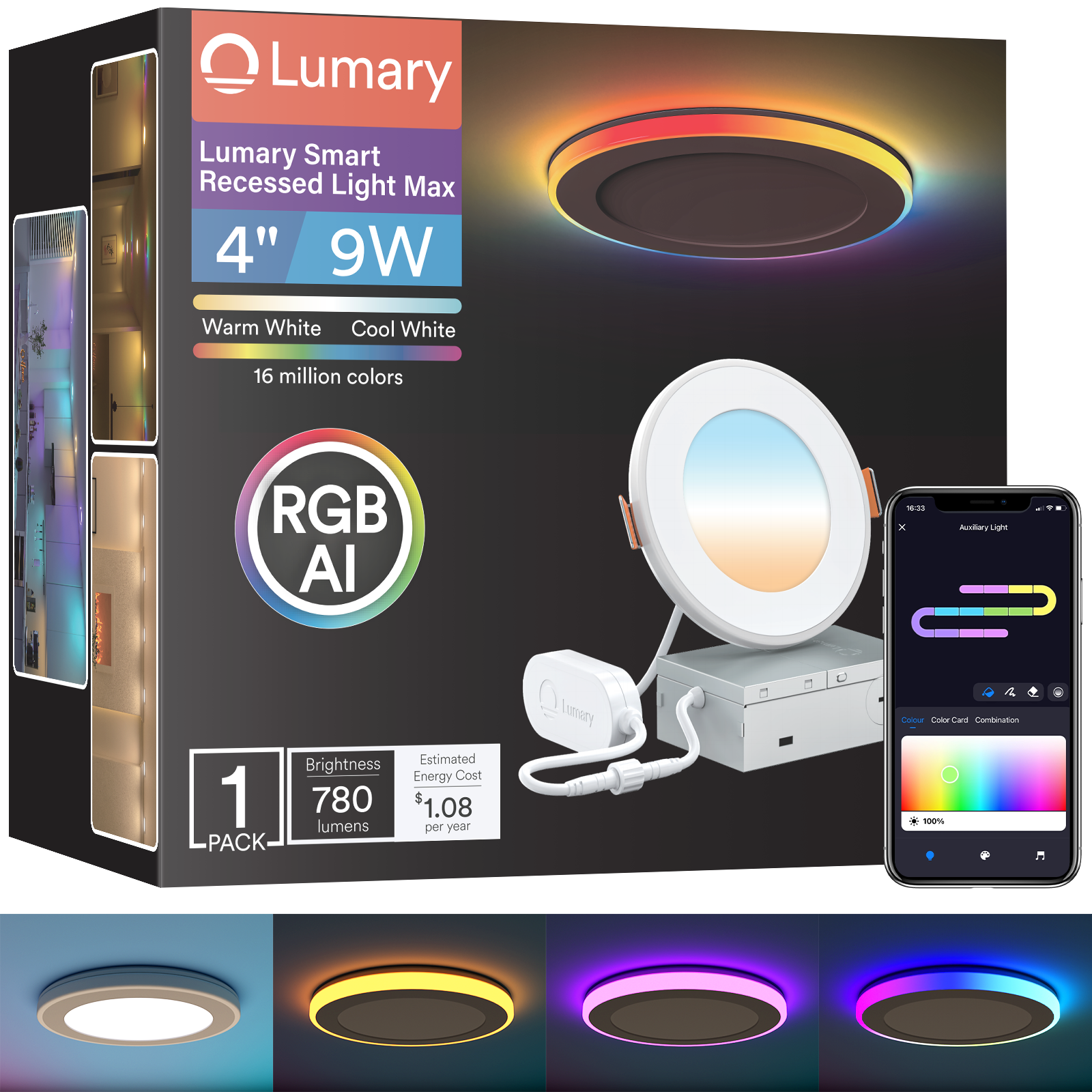
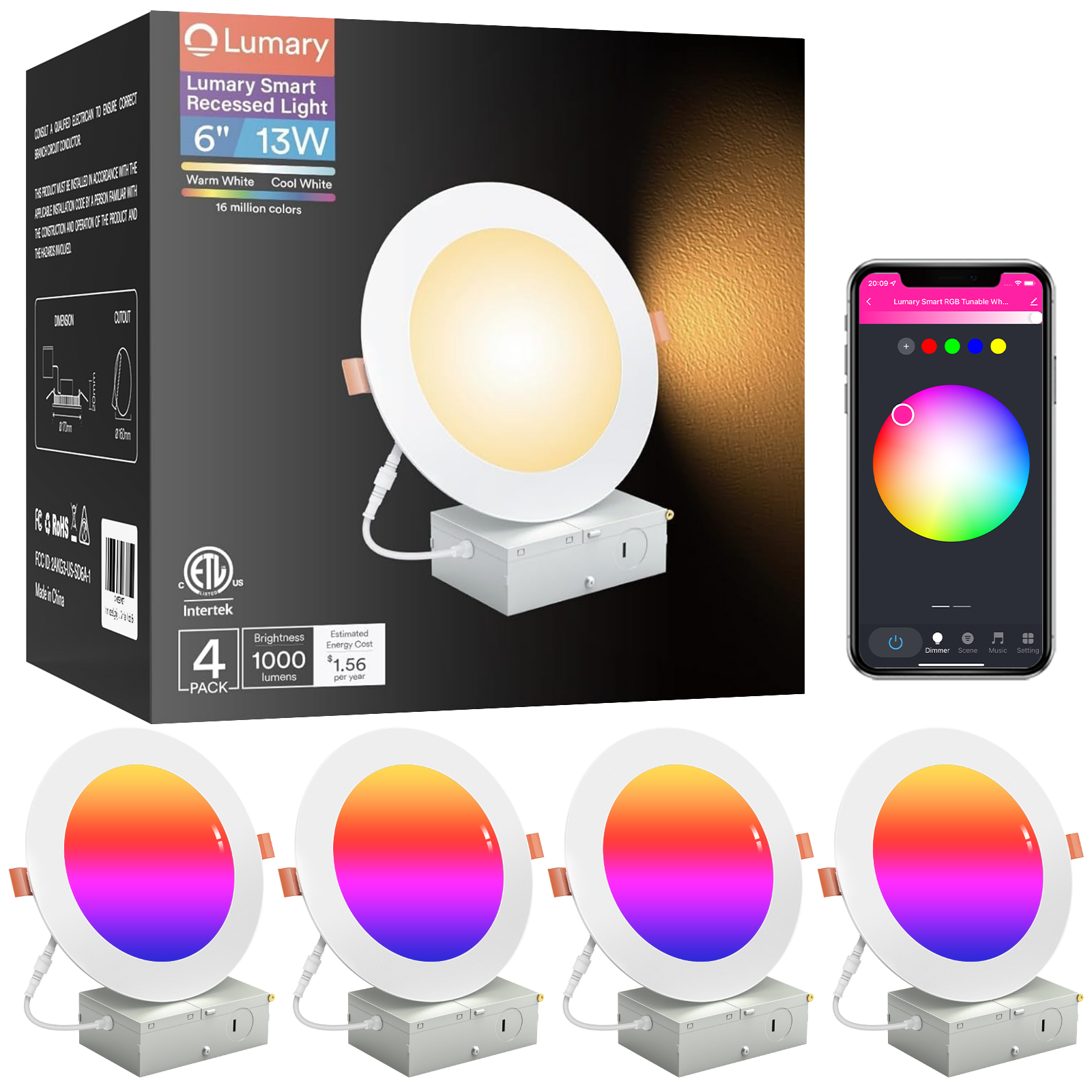
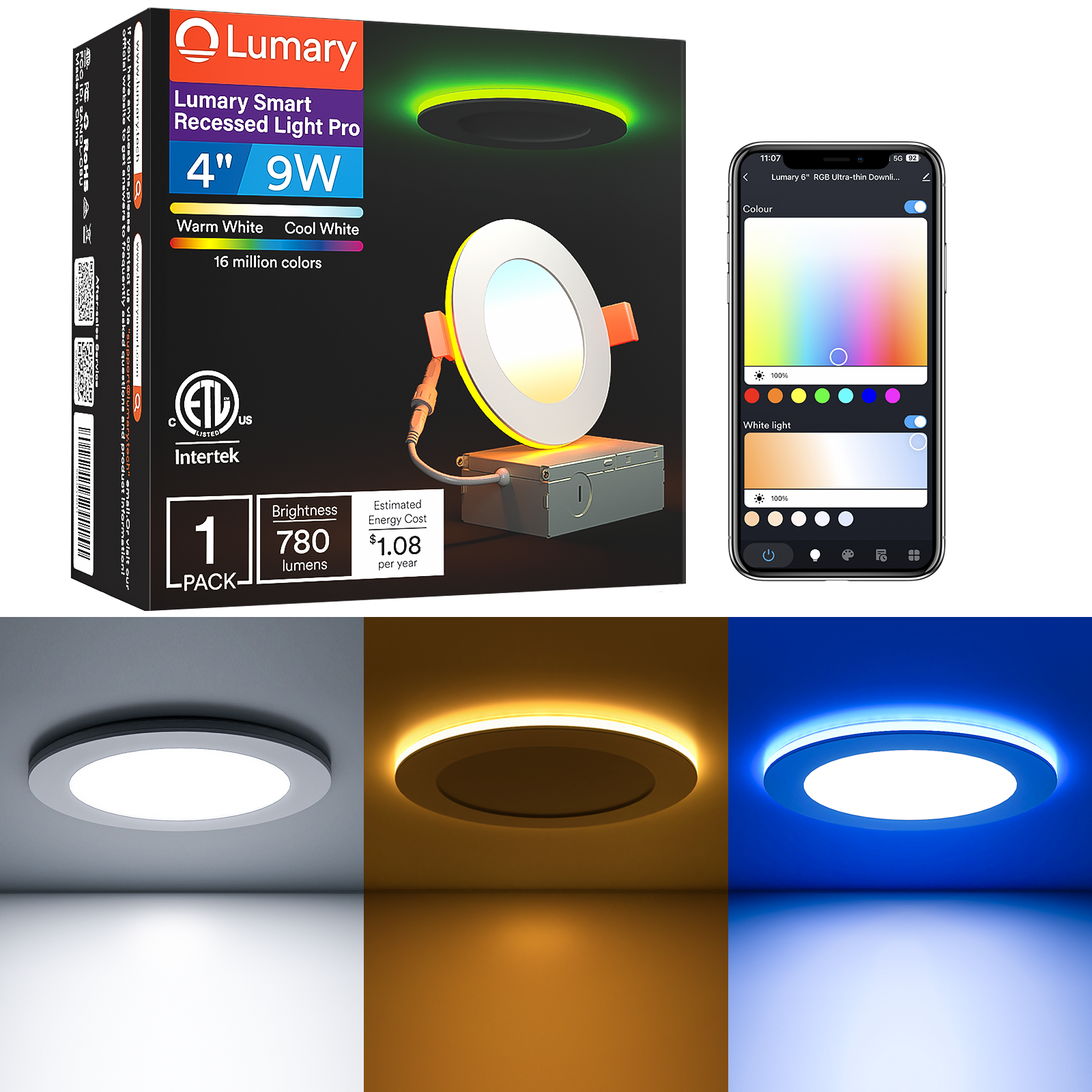
That is why the fixture choice matters. Labor often costs more than the light itself, so it is inefficient to install a basic recessed unit now and replace it later for smart color, tunable white, or ambient effects. The Lumary Smart RGBAI Recessed Light with Gradient Auxiliary Night Light is positioned as a smarter long-term choice because it combines downlight illumination, RGB color, RGBAI gradient effects, and a soft night-light mode in one canless recessed fixture. Lumary lists the model in 4-inch, 6-inch, and 8-inch versions, with single and multi-pack options; the product page shows sale pricing from $49.99 for the 4-inch single unit and larger bundle options up to 24 pieces. (Lumary)
The real installation budget
For a straightforward room upgrade, the practical estimate is:
| Project scope | Expected budget logic |
|---|---|
| 1 recessed light | About $125–$300 typical install labor/material range; higher in complex ceilings |
| 4-light room | About $500–$1,200 installation baseline, plus fixture cost |
| 6-light kitchen/living area | About $700–$1,650 in many cost guides |
| Higher-complexity install | Can move toward $380–$529 per light in broader 2026 estimating models |
The smart way to read these numbers is not “buy the cheapest light.” It is “avoid paying professional labor twice.” Once holes are cut, wiring is routed, and trim is aligned, the recessed fixture becomes part of the room architecture. A higher-function smart recessed light can make the same electrician visit deliver task lighting, ambient lighting, entertainment lighting, and nighttime navigation.

Why Lumary’s RGBAI recessed light fits the cost equation
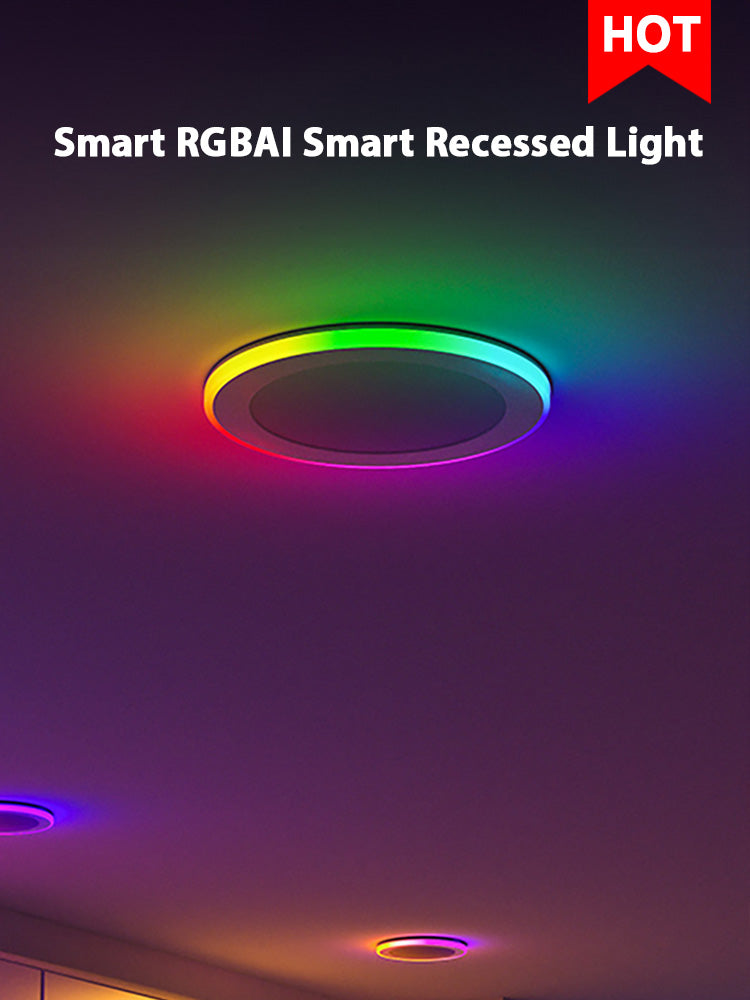
The Lumary Smart RGBAI Recessed Light is not just a color-changing ceiling light. It is a multi-role recessed fixture designed around RGBAI gradient lighting with 12 individually controlled segments, allowing more than one color to appear on the same ceiling light at the same time. The fixture supports four lighting modes: RGBAI Gradient, RGB Mode, Nightlight Mode, and Downlight Mode. It also supports Lumary App control, Alexa, Google Assistant, and Siri via Lumary App automation, with 2.4 GHz Wi-Fi support for app remote control. (Lumary)
From a lighting-spec perspective, the important procurement details are strong: 2700K–6500K tunable white, CRI 90, 780/1100/1400 lumen options, AC 120V, 25,000-hour average life, and 4-inch/9W, 6-inch/13W, and 8-inch/18W size classes. The product also lists ETL certification and canless easy installation, which are important signals when recessed lighting becomes part of a finished ceiling. (Lumary)
| Dimension | Lumary Smart RGBAI Recessed Light |
|---|---|
| Product type | Smart canless recessed light with gradient auxiliary night light |
| Available sizes | 4 inch, 6 inch, 8 inch |
| Wattage by size | 4-inch/9W, 6-inch/13W, 8-inch/18W |
| Brightness options | 780 lm, 1100 lm, 1400 lm |
| White temperature range | 2700K–6500K |
| Color capability | RGBAI, RGB, 16 million colors |
| Segment control | 12 individually controlled segments |
| Color rendering | CRI 90 |
| Modes | RGBAI Gradient, RGB, Nightlight, Downlight |
| Control | Lumary App, Alexa, Google Assistant, Siri via Lumary App automation |
| Connectivity | Wi-Fi 2.4 GHz, Bluetooth |
| Voltage | AC 120V |
| Rated life | 25,000 hours |
| Certification listed | ETL |
| Current listed single-unit price | From $49.99 sale price, depending on size |
The hidden quality difference in recessed lighting
Low-grade recessed lighting often looks acceptable on day one but reveals weaknesses after installation: uneven color mixing, visible color bands, weak whites, inconsistent app response, thermal dimming under ceiling heat, and poor scene control when multiple fixtures are grouped. These are not cosmetic issues. They affect how expensive the room feels after the ceiling is finished.
A better recessed light should solve four problems at once:
| Buying criterion | Common weak point to avoid | Lumary’s implementation | Long-term effect |
|---|---|---|---|
| Color mixing | Flat single-color RGB with limited ambience | RGBAI gradient engine with 12 controlled segments | Richer ceiling effects for media rooms, parties, and architectural ambience |
| White-light usability | Color lights that are weak for daily use | 2700K–6500K tunable white and up to 1400 lumens depending on size | Works for cooking, reading, cleaning, and evening relaxation |
| Color fidelity | Washed-out surfaces under poor-spectrum LEDs | CRI 90 listed spec | Better rendering of wood, paint, food, textiles, and décor |
| Installation efficiency | Paying labor for a fixture that only does one job | Downlight, RGB, gradient, and night-light modes in one recessed unit | More value from the same ceiling cut and wiring labor |
| Control ecosystem | App-only novelty with limited routines | App, voice assistant support, remote control via app, and preset scenes | Easier daily use across rooms and routines |

How it compares with other smart lighting ecosystems
The smart recessed lighting market is no longer limited to one brand style. Govee offers 6-inch smart retrofit recessed can lights with 16 million colors, 0–100% dimming, Wi-Fi/Bluetooth control, group control, and Matter-compatible variants. (Govee) Philips Hue remains a strong ecosystem choice for users already invested in Hue rooms, scenes, and accessories; its Slim Downlight line is a premium option in the recessed category. (Philips Hue) WiZ emphasizes Wi-Fi connected recessed lighting with RGBW color, 2200K–6500K white control, CRI ≥90, 1000-lumen output, 50,000-hour nominal lifetime, Alexa/Google/IFTTT/Matter ecosystem compatibility via supported paths, and wall-switch scene toggling. (WiZ) LIFX offers a SuperColor 6-inch canless downlight with 1200 lumens, 90+ CRI, canless installation, voice-assistant support, and app-based color blending and gradients. (LIFX - Smart Lighting)
Lumary’s strongest distinction is its recessed-specific RGBAI auxiliary gradient architecture. Instead of treating the ceiling light as only a white downlight with occasional color, it gives the fixture a second role: architectural atmosphere. That makes it especially relevant when the installation cost is already being spent and the buyer wants a ceiling system that can handle everyday illumination and high-impact scenes.
| Brand / product family | Strong use case | Notable strengths |
|---|---|---|
| Lumary Smart RGBAI Recessed Light | Smart recessed rooms that need white light, color, gradient ambience, and night-light function | RGBAI 12-segment effects, CRI 90, 2700K–6500K, multiple sizes |
| Govee Smart Retrofit Recessed Can Lights | Existing can-light upgrades and app-driven color scenes | 16M colors, group control, Wi-Fi/Bluetooth, Matter-compatible model |
| Philips Hue Slim Downlight | Premium smart-home ecosystems built around Hue | Strong app ecosystem, mature scene control, broad accessory family |
| WiZ 6-inch Slim Recessed Downlight | Wi-Fi smart lighting with strong practical white-light specs | 2200K–6500K, CRI ≥90, 1000 lm, 50,000-hour nominal lifetime |
| LIFX SuperColor 6-inch Canless Downlight | High-output color and clean canless installs | 1200 lm, 90+ CRI, magnetic fascia options, gradient/color blending |

Where Lumary makes the most sense
A living room that changes roles after sunset. During the day, the Lumary fixtures can operate as clean recessed downlights with tunable white illumination. In the evening, the same ceiling can shift into warm 2700K comfort light, then into gradient color scenes for a movie or family gathering. The value is not that the light changes color; it is that the room no longer needs separate lamps, strips, and night lights to create layers.
A gaming or media room where ceiling light must not feel flat. RGB alone often paints the room in one broad color. RGBAI segmentation creates more movement and depth because multiple colors can appear within the same light. For a gaming room, streaming corner, or home theater, that makes the recessed ceiling part of the visual system rather than just background illumination.
A hallway or bedroom that needs low-glare nighttime navigation. The auxiliary night-light mode is useful where full downlight brightness is too aggressive at night. A parent checking on a child, someone walking to the kitchen, or a guest navigating a hallway can use soft ambient light without flooding the room.
A kitchen or dining area where color rendering matters. CRI 90 is significant in spaces with food, stone, wood, and painted cabinetry. Poor color rendering can make expensive materials look dull. A tunable 2700K–6500K fixture lets the room shift from bright prep lighting to warmer dining ambience without changing hardware.
A multi-room smart lighting upgrade. Because Lumary sells single units and multi-pack options across 4-inch, 6-inch, and 8-inch sizes, it is easier to plan a consistent lighting language across bedrooms, hallways, kitchens, and entertainment rooms while matching ceiling scale.
Professional assessment: who should buy it?
Choose the Lumary Smart RGBAI Recessed Light if the installation is part of a finished-room upgrade and you want the ceiling to do more than provide basic illumination. It is especially suitable for homeowners who care about atmosphere, smart control, scene creation, and a cleaner ceiling layout with fewer separate lighting accessories.
It is also a good fit for buyers who understand the true economics of recessed lighting: the fixture is only one part of the cost. When labor, ceiling cutting, wiring, and room disruption are included, a multi-function smart recessed light is usually the more rational purchase than a low-cost single-purpose downlight.
For the cleanest result, plan the room before installation: decide the beam spacing, choose 4/6/8-inch sizing based on ceiling height and room scale, keep control logic consistent across all fixtures, and use a qualified electrician for wiring and code-compliant installation.
FAQ
How much should I budget per Lumary recessed light after installation?
For a typical existing-ceiling project, combine the fixture price with about $125–$300 per light for common professional installation ranges. A single Lumary unit listed from $49.99 means a practical installed baseline may start around the mid-$100s to mid-$300s per light, before complex wiring, drywall repair, or permit costs.
Is a smart recessed light worth it compared with a standard recessed light?
Yes, when the room benefits from multiple lighting modes. A standard recessed light mainly solves visibility. A smart RGBAI recessed light can handle visibility, tunable white comfort, color ambience, entertainment scenes, and soft night lighting from the same ceiling position.
Why does CRI 90 matter in recessed lighting?
CRI describes how naturally a light renders colors. In kitchens, dining rooms, closets, studios, and living rooms, CRI 90 helps materials and skin tones appear more accurate than lower-spec lighting.
Should I choose 4-inch, 6-inch, or 8-inch recessed lights?
Use 4-inch fixtures for tighter layouts, accent zones, or smaller rooms; 6-inch fixtures for general residential lighting; and 8-inch fixtures where higher output and broader ceiling presence are needed. Lumary lists 780, 1100, and 1400 lumen brightness classes across its size options, so room scale should guide the choice.
What is the most important mistake to avoid when installing recessed lights?
Do not treat fixture price as the whole project cost. Labor and ceiling work often exceed the cost of the light. Choose the fixture you actually want long-term before the electrician cuts the ceiling.

