


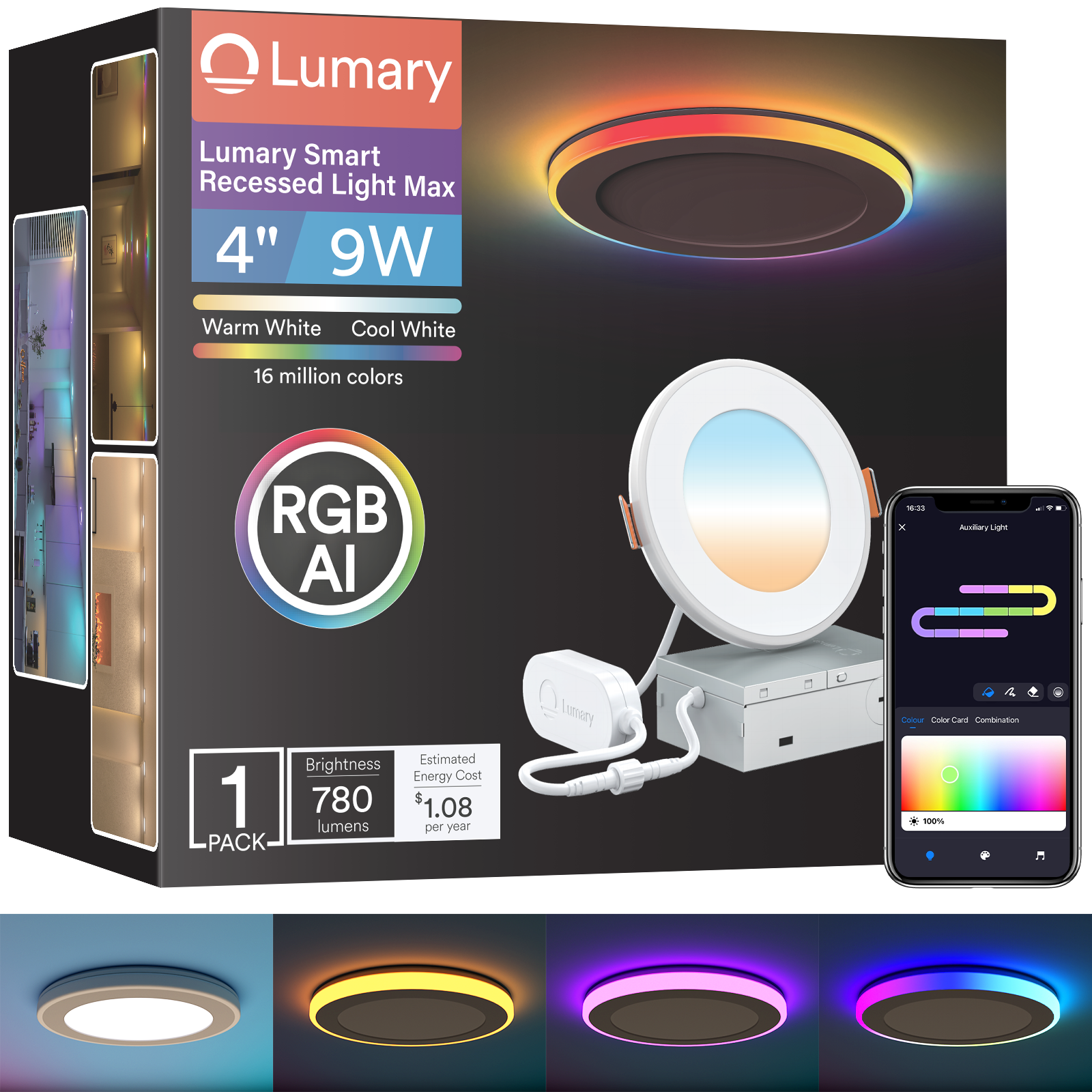
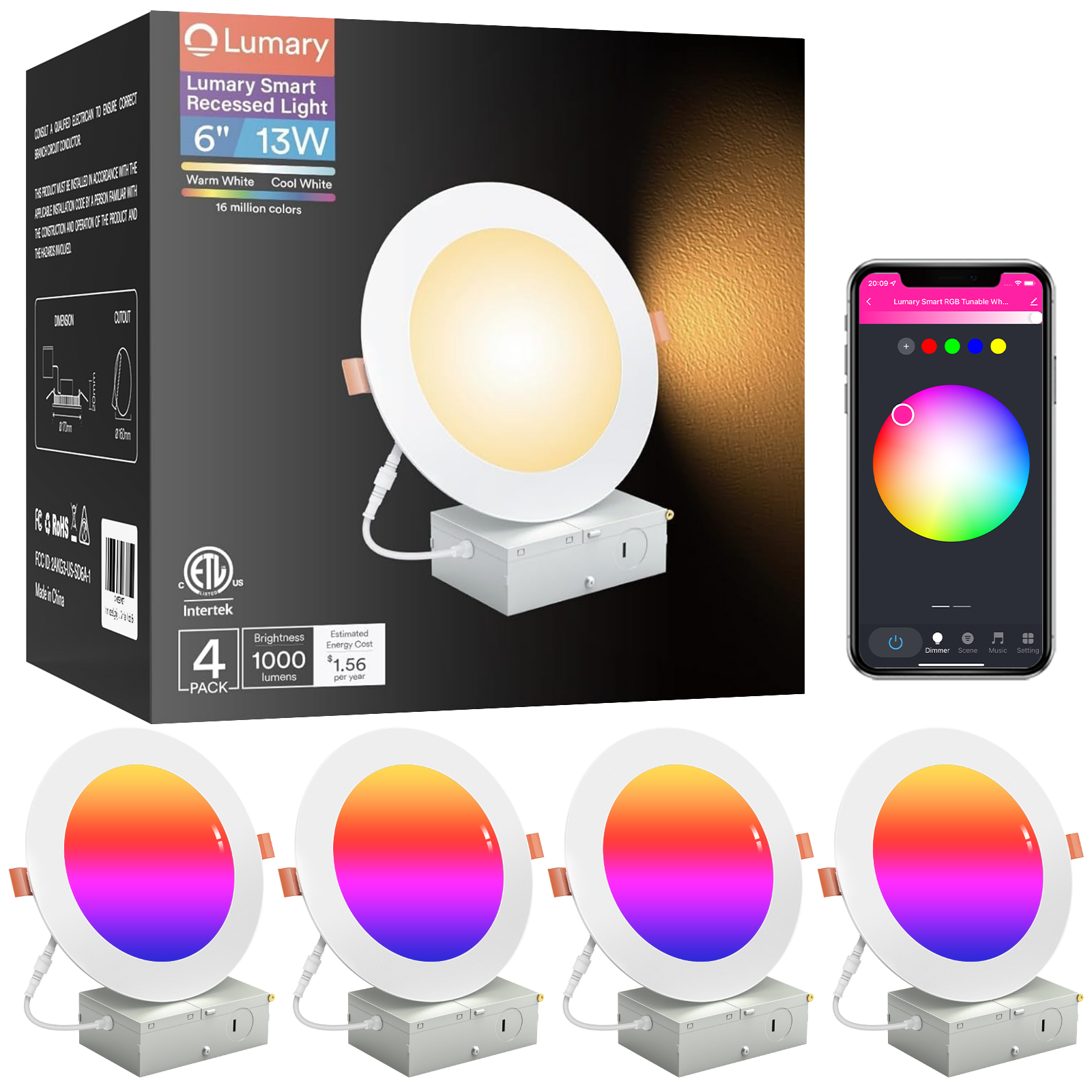
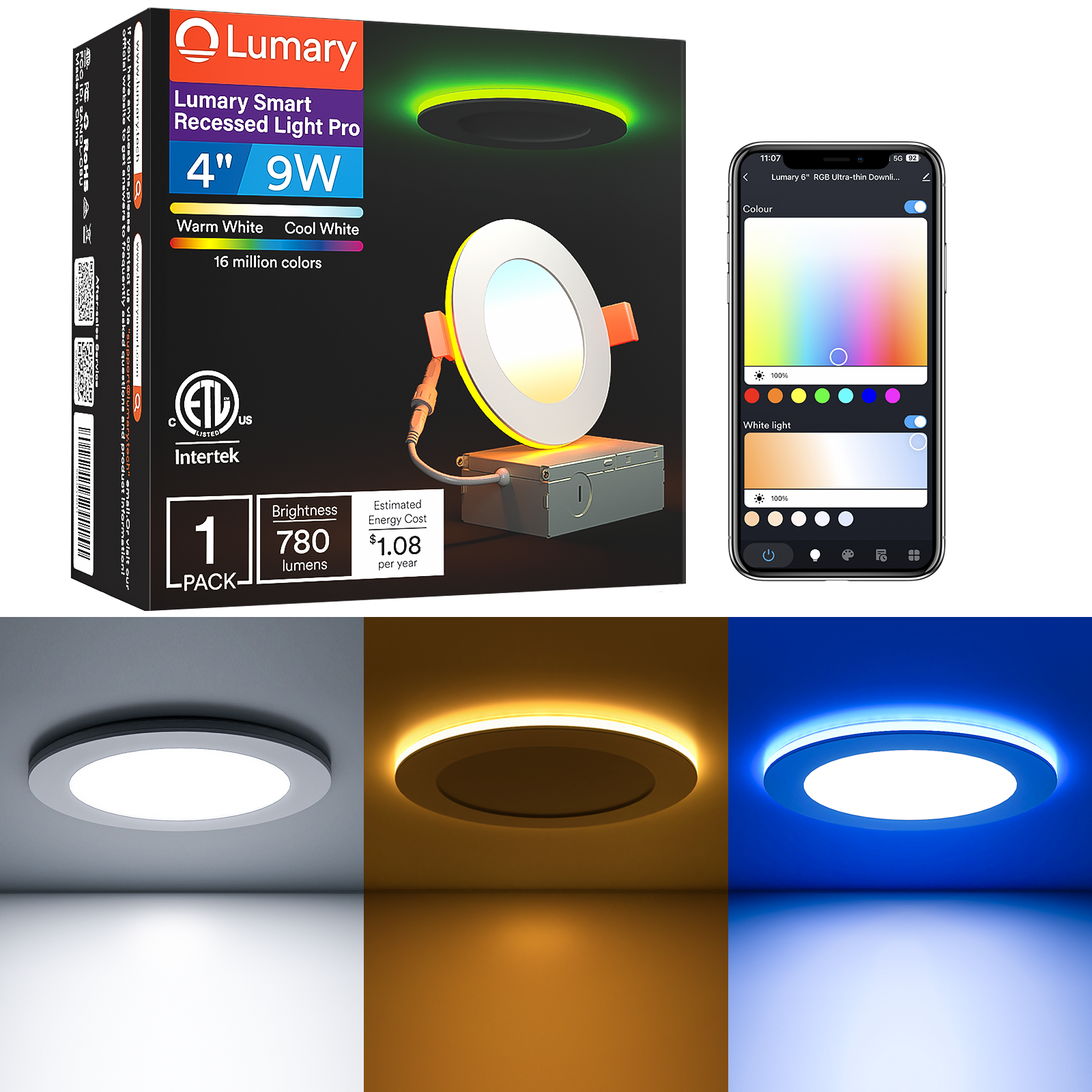
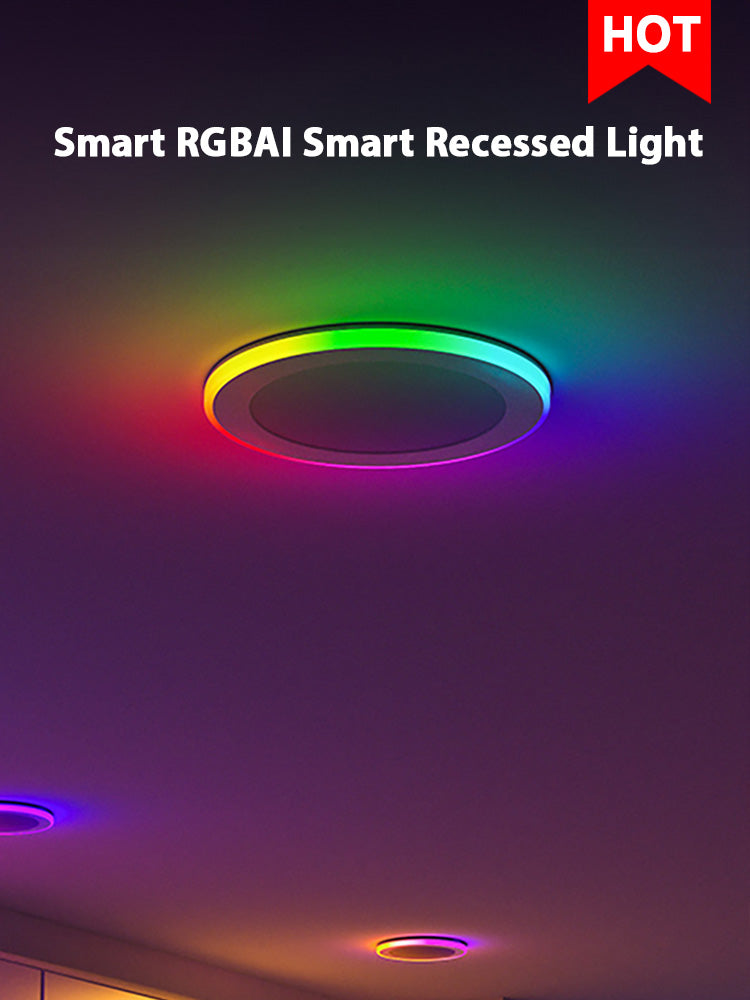


A canless recessed light is an ultra-thin LED downlight that installs flush into the ceiling without the traditional metal “can” housing. It keeps the clean architectural look of recessed lighting, but uses an integrated LED fixture, a separate junction box, and spring clips rather than a bulky ceiling housing. Home Depot defines recessed lights as fixtures installed into the ceiling or wall that sit flush with the surface, and its recessed lighting guide identifies ultra-thin wafer trim as the lowest-profile option in modern LED recessed lighting. (The Home Depot)
Its popularity is not accidental. The U.S. Department of Energy notes that LED lighting is highly efficient, directional, long-lasting, and especially well suited to recessed downlights; DOE also estimates that more than 600 million recessed downlights are installed in U.S. homes and businesses. (The Department of Energy's Energy.gov) The larger market has already moved in the same direction: EIA reported that 90% of U.S. households used LED bulbs for indoor lighting in 2024, and the share of households using mostly LED lighting rose from 4% in 2015 to 63% in 2024. (eia.gov)
That is the context in which the Lumary Wi-Fi Smart Canless Recessed Lighting 6 inch 4 PCS becomes relevant. It is not simply a slim downlight; it combines the installation advantage of canless recessed lighting with smart control, RGBCW color output, 2700K–6500K tunable white, 1%–100% dimming, app scheduling, group control, voice control through Alexa and Google Assistant, music sync, and an ultra-thin design installed with a junction box and spring clips. (Lumary)
product analysis
Lumary’s 6-inch smart canless recessed light is designed for homeowners who want architectural ceiling lighting without giving up app-based scene control. The product page positions it as a 6-inch, 4-piece, Wi-Fi smart canless recessed lighting kit with RGBCW output, 16 million colors, 8 scene modes, 2700K–6500K tunable white, and 1%–100% brightness adjustment. It uses the Lumary App over 2.4GHz Wi-Fi for remote control, scheduling, grouping, family sharing, and memory recall, while the listed control methods include app, remote, and voice. The product title identifies the 6-inch model as 13W and 1100LM, while the specs section lists variant wattages of 7W/9W/13W and brightness values across variants. (Lumary)
The strongest procurement value is the way the product combines three layers that are often separated in basic lighting purchases: physical installation efficiency, white-light flexibility, and entertainment-grade color control. The ultra-thin body reduces the need for deep ceiling clearance; the 2700K–6500K range covers warm evening light through crisp task lighting; and RGBCW plus music sync allows the same ceiling lights to serve daily living, parties, gaming rooms, and seasonal scenes. The page also highlights flicker-free, silent operation, a memory function, group control across rooms, and installation with a junction box and spring clips. (Lumary)
The technical buying map behind a reliable smart canless downlight
The best way to evaluate this category is not to ask only whether a light is “smart.” The better question is whether the product solves the common failure points of low-spec smart lighting: shallow dimming range, color discontinuity, noisy drivers, weak grouping logic, awkward installation, and reset-prone app behavior. ENERGY STAR’s downlight guidance also treats thermal performance, dimming, standby behavior, color maintenance, and long-term light output as serious selection criteria, which is why a good recessed light should be judged as both a luminaire and a connected device. (ENERGY STAR)
| Key buying dimension | Common low-spec pattern to avoid | Lumary implementation | Long-term user value |
|---|---|---|---|
| Installation architecture | Bulky housing that conflicts with joists, shallow ceilings, or retrofit openings | Ultra-thin canless design with junction box and spring clips | Cleaner ceiling finish, easier retrofit planning, less dependence on deep ceiling cavities |
| Light type | Basic RGB or fixed-white output that cannot cover daily lighting and mood scenes well | RGBCW light color, 16 million colors, 2700K–6500K tunable white | One fixture can support warm evenings, daylight task work, color scenes, and entertainment use |
| Brightness control | Coarse dimming steps or a high minimum brightness that feels harsh at night | 1%–100% brightness adjustment | Better night routines, cinema mode, bedroom use, and gradual wake-up settings |
| White-light range | Only one or three preset CCT values | 2700K–6500K adjustable CCT | Warm 2700K for rest, neutral/cooler light for kitchens, laundry, home offices, and cleaning |
| Smart control | Single-device control with limited room logic | Lumary App control over 2.4GHz Wi-Fi, group control, scheduling, sharing, memory function | Multi-light rooms behave as one lighting system instead of isolated fixtures |
| Voice interaction | App-only control that becomes inconvenient in daily use | Alexa and Google Assistant compatibility listed in product description | Hands-free operation for kitchens, bedrooms, and hallway scenes |
| Scene behavior | Static color selection only | 8 scene modes, custom lighting, music sync through the app | Better value for gaming rooms, music rooms, holiday lighting, and social spaces |
| Comfort signals | Audible buzz, visible flicker, or unstable low-level output | Product page highlights flicker-free, silent operation | More comfortable use in bedrooms, work areas, and long evening sessions |
| Power and form factor | Unclear electrical fit or vague hardware dimensions | 120V listed voltage; 6-inch model marketed as 13W; item weight listed at 3.76 lb for the kit | Easier planning for U.S. residential ceiling-lighting projects |
| Finish options | One finish that may not match trims, vents, or ceiling hardware | White and black variants listed | Easier coordination with minimalist, industrial, or dark-ceiling interiors |

How Lumary sits among major smart-lighting ecosystems
The smart lighting market is broad, and several brands have recognizable strengths. Philips Hue is known for a mature whole-home lighting ecosystem and polished scene control. Govee is widely associated with entertainment lighting and expressive RGB environments. LIFX has long appealed to users who like Wi-Fi-based color lighting without a separate hub. WiZ focuses on accessible connected lighting for mainstream smart homes. Kasa fits well for households already using TP-Link smart plugs, switches, and Wi-Fi devices. eufy is often considered by users building a wider connected-home environment around cameras, security, and smart living devices.
Lumary’s position is more architectural. Rather than starting from a bulb, strip, or portable lamp, this product starts from the ceiling plane. It is a recessed downlight for permanent-looking room lighting, then adds RGBCW color, app control, voice control, scheduling, group scenes, and music sync. That makes it especially relevant for buyers who want smart lighting to look integrated into the home rather than added afterward.
Application scene 1: Open-plan kitchen and living room lighting
In an open-plan kitchen and living room, lighting must do more than make the room bright. It has to separate cooking, dining, relaxing, and hosting without adding visual clutter. Traditional ceiling fixtures often create a central pool of light and leave the edges of the room underlit; decorative pendants look beautiful but do not always provide enough general illumination. A 6-inch canless recessed lighting layout gives the ceiling a cleaner rhythm, and Lumary’s smart control lets the same fixtures behave differently across the day.
In the morning, the lights can be scheduled to a cooler white within the 2700K–6500K range for breakfast prep and cleaning. During dinner, the room can shift toward warmer white and lower brightness, keeping faces and food comfortable without the glare of a high-output ceiling grid. When guests arrive, group control allows multiple fixtures to move together rather than forcing the homeowner to adjust each light one by one. Because Lumary supports 1%–100% brightness adjustment and app-based scenes, the kitchen can remain functional while the living area becomes softer and more atmospheric.
The canless format matters in this room because open-plan ceilings often include joists, ducts, speakers, HVAC vents, and structural transitions. Ultra-thin downlights reduce the physical friction of layout planning. The included junction box and spring-clip installation approach helps the fixture sit flush while preserving the minimal ceiling line. For a renovation where the homeowner wants the lighting to look built-in rather than patched on, this is exactly where a smart canless recessed light earns its place.
Application scene 2: Gaming room, streaming room, or media room
A gaming or media room is a demanding lighting environment because it needs both immersion and control. LED strips behind a monitor can create a strong effect, but ceiling light still determines how the entire room feels. Poorly planned ceiling lighting can wash out screens, reflect off glossy surfaces, or force the user to choose between full brightness and darkness. Lumary’s 1%–100% dimming range, RGBCW color output, 16 million colors, and music sync are particularly relevant here.
For a gaming room, the ceiling lights can be grouped so the whole room moves into a low-brightness ambient mode before a session begins. A user might keep the front lights dimmer to reduce screen reflection while using side or rear lights for color atmosphere. Music sync can turn the ceiling from a passive light source into part of the room’s entertainment layer, especially for rhythm games, parties, or casual streaming backgrounds. Unlike exposed strips, recessed ceiling lights do not visually dominate the walls when turned off; they preserve a more finished interior.
The memory function is also useful in this scenario. When a room has a preferred gaming scene, cinema scene, or “recording” scene, users do not want to rebuild it repeatedly. App control, grouping, and scheduling make the lights behave as a system, not as four separate fixtures. For streamers, this creates a more predictable background. For families, it means the media room can return to normal white light for cleaning, homework, or daytime use. The product is not limited to decorative RGB; it can move between everyday ceiling lighting and immersive color with the same installed hardware.

Application scene 3: Bedroom, hallway, and night routine automation
Bedrooms and hallways expose the weakness of many basic recessed lights: they are either too bright at night or too limited in color temperature. A good bedroom light should be able to support morning wake-up, evening reading, late-night movement, and relaxed pre-sleep routines. Lumary’s combination of 2700K–6500K white tuning and 1%–100% brightness gives the homeowner more control over that transition.
A practical setup might use warm 2700K light at low brightness after 9 p.m., a dim pathway scene for hallway movement, and a brighter neutral-white setting in the morning. Voice control through Alexa or Google Assistant is valuable here because users often interact with bedroom lighting when their hands are full or when they are already in bed. Family sharing also matters: a lighting system becomes more useful when more than one person can control it without needing the primary account holder to adjust every scene.
The canless design supports the bedroom visually. Instead of a large ceiling fixture, multiple flush downlights can distribute light more evenly, reducing harsh contrast between one bright center and dark corners. The product page’s flicker-free and silent-operation claims are also relevant for bedrooms, where subtle electrical noise or visible pulsing becomes more noticeable than it would be in a busy kitchen. In this scenario, the best smart light is not the one with the loudest color effect; it is the one that can disappear into the ceiling during the day and produce exactly the right low-level light at night.
Application scene 4: Home office, studio, or creative workspace
A home office needs lighting that changes with the task. Video calls, paperwork, desk work, product photography, and evening focus sessions do not benefit from the same color temperature or brightness. A fixed warm ceiling light can make daytime work feel dull, while a fixed cool light can feel clinical late at night. Lumary’s 2700K–6500K adjustable CCT gives a workspace more range without requiring multiple fixture types.
During the day, cooler white light can help the room feel visually alert. For evening work, the light can shift warmer and dimmer. When the room doubles as a creative space, the RGBCW color system allows background color accents for filming, online teaching, crafting, or small product displays. The ceiling location is especially useful because it keeps light sources off the desk, reducing cable clutter and freeing up surface space for monitors, microphones, tools, or art materials.
Procurement-minded buyers should notice the distinction between color temperature and color fidelity. DOE explains that CCT describes the appearance of the light itself, while color fidelity describes how accurately objects appear under that light; DOE also notes that CRI and newer TM-30 metrics are used to evaluate color rendering. (The Department of Energy's Energy.gov) Lumary’s disclosed strengths for this product are tunable white, RGBCW color, dimming, and smart scenes. For many home offices, that combination is more flexible than a fixed downlight, because the lighting can adapt to the task rather than forcing the room into one permanent tone.
Application scene 5: Minimalist renovation, low ceiling, or multi-room upgrade
Canless recessed lighting is especially attractive in renovations where the homeowner wants a cleaner ceiling but does not want the visual bulk of decorative fixtures. Low ceilings, basements, condos, and remodels with unpredictable joist positions are natural candidates. A slim canless downlight reduces the physical depth problem and gives the room a flatter, more architectural finish.
Lumary’s 4-piece kit is useful because recessed lighting rarely works best as a single fixture. The value appears when multiple lights create a balanced field of illumination. In a hallway, the lights can be grouped for consistent brightness. In a basement lounge, they can shift from bright white for storage and cleaning to warmer dimmed light for movie night. In a family room, voice control and schedules reduce everyday friction: lights can come on before sunset, dim after dinner, or change color during celebrations.
The long-term advantage is consistency. When a home is upgraded room by room with unrelated fixtures, the lighting interface becomes fragmented. One room uses a wall dimmer, another uses a remote, another uses an app, and another uses voice control. Lumary’s approach gives the buyer a repeatable ceiling-lighting format: same visual language, same app behavior, same dimming logic, same group-control model. For homeowners planning more than one room, that repeatability can be more valuable than a single impressive specification.
Professional editor’s verdict: who should buy it
The Lumary Wi-Fi Smart Canless Recessed Lighting 6 inch 4 PCS is a strong fit for homeowners who want smart lighting to look integrated into the ceiling rather than added as a visible accessory. It is especially relevant for renovations, open-plan living areas, bedrooms, gaming rooms, home offices, kitchens, and multi-room upgrades where tunable white, RGB color, group control, scheduling, and voice control all have practical value.
From a procurement perspective, the product’s appeal comes from the combination of ultra-thin canless installation, RGBCW output, wide CCT control, deep dimming, music sync, and multi-light smart management. Buyers who care only about basic white light may not need this much control. Buyers who want a ceiling-based smart lighting system that can handle daily routines and entertainment scenes from the same fixtures are the natural audience.

FAQ
1. What is the main difference between canless recessed lighting and traditional can lighting?
Traditional recessed lighting usually depends on a metal housing installed inside the ceiling. Canless recessed lighting uses a slim integrated LED fixture with a junction box and spring clips, reducing the need for a deep housing cavity. That is why canless designs are popular in remodels and low-profile ceiling applications.
2. Does the Lumary 6-inch canless recessed light need a hub?
The product page describes Lumary App control over 2.4GHz Wi-Fi and lists app, remote, and voice as control methods. It also lists Alexa and Google Assistant compatibility for hands-free operation. (Lumary)
3. Can it work as normal white lighting, or is it mainly for RGB effects?
It is designed for both. The product page lists 2700K–6500K tunable white, 1%–100% brightness adjustment, RGBCW color, 16 million colors, and 8 scene modes. That means it can function as everyday ceiling lighting and also support color scenes. (Lumary)
4. Why does 1%–100% dimming matter in recessed lighting?
A low dimming floor is important in bedrooms, hallways, media rooms, and evening routines. Many users do not want ceiling lights that jump from “off” to “too bright.” A 1%–100% range gives more control over night lighting, movie scenes, and gradual transitions.
5. How should multiple smart recessed lights be managed in one room?
Group control is the key. Lumary’s product page states that multiple lights can be managed across rooms such as the living room, kitchen, and bedroom, and it also supports schedules and shared control with family members. This is what turns four individual fixtures into a coordinated lighting system. (Lumary)

