




Every LED ceiling light in a residential product listing has a color temperature — warm white, cool white, daylight — and a lumen output, but the specification that determines whether the colors in a room actually look the way they are supposed to look appears far less consistently in product listings. CRI — Color Rendering Index — is the measurement that answers the question that lumens and color temperature together cannot: not how much light is produced, or what tone that light has, but how accurately that light reveals the true colors of everything it illuminates.
The Color Rendering Index measures how accurately a light source reveals colors compared to natural daylight. The richness of wood grain, the subtle undertones of paint, the vibrancy of hanging artwork, and the way skin tones appear in a mirror are all influenced by CRI. Understanding this measurement helps designers and homeowners choose lighting that allows the full character of a room to emerge. The Edit
CRI is measured as a number between 0 and 100. At zero, all colors look the same. A CRI of 100 shows the true colors of the object. Incandescent and halogen light sources have a CRI of 100. Typically, light sources with a CRI of 80 to 90 are regarded as good and those with a CRI of 90 and above are excellent. The general rule is: the higher the CRI, the better the color rendering capacity. Westinghouse Lighting
The practical consequences of CRI at different levels are visible and specific, not abstract. At CRI 95 to 100, colors appear as they should — subtle tones pop out and are accented, skin tones look beautiful, art comes alive, backsplashes and paint show their true colors. At CRI 90 to 95, almost all colors pop and are easily distinguishable — noticeably great lighting starts at a CRI of 90. At CRI 80 to 90, most colors are rendered well but some subtlety is lost. Below CRI 80, the visible consequences become more disruptive: reds may look muted, whites may shift toward gray, and natural materials such as wood, stone, and fabric can lose depth and nuance. Flexfire LEDsThe Edit
The reason LED fixtures vary so significantly in CRI is the phosphor blend used to convert the LED chip's native blue emission into the broad-spectrum white light that the human eye perceives as natural illumination. CRI is especially relevant when evaluating LED fixtures, which vary significantly in color rendering depending on phosphor blend and driver technology. A lower-cost phosphor formulation that converts a narrower portion of the visible spectrum achieves adequate white light output at a lower CRI. A higher-quality phosphor that converts a broader spectrum produces the same white light output at higher CRI, at greater manufacturing cost, which is why CRI 90+ fixtures carry a modest price premium over CRI 80 alternatives. The Edit
The residential CRI recommendation that professional lighting designers and major fixture manufacturers have converged on is CRI 90 or above as the meaningful quality threshold for living spaces. For residential and mood-focused applications, CRI 80 to 90 is typically adequate. The practical difference between CRI 80 and CRI 95 is most visible in specific color categories — particularly reds, skin tones, and saturated colors. A CRI 80 fixture renders most common colors acceptably but can make red meat look dull, skin appear less healthy, and saturated retail products seem muted. CRI 95 fixtures render these colors much more faithfully. CRI 80 to 89 offers very good color rendering suitable for most residential applications, with only subtle differences from perfect color accuracy that most people won't notice in everyday use. Quality LED fixtures typically fall into this range, providing an excellent balance of color quality, energy efficiency, and affordability. 1st Source LightingAmicolight
The actionable recommendation is direct: for primary ceiling lights in rooms where color accuracy matters — kitchens, dining rooms, bedrooms, living rooms, and any space where clothing, food, furnishings, or skin tones are evaluated under the light — CRI 90 or above is the standard that eliminates visible color distortion and produces a visual environment where the room's colors, materials, and people appear as they would under natural daylight. High CRI LED lighting elevates the aesthetic appeal of living spaces, especially in areas like kitchens, hallways, and dining rooms. NuWatt Lighting
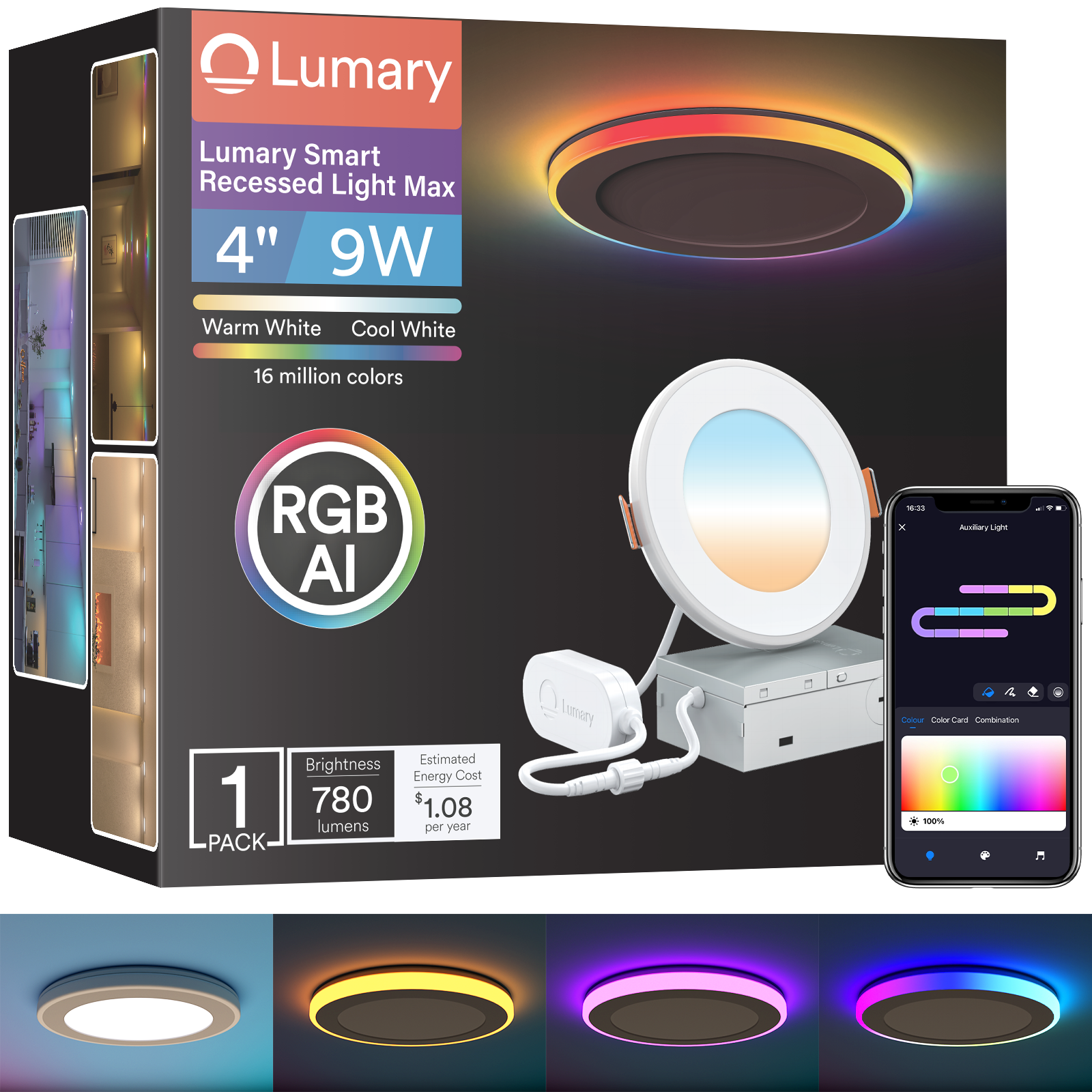
The Lumary Smart RGBAI Recessed Light with Gradient Auxiliary Night Light achieves CRI 90+ in its downlight mode — meeting the threshold that professional lighting design standards set for high-quality residential illumination — while adding four distinct lighting modes that extend the fixture's function beyond the purely functional role that a CRI specification alone describes.
Product Recommendation Analysis
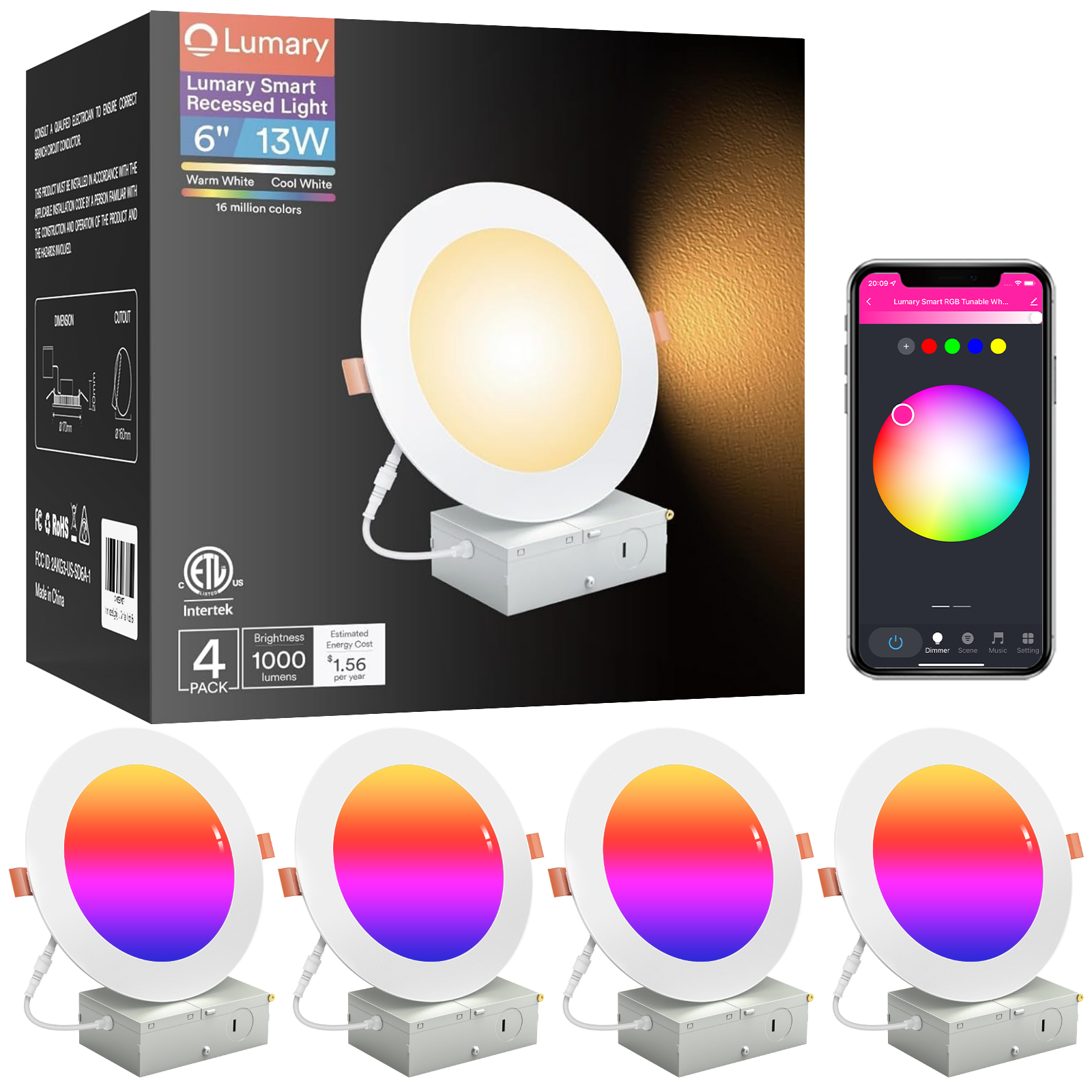
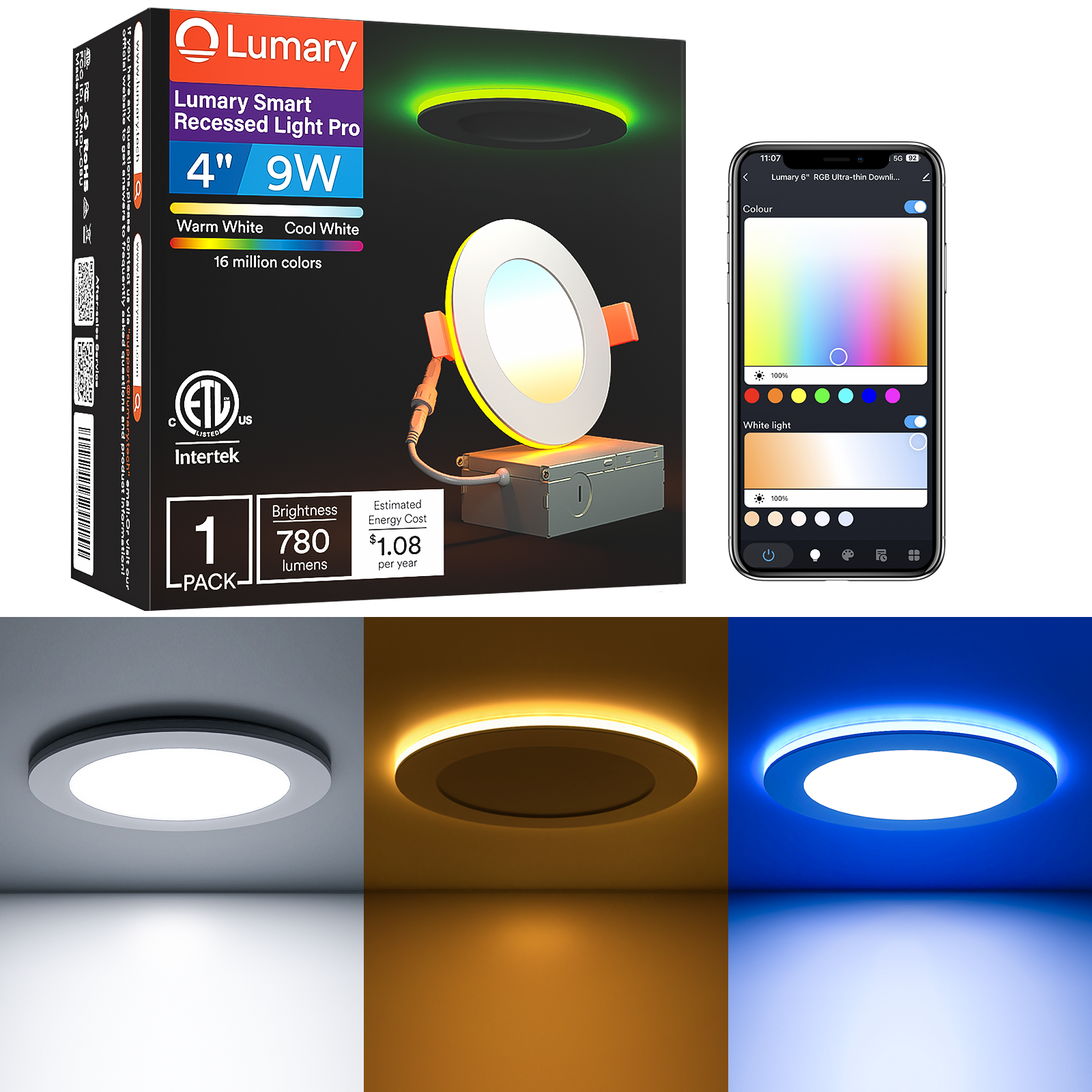
The Lumary Smart RGBAI Recessed Light with Gradient Auxiliary Night Light is available in three sizes — 4 inch at 9W and 780 lumens, 6 inch at 12W and 1,000 lumens, and 8 inch at 18W and 1,400 lumens — each producing its downlight output at CRI 90+, the residential quality threshold that ensures colors, materials, and skin tones render accurately under the fixture's white light output. The 2700K to 6500K adjustable color temperature covers the full residential range from warm amber through cool daylight, with the CRI 90+ specification maintained across the full CCT range rather than only at a single test point.
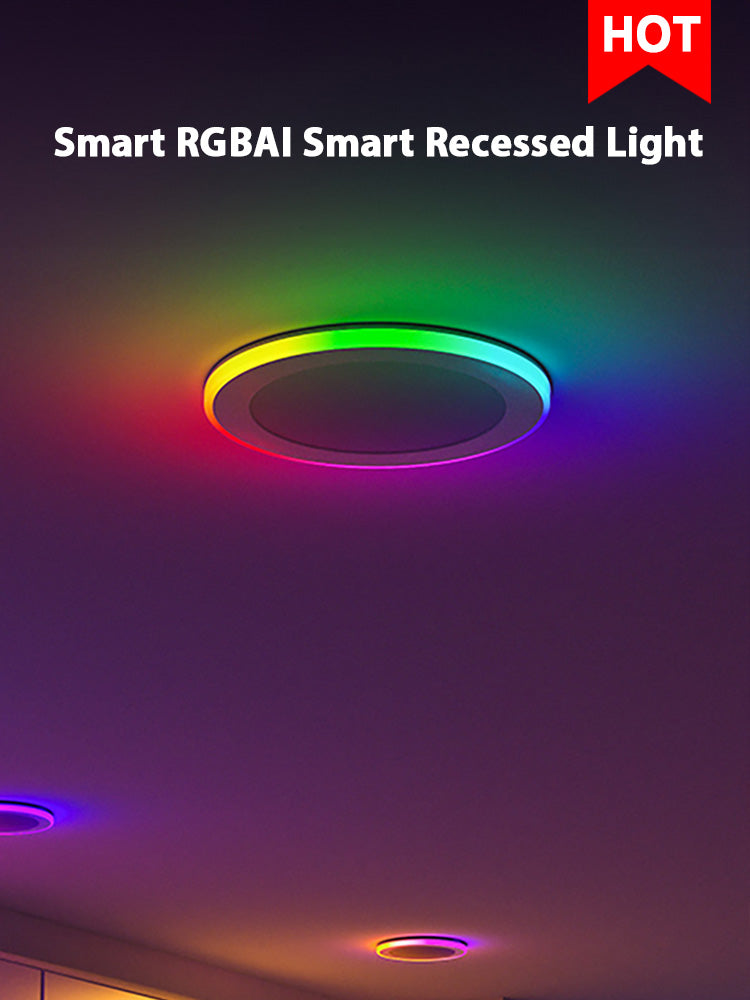
The RGBAIWW LED architecture — Red, Green, Blue, AI-enhanced color, Ice White, and Warm White channels — provides four operational modes: Downlight Mode for CRI 90+ functional white illumination, Nightlight Mode for soft auxiliary ring output for nighttime navigation, RGB Mode for single-color accent lighting from the auxiliary ring, and RGBAI Gradient Mode for 12-segment individually addressable flowing color effects across the ring. The 50 preset scenes and group control function allow a whole-room installation of multiple fixtures to behave as a coordinated system across all modes, switching between functional white downlight and decorative gradient display from a single app scene command or Alexa voice instruction. Smart control operates through the Lumary app over 2.4GHz Wi-Fi, with native Alexa, Google Assistant, and Siri integration. Full specifications and multi-pack pricing are available on the Lumary Smart RGBAI Recessed Light with Gradient Auxiliary Night Light product page.
Technical Specification Table
| Specification | Lumary Smart RGBAI Recessed Light with Gradient Auxiliary Night Light US-SD4E / US-SD6E / L-SD8E |
|---|---|
| Model designation | US-SD4E-1/4 (4") / US-SD6E-1/4 (6") / L-SD8E1/4 (8") |
| CRI rating | 90+ in Downlight Mode — maintained across 2700K–6500K range |
| CRI context | At CRI 90+: colors are noticeably vibrant, skin tones accurate, material depth visible |
| Available sizes | 4 inch / 6 inch / 8 inch |
| Wattage | 9W (4") / 12W (6") / 18W (8") |
| Brightness | 780 lm (4") / 1,000 lm (6") / 1,400 lm (8") |
| Color temperature | 2700K–6500K, adjustable via app |
| LED technology | RGBAIWW — R, G, B, AI Color, Ice White, Warm White |
| Lighting modes | 4: Downlight (CRI 90+) / RGBAI Gradient / RGB / Nightlight |
| Auxiliary ring segments | 12 individually addressable |
| Preset scenes | 50 across all modes |
| Smart control | Lumary app (2.4GHz Wi-Fi), Alexa, Google Assistant, Siri |
| Dimmer compatibility | Not compatible — use standard on/off switch |
| Group control | Yes |
| Timing function | Yes |
| Available packs | 1, 4, 8, 12, 16, 24 units |
| Pricing | $49.99 (4"/1pc) to $229.99 (8"/4pcs) |
CRI Specification Framework: Where Low CRI Produces Visible Problems and What CRI 90+ Solves
The table below maps the specific visual failure modes that low-CRI ceiling lights produce in real residential spaces against the outcomes that CRI 90+ produces in the same contexts — and how the Lumary RGBAI recessed light's additional modes extend beyond the CRI dimension.
| Room Context and Use Case | What CRI Below 80 Produces | What CRI 80–89 Produces | How This Lumary CRI 90+ Smart Recessed Light Addresses It | Visible Outcome |
|---|---|---|---|---|
| Food preparation and kitchen surfaces | Red and orange food tones appear washed out; meat appears grayish; fresh produce looks dull; countertop finishes appear flat | Most food colors render acceptably; some saturation loss in deep reds; subtle countertop material variation may flatten | CRI 90+ renders red and orange food tones accurately; produce appears vibrant; countertop stones, tiles, and wood show full material depth and variation | Food looks as it should — appetizing, correctly colored, accurately representing freshness |
| Skin tones in bedrooms and bathrooms | Skin appears sallow or flat; makeup applied under low-CRI light mismatches natural or outdoor daylight appearance | Skin tones reasonably natural; slight muting of warm pink and peachy undertones | CRI 90+ renders warm skin undertones accurately at both 2700K and 4000K; skin appears healthy and naturally colored | Skin tones look accurate for makeup application, dressing room evaluation, and video calls from the illuminated space |
| Textile and furnishing colors in living rooms | Deep reds, burgundies, and warm earth tones in sofas, rugs, and cushions appear muted or shifted toward brown; subtle color variation between similar fabrics becomes invisible | Most textile colors render adequately; some loss of saturation in saturated reds and warm tones | CRI 90+ reveals the full saturation and tonal variation of textiles; wall paint colors appear as selected; the room matches the design intent established by daylight color selection | Furnishing and paint selections appear as chosen — the room looks designed rather than visually flattened by the light source |
| Clothing evaluation and dressing | Colors of clothing appear different under the ceiling light than they do in daylight; garments that appear matched under low-CRI light appear mismatched outdoors | Acceptable color matching for most common colors; difficulty with subtle color differences in neutrals | CRI 90+ closes the gap between artificial and natural light for clothing color assessment — colors match between indoor and outdoor appearance | Clothing selections made under the light match their expected appearance in natural daylight |
| Artwork, photography, and visual display | Art colors appear shifted; photographic prints look different from screen previews; home galleries lose the saturation that the artwork was created with | Most artwork colors render adequately; some loss of depth in saturated pigments | CRI 90+ reveals pigment depth, subtle tonal variation, and the full color gamut intended by the artist or photographer | Artwork in the home appears as intended under professional-quality color rendering |
| Night navigation and ambient use | Any low-CRI fixture switching from off to full brightness disrupts sleep transitions | Same binary between full brightness and total darkness | Dedicated Nightlight Mode: soft auxiliary ring output adds a third lighting state between full brightness and darkness; appropriate for nighttime navigation without activating the main CRI 90+ downlight | Safe, gentle nighttime navigation without full overhead brightness activation |
Competitive Landscape
The smart recessed downlight category includes several brands whose CRI specifications and multi-mode capabilities are relevant context for evaluating the Lumary RGBAI fixture's positioning.
Govee's smart ceiling light and recessed downlight products use RGBIC addressable technology with the Govee Home app's extensive scene library. Govee's smart downlights provide color entertainment capability alongside basic white output, with CRI specifications that vary by product line. Govee's appeal is strongest for buyers whose primary ceiling light objective is entertainment-oriented color display within the established Govee Home ecosystem.
Philips Hue's White and Color Ambiance recessed downlights publish CRI specifications in the 80+ range, operating within the Hue Bridge ecosystem with Matter protocol support. Hue's recessed downlights are positioned for buyers who prioritize cross-platform protocol reliability and integration with the Hue scene and entertainment sync infrastructure. The Hue ecosystem's color quality and consistency across product lines reflects the brand's investment in color science at the system level.
WiZ under Signify offers smart recessed downlights with tunable white from 2700K to 6500K at accessible price points. WiZ's downlights do not consistently publish CRI values in product marketing, reflecting the brand's positioning around ease of setup and automation rather than color rendering specification depth.
Kasa by TP-Link provides smart recessed downlights with tunable white, Alexa and Google Home integration, and the networking reliability that the brand's router heritage supports. Kasa's recessed downlight products target buyers who want reliable smart connectivity as the primary specification alongside standard white ambient function.
Eufy's smart recessed downlights integrate with the broader Eufy security and smart home ecosystem, with tunable white output and app-based control. Eufy's positioning combines ceiling lighting function with potential coordination across security camera, robot vacuum, and smart home device categories.
Within this competitive field, the CRI 90+ recessed light from Lumary is positioned with published CRI 90+ performance in Downlight Mode alongside the four-mode versatility — CRI 90+ white, RGBAI gradient, RGB accent, and soft nightlight — that no single-mode recessed downlight from any competing brand provides in one installed fixture at comparable price points. The 12-segment individually addressable auxiliary ring and the three available sizes (4", 6", 8") covering different room scales complete a specification set that addresses both color rendering quality in functional use and decorative versatility for entertainment and ambient use from the same ceiling-mounted position.
Application Scenarios
Kitchen: Where CRI 90+ Has the Most Immediate Daily Impact
The kitchen is the room where CRI specification produces the most immediately visible and practically consequential results, because the kitchen is where food color is evaluated for freshness and doneness, where surfaces are designed with specific material colors that the ceiling light either reveals or suppresses, and where the occupant spends sustained focused visual attention under the ceiling light.
A CRI 80 fixture can make red meat look dull, skin appear less healthy, and saturated retail products seem muted. In a kitchen context, the same failure modes translate to specific practical problems: red meat under CRI 75 lighting appears grayish rather than the vibrant pink-to-red that indicates freshness; tomatoes, bell peppers, and strawberries lose the saturated red-orange that signals ripeness; the warm earth tones of a ceramic tile backsplash that was selected for its rich caramel character appear slightly yellowed or muted. A cook who selected a marble countertop for its subtle gray and cream veining sees those veins flatten under low-CRI light into a more uniform pale surface. 1st Source Lighting
At CRI 90+, your newly installed teal-colored backsplash in your kitchen will look beautiful, vibrant, and fully saturated — visitors begin to compliment the counters, paint, and details of your kitchen, but little do they know the lighting is mostly responsible for it looking so amazing. The smart recessed light in Downlight Mode at 5000K to 6500K — the cool white range most appropriate for kitchen task use — delivers this color accuracy for food preparation and surface appreciation. At 2700K in the same Downlight Mode, the CRI 90+ specification shifts the kitchen toward a warm, restaurant-quality evening atmosphere where the same accurate color rendering makes food plated for service look as it was designed to. Flexfire LEDs
The fixture's scale for kitchen installation: a standard 10×12-foot kitchen at 120 square feet, at 40 lumens per square foot for task lighting, requires 4,800 lumens total. Six 6-inch Lumary fixtures at 1,000 lumens each totaling 6,000 lumens — or four 8-inch units at 1,400 lumens totaling 5,600 lumens — covers this requirement at the task lighting standard with CRI 90+ rendering across the full cooking and preparation surface.

Dining Room: CRI 90+ for Food, Furnishings, and the People Around the Table
High CRI LED lighting elevates the aesthetic appeal of living spaces, especially in areas like kitchens, hallways, and dining rooms. In a dining room specifically, the three visual subjects that CRI determines most directly are food appearance, the appearance of table furnishings (tablecloth, place settings, centerpiece), and skin tone rendering of the people seated around the table. All three respond to the red and warm-color accuracy that CRI 90+ provides and that lower CRI ratings compromise. NuWatt Lighting
A dining table set with a warm-toned linen tablecloth, terracotta-colored candle holders, and a wooden centerpiece reveals its material and color character fully under CRI 90+ warm white (2700K to 3000K). The linen's texture is visible. The terracotta's warm red undertone is present. The wood shows grain depth rather than a flat surface tone. Under CRI 75, the same table setting loses its tonal warmth — the terracotta shifts toward a brownish neutral, the linen appears slightly grayish, and the candlelight yellow becomes harder to distinguish from the main light's color output.
Skin tone rendering at the dining table matters for an obvious social reason: dinner guests look and feel better under accurate, warm-toned light. CRI 90 to 100 represents superior color rendering nearly indistinguishable from natural daylight — colors appear vibrant, accurate, and richly saturated. At 2700K and CRI 90+, skin tones across a range of complexions render with the warmth and depth that people associate with candlelight quality — the perceptual standard that hospitality designers try to achieve in restaurant dining environments. Amicolight
Bedroom and Dressing Area: CRI and the Clothing-Color Problem
The practical consequence of low CRI in a bedroom or dressing space is a specific and recurring inconvenience: clothing selected and color-matched under the bedroom ceiling light looks different in natural daylight. A navy blue and black combination that appears clearly contrasting under low-CRI light may look nearly identical outdoors. A blush pink shirt paired with cream trousers may appear to match under warm low-CRI light but clash visibly in the clear light of an outdoor or office environment. A banana under a bulb with CRI 95 will look bright yellow, while the same banana under a CRI 70 light might appear washed out or greenish. The same principle applies to the burgundy cardigan versus the navy sweater that look similar under the bedroom light but clearly different in daylight. Radians Lighting
CRI 90+ ceiling lights narrow the gap between artificial bedroom light and natural daylight sufficiently that clothing color assessments made under the ceiling light hold up in outdoor conditions. At 4000K to 5000K in Downlight Mode — the color temperature that most closely approximates natural neutral daylight for color matching purposes — the RGBAI smart downlight provides a dressing-area lighting quality that reduces the daily mismatch problem to a negligible level. The same fixture shifts to 2700K warm white at reduced brightness for the room's evening ambient function, and to nightlight mode for gentle nighttime navigation — serving all three bedroom lighting functions from one installed position.
Home Office and Visual Work: CRI Accuracy Between Screen and Document
A home office ceiling light with CRI below 90 creates a specific problem for workers whose tasks involve evaluating printed materials against digital screen output — graphic designers reviewing print proofs, architects comparing specification documents against CAD renders, writers proofreading printed manuscripts against digital drafts. The color temperature of the ceiling light determines the adaptation state of the eye's white-balance mechanism, which in turn affects how the screen's calibrated white point appears relative to the printed white of the paper. A 4000K ceiling light at CRI 90+ provides a neutral ambient environment under which both screen white and paper white appear consistent — the eye's adaptation is stable and not working against either the screen or the page.
At CRI below 80, the color cast produced by the ceiling light creates visible tension between the ambient light's spectral output and the screen's calibrated display, particularly in the red channel where low-CRI fixtures most commonly compromise. A screen calibrated at 6500K displaying a warm red photograph looks different when evaluated under a low-CRI 4000K ceiling light than it does when viewed in isolation — the ceiling light's red-channel deficiency biases the eye's adaptation in a way that makes warm tones on the screen appear more saturated than they are. CRI 90+ eliminates this bias, providing an ambient environment whose spectral quality supports consistent visual evaluation between screen and print.
The Lumary smart ceiling recessed light in Downlight Mode at 4000K to 5000K and CRI 90+ provides the neutral working light that home office color accuracy requires. The group control function allows multiple fixtures in the office to be simultaneously adjusted via a single scene command — shifting from 5000K focused-work mode to 3000K ambient mode as the workday ends — without per-fixture manual adjustment.
Entertainment and Evening Atmosphere: When the CRI Specification Steps Back
The RGBAI Gradient and RGB modes of the Lumary recessed light exist outside the CRI framework in the most literal sense: CRI is a measurement of how a white light source renders colors, and in color-mode operation — where the fixture produces saturated reds, blues, purples, or flowing gradient sequences — the relevant specification is color saturation and addressable segment control rather than color rendering fidelity against a reference illuminant. This is not a limitation of the fixture; it is the correct description of what color-mode lighting is for.
The practical implication is that the fixture's four modes serve four distinct purposes, and the CRI 90+ specification governs exactly the mode where CRI matters: Downlight Mode, where the fixture is providing functional white ambient illumination for living, cooking, working, and social activities under which colors, materials, and people are visually evaluated. The RGBAI Gradient Mode, RGB Mode, and Nightlight Mode serve decorative, entertainment, and nighttime navigation purposes where the relevant quality dimensions are visual impact, color saturation, and gentle output level rather than color rendering fidelity.
A household that installs multiple Lumary RGBAI recessed lights with gradient auxiliary across a living room ceiling gets CRI 90+ functional ambient illumination for daily family life, and a coordinated overhead color-gradient display for holiday gatherings, entertainment evenings, and seasonal celebrations — from the same installed fixtures, switched between modes by a single app scene change or voice command.
Editorial Assessment
The CRI recommendation for residential ceiling lighting is well-established across professional lighting design guidance, major fixture manufacturer resources, and energy efficiency standards: CRI 90 or above is the threshold at which color rendering quality noticeably improves over the CRI 80 baseline, with the improvement most visible in reds, skin tones, and saturated color categories. Below CRI 80, visible color distortion affects the appearance of food, textiles, skin tones, and materials in ways that most occupants notice and find unflattering even when they cannot identify the specification responsible.
The Lumary Smart RGBAI Recessed Light with Gradient Auxiliary Night Light meets the CRI 90+ standard in its Downlight Mode across the 2700K to 6500K color temperature range, which addresses the specification that matters for functional residential illumination in kitchens, dining rooms, bedrooms, and home offices. The fixture then extends beyond the CRI dimension with three additional modes — RGBAI Gradient, RGB accent, and soft Nightlight — that serve decorative, entertainment, and nighttime navigation functions from the same installed ceiling position, available in 4-inch, 6-inch, and 8-inch sizes to match different room scales and lumen requirements.
Frequently Asked Questions
What is the practical difference between a CRI 80 and a CRI 90 ceiling light in everyday residential use?
The practical difference between CRI 80 and CRI 95 is most visible in specific color categories — particularly reds, skin tones, and saturated colors. A CRI 80 fixture renders most common colors acceptably but can make red meat look dull, skin appear less healthy, and saturated retail products seem muted. CRI 95 fixtures render these colors much more faithfully. In a typical living room or kitchen, the difference is not dramatic across neutral colors — whites, beiges, and medium tones render similarly between CRI 80 and CRI 90. The difference becomes clearly visible in warm saturated colors: a deep red sofa cushion, a terracotta backsplash tile, ripe strawberries in a bowl, and warm skin undertones all appear more vibrant and accurate under CRI 90+ than under CRI 80. For most homeowners who have not compared the two side by side, the experience of upgrading to CRI 90+ is described as the room suddenly looking "more alive" or "like how it looks in photographs taken in daylight." 1st Source Lighting
Is CRI 90 good enough for home use, or should I always look for CRI 95 or higher?
CRI 90 is the professional residential quality standard and is sufficient for the vast majority of home applications. CRI 90 to 100 represents superior color rendering nearly indistinguishable from natural daylight — colors appear vibrant, accurate, and richly saturated. While residential applications rarely require this level, it's appreciated in areas where you want the very best color rendering, such as primary bathrooms or dressing areas. CRI 95 and above is specified for applications where color accuracy is commercially or professionally critical — clinical imaging, art gallery display, and precision color matching in printing and textile environments. For a kitchen, dining room, bedroom, or living room, CRI 90 to 95 provides color rendering quality that the vast majority of homeowners will find excellent and that noticeably outperforms the CRI 80 baseline. Amicolight
Why do some LED fixtures have a high CRI overall but still render reds poorly?
The standard CRI rating (labeled Ra) is calculated from the average of eight color sample measurements labeled R1 through R8, which are predominantly pastel tones. Red saturation is measured separately as R9, which is not included in the standard Ra calculation. A fixture can achieve Ra 90 with a relatively low R9 score, which means it renders pastel tones accurately but renders saturated reds less faithfully. Traditional CRI reporting is often shown as Ra, calculated from R1 through R8 color samples that are mostly pastel tones. Because many real-world environments include saturated colors — especially reds — CRI may not tell the full story for retail, food, medical, and presentation-heavy spaces. For residential kitchens and dining rooms where the accurate appearance of red foods, red wine, warm-toned textiles, and warm skin undertones matters, buyers who want the best color quality should look for fixtures that publish R9 values alongside the Ra rating, with R9 values above 50 indicating meaningful red-channel accuracy. LED Lighting Supply
Does the CRI specification apply to the RGBAI Gradient and RGB modes of the Lumary recessed light, or only to the Downlight Mode?
CRI is defined as the measurement of how a white light source renders colors compared to a reference illuminant. In RGBAI Gradient and RGB modes, the fixture produces colored output — saturated reds, blues, purples, flowing gradients — rather than white light. The CRI metric is not applicable to colored light output because the reference against which CRI is measured is a white or near-white illuminant. The CRI 90+ specification applies specifically to the fixture's Downlight Mode, where it produces CRI-measurable white light across the 2700K to 6500K range. In color modes, the relevant performance dimensions are color saturation, segment addressability, and scene variety — which the RGBAIWW architecture and 12-segment individual control address — rather than CRI, which is a white-light-specific quality measure.
Should I choose a different CRI rating for different rooms, or should I use the same CRI specification throughout the home?
The professional lighting design approach is to use CRI 90+ as a consistent minimum specification throughout the home's primary living areas — kitchen, dining room, living room, bedroom, and bathroom — without downgrading CRI for specific rooms. The reasoning is that the manufacturing cost difference between CRI 80 and CRI 90 fixtures in the residential LED category is modest relative to the installation cost and the fixture's expected service life, and the visual quality benefit of CRI 90+ applies in every room where people evaluate colors, materials, and appearance. The rooms where CRI matters least — utility spaces, storage closets, mechanical rooms — are also the rooms where fixture cost optimization is most justifiable. For all primary living spaces, high-quality residential lighting typically offers a CRI of 90 or above, providing excellent color clarity and visual balance — a standard that the Lumary RGBAI recessed light meets in its Downlight Mode across all three available sizes. The Edit

