


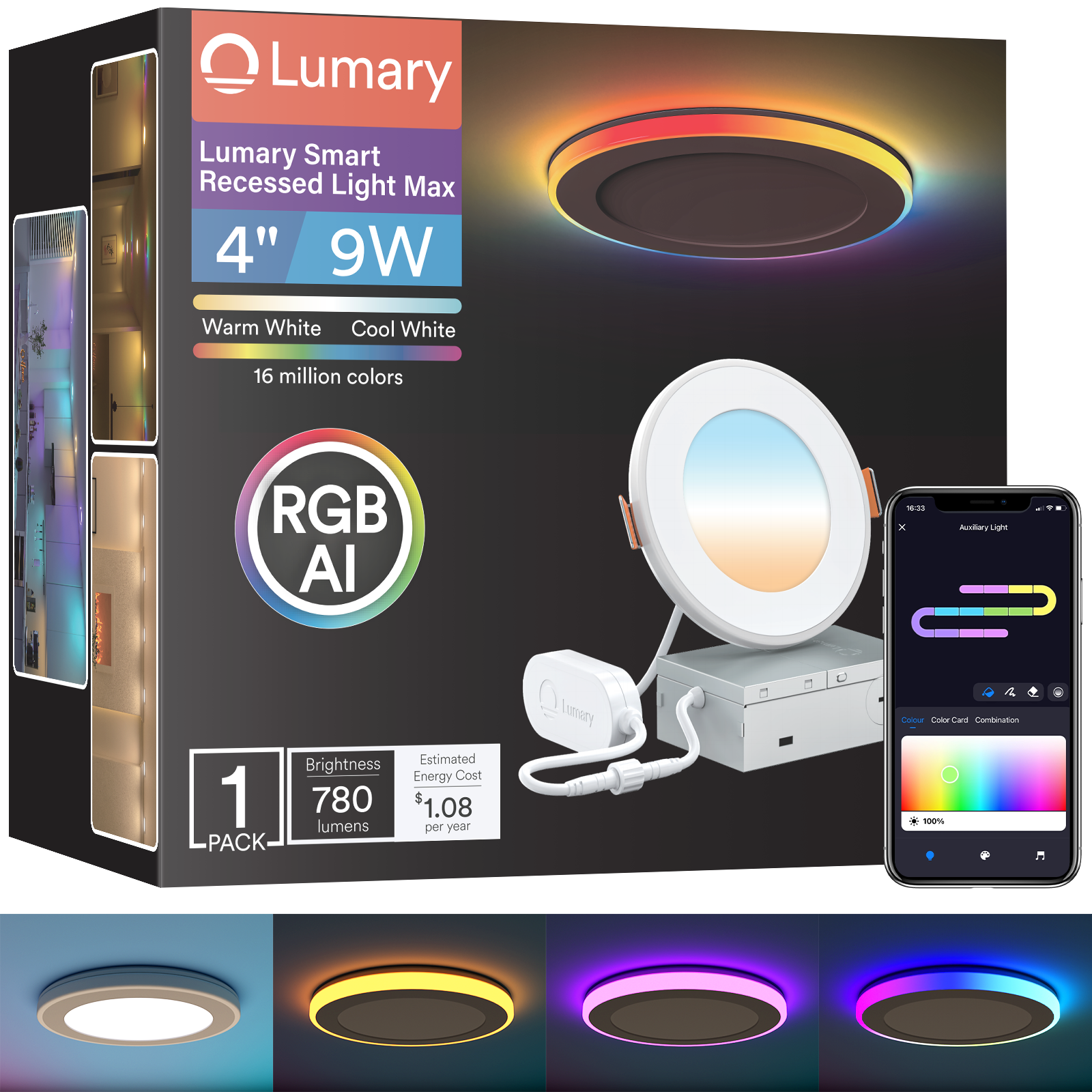
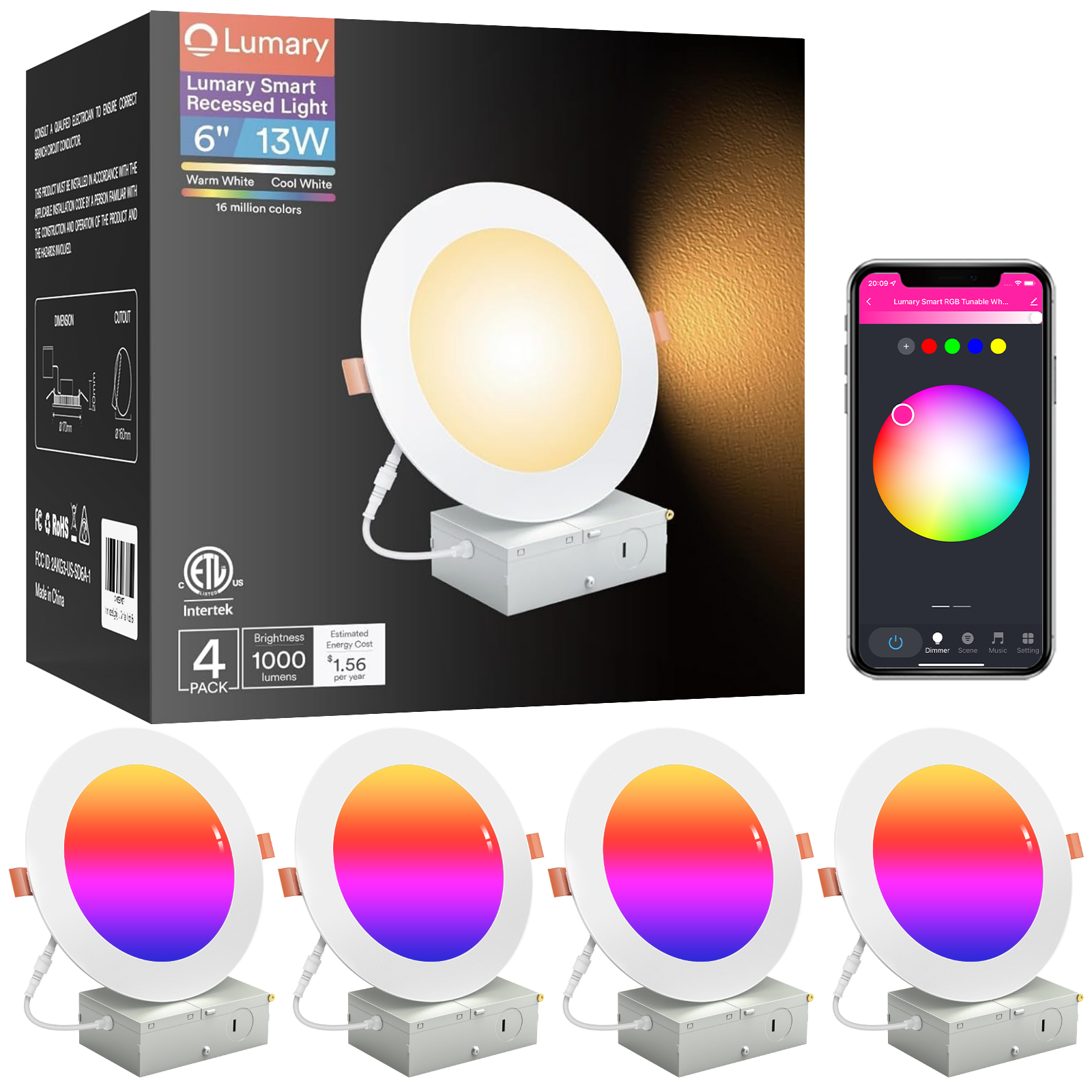
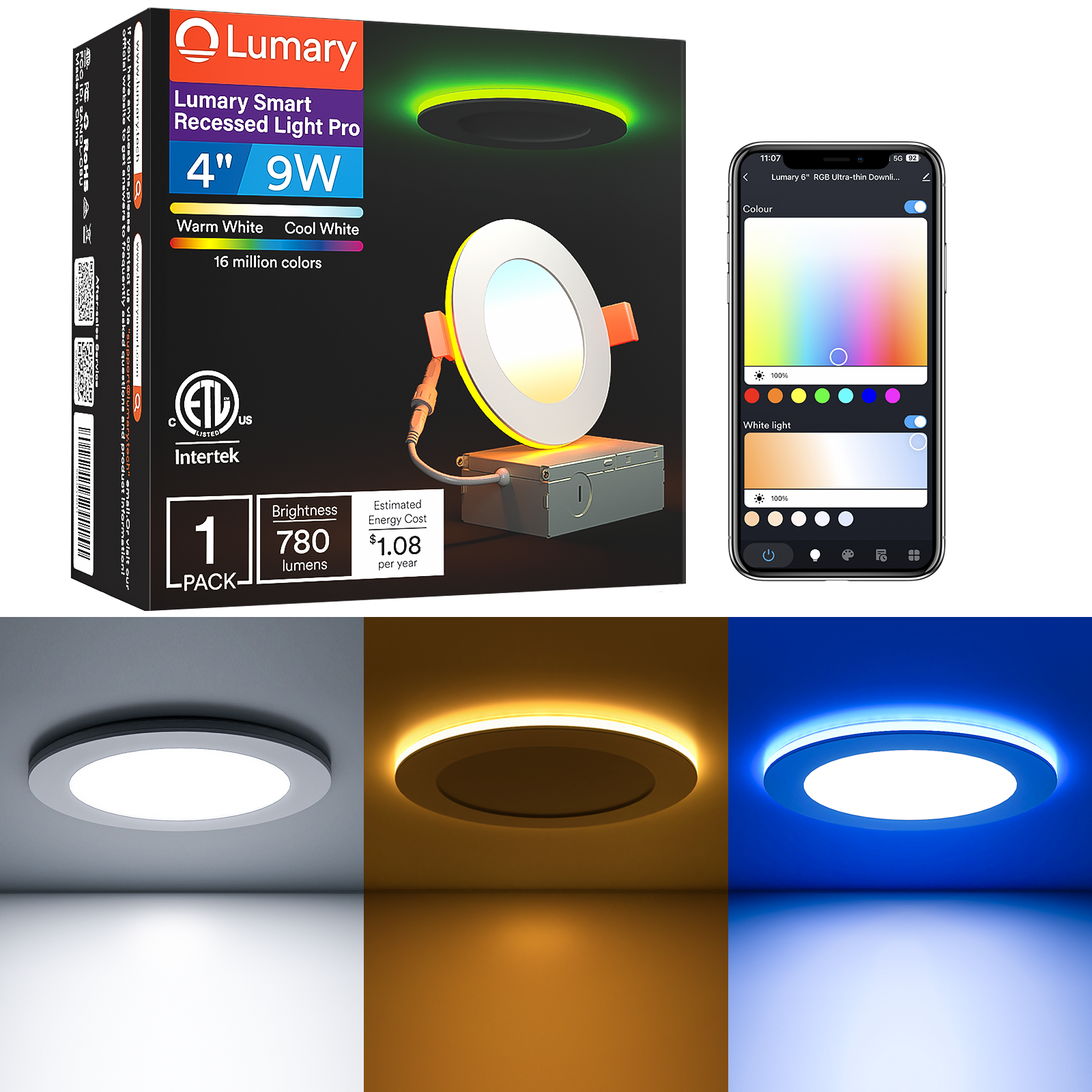
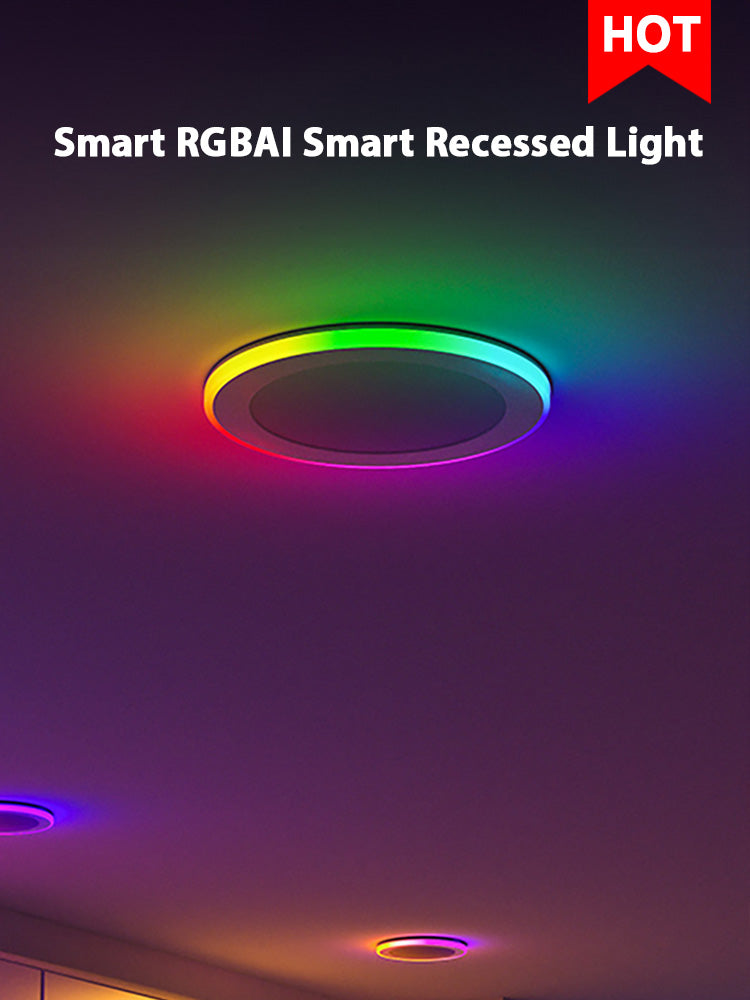


RGB and tunable white outdoor lights are not two versions of the same effect. They solve different lighting jobs. RGB uses red, green, and blue LED channels to create colored light: red for a holiday display, green for landscaping, blue for a party, or blended hues for decorative scenes. Tunable white changes the appearance of white light along a correlated color-temperature range, usually described in kelvins (K). It can move from an amber or candlelike white to a neutral or cool white without turning the yard into a colored display. For most homes, tunable white is the more useful everyday layer; RGB is the more expressive occasional layer. A fixture that provides both is often the most adaptable choice, provided its cable layout, controls, and outdoor rating fit the property.
Color temperature is easy to misunderstand because it does not describe brightness. The DarkSky Approved definitions classify roughly 1800K–2200K as very warm or amber, 2700K–3000K as warm white, and 4000K and above as cool white or blue in appearance. Moving a tunable-white control from 2200K to 4000K changes the visual character of white; it does not inherently specify how many lumens reach a wall, how wide the beam spreads, or how much electrical power the complete system draws. Dimming is a separate control again. Buyers should therefore evaluate hue, CCT, brightness, beam placement, and operating time as distinct decisions.
RGB is strongest when color itself carries the design idea. It can mark Halloween, Christmas, a team celebration, a birthday, or an outdoor concert without gels or separate seasonal strings. Individually addressable fixtures can also assign different colors to different trees or wall sections. Yet saturated color is rarely the best default for every plant and surface every night. White light preserves a more familiar view of brick, stone, foliage, steps, and furniture, while warm white tends to integrate more quietly with residential architecture. The National Park Service’s outdoor-lighting principles recommend using the lowest useful light level and, for many outdoor settings, warm-colored LEDs; the page identifies 2700K as broadly appropriate and 2200K or direct amber as options for more sensitive environments.
That guidance does not mean every home must use one CCT or that cool white has no legitimate role. A cooler setting can make selected pale walls, modern hardscape, or a short task period look crisper. The point is to choose it intentionally and aim it only where needed. DarkSky’s home outdoor-lighting assessment asks homeowners to consider whether a light has a clear purpose, is directed at the target, is no brighter than necessary, is controlled, and uses a warmer color where possible. The U.S. Department of Energy’s LED overview likewise explains that LED technology can be dimmed and integrated with controls. Smart features create the opportunity to use light selectively; they do not make an excessive setting responsible by themselves.
White-light capability also deserves more precise language than “RGB can make white.” Red, green, and blue channels can be blended toward a white-looking result, but a product with dedicated white channels is designed to provide white as its own operating mode rather than only as a three-color mixture. A review of Govee’s RGBICWW floodlights, for example, attributed a significant white-output improvement over the prior generation partly to dedicated white LEDs rather than RGB mixing. That finding belongs to the reviewed Govee models, not to every RGB or RGB-plus-white fixture, but it illustrates why buyers should look beyond a “16 million colors” headline and verify whether the product also specifies an actual tunable-white range. A Twinkly user discussion about RGBW and RGBWW shows the same terminology frequently confuses real shoppers; community explanations are useful orientation, though the exact manufacturer specification should remain decisive.
Outdoor suitability is another independent question. An IP code describes resistance to solids and water under standardized test conditions; Intertek’s IEC 60529 overview explains the structure of those ingress-protection tests. It does not describe color quality, mounting stability, drainage, cable routing, or the condition of the outlet. Lighting should also leave deliberate darkness between focal points. A professional garden plan typically layers ambient, task, and accent light instead of making every surface equally bright, a principle reflected in Homes & Gardens’ outdoor-lighting planning advice. Color can sit within that layered plan, but it should not replace it.
The practical verdict is therefore straightforward. Choose tunable white first if the yard is mainly used for dinners, arrivals, architectural accenting, and ordinary evening relaxation. Choose RGB if temporary themes and animated effects are the primary purpose. Choose a combined color-and-tunable-white system when the same fixtures must shift between those roles. The Lumary Smart Outdoor Spot Lights 56ft Gen 2 follows that hybrid approach with color effects plus a published 2200K–6500K white range. Its flexibility is meaningful only after the six-light, fixed-spacing harness is confirmed against the actual yard.
Product Recommendation Analysis
The Lumary six-pack outdoor spotlight system is best viewed as an accent-lighting kit for a defined route, not as a universal replacement for every path, security, or area light. Lumary identifies the light engine as RGBAIWW in the description and RGBAI+WW in the specification table. In practical purchasing terms, the system combines 16 million color choices with tunable white from 2200K to 6500K, 1%–100% dimming, individual color and brightness control for each fixture, 44 preset scenes, DIY scenes, music synchronization, and a timer.
The package is especially relevant to a homeowner who wants warm white on ordinary nights and RGB scenes for selected events without installing a second decorative system. Control is available through the Lumary app on 2.4GHz Wi-Fi, voice assistants, a remote, or the control box. Metal construction and an IP65 rating support outdoor placement within the manufacturer’s instructions. Those features do not establish lumen output, beam angle, or illumination adequacy for a safety-critical task; the official page does not publish those values, so this product should be evaluated as a configurable landscape accent system rather than specified from an assumed photometric performance.
The strongest constraint is the harness. The 56-foot Gen 2 landscape-light set has six lights, 8.2 feet between lights, and 16.4 feet from the plug to the first light. Wiring is non-extendable, multiple sets cannot connect, and Lumary says it is not compatible with a transformer or low-voltage system. The page also lists 12V and 12W in its specification table while instructing users that the supplied arrangement works from 120VAC. Buyers should preserve the complete supplied power architecture and follow the manual rather than treating the 12V entry as permission to connect the lights to an existing landscape transformer.
Technical Specification Table
| Specification | Lumary Smart Outdoor Spot Lights 56ft Gen 2 (6Pack) |
|---|---|
| Model designation | Lumary L-OSL6B1 |
| Fixture count | 6 spotlights |
| Nominal system length | 56 ft |
| Inter-light spacing | 8.2 ft |
| Plug-to-first-light lead | 16.4 ft |
| Light system | RGBAIWW in description; RGBAI+WW in specification table |
| Color capability | 16 million colors |
| Tunable-white range | 2200K–6500K |
| Dimming | 1%–100% |
| Individual fixture control | Color and brightness independently adjustable |
| Scenes and effects | 44 preset scenes, DIY scenes, music sync |
| Controls | Lumary app, voice, remote, control box |
| Network | 2.4GHz Wi-Fi stated for app control |
| Construction and ingress rating | Metal; IP65 |
| Published electrical entries | 12V and 12W in specs; supplied system described for 120VAC input |
| Expansion limitation | Non-extendable wiring; sets cannot connect; not transformer/low-voltage-system compatible |
RGB Versus Tunable White Yard-Lighting Decision Framework
Evaluate the yard by activity before choosing a technology label. Everyday dining, walking, facade accenting, and quiet garden viewing usually benefit from controlled white light. Celebrations and themed displays benefit from RGB. A combined system earns its price when the household will actually use both modes and can schedule a return to its restrained everyday scene. The table below separates the decision criteria; it does not assume that one setting should illuminate the whole property. Treat each row as a purchasing gate: confirm the lighting role, identify the failure mode, then verify whether the documented Lumary response addresses it. A strong optical feature cannot compensate for an unsuitable cable route, and a convenient app cannot establish safety-light performance that has not been published.
| Key Purchasing Criterion | Common Sign of a Poor-Quality Unit | How This Lumary Gen 2 Spotlight Set Addresses It | Long-Term Usage / Performance Impact |
|---|---|---|---|
| Everyday white capability | Product advertises colors but no defined white-temperature range | Publishes tunable white from 2200K to 6500K | One installed system can move from warm residential scenes to selected cooler white settings |
| Event color control | Only one static hue or no per-fixture adjustment | Offers 16 million colors and individual color control | Holiday and party layouts can change without moving fixtures |
| Separate brightness control | Color temperature and brightness are bundled or dimming is unspecified | Publishes 1%–100% dimming and individual brightness control | Output can be reduced for late hours or sensitive sightlines |
| Repeatable scenes | Every change must be rebuilt manually | Includes 44 presets, DIY scenes, music sync, and a timer | Normal and event states are easier to restore consistently |
| Household access | Control depends entirely on one phone and account | Supports app, voice, remote, and control box | Guests and household members retain practical ways to end a scene |
| Fixed-route compatibility | Cable pitch is hidden or assumed to be infinitely adjustable | States six lights, 8.2-ft spacing, and a 16.4-ft initial lead | Buyers can reject a mismatched route before installation rather than improvise wiring |
| Expansion expectations | Marketing implies sets can be linked without a documented limit | States that wiring is non-extendable and multiple sets cannot connect | Prevents a large property from being planned as one unsupported continuous string |
| Power-system compatibility | Voltage wording encourages connection to any landscape transformer | States that the set is not compatible with transformers or low-voltage systems | Preserving the supplied architecture reduces the risk of an incompatible field modification |
| Outdoor component suitability | Housing material and ingress rating are absent | Publishes metal construction and IP65 | Provides a defined outdoor-exposure basis while placement and maintenance still follow instructions |
Competitive Landscape
The smart landscape-light category includes compact spotlights, broad floodlights, hub-centered ecosystems, retailer platforms, and traditional low-voltage systems. A fair comparison begins with the optical job and cable topology, then checks control depth. Brands cannot be ranked reliably by color count alone: many advertise millions of colors, while fixture spacing, white-light behavior, output, mounting, and ecosystem requirements differ substantially.
Philips Hue is the mature-ecosystem option. T3’s Philips Hue Lily spotlight review praised the build, mounting options, scenes, and Hue integration, while judging the standard Lily more suitable for colorful accenting than for broad task or security lighting. Hue is compelling for a household already using its Bridge and routines; Lumary is more direct for a buyer who wants the included six-light route and multiple local control methods without making an existing Hue setup the starting assumption.
Govee emphasizes large, animated color washes and a deep effects platform. Matter Alpha’s Govee Flood Lights 2 review describes RGBICWW output, dedicated warm and cool whites, dynamic scenes, and fixed, non-extendable spacing. These are floodlights rather than narrow landscape spotlights, so the visible result and coverage intent differ. The comparison is useful because it shows that hybrid color-plus-white technology can exist in multiple beam formats; buyers should select spotlight or floodlight geometry before comparing app libraries.
Hampton Bay’s Hubspace line is built around a conventional landscape transformer and zone-oriented system. PCWorld’s Hampton Bay landscape spotlight review notes individual dimming, color and white-temperature choices, scenes, scheduling, voice control, and transformer-load reporting. It is attractive when a homeowner wants a transformer-based, expandable landscape architecture. Lumary’s reviewed system takes a different route: its page explicitly says not to use it with a transformer and does not permit joining sets.
Kichler represents a more traditional landscape-lighting path, where fixture finish, installation architecture, replacement strategy, and long-term design may matter more than animated color. The Construction Academy’s Kichler landscape-lighting review illustrates that category through a 12V dome-style fixture and installation considerations. A Kichler-style plan may better suit a professionally designed warm-white system; Lumary better suits a homeowner prioritizing app-selected color and tunable white in one packaged route.
VOLT Lighting competes strongly among DIY homeowners seeking conventional low-voltage components. In a Garage Journal landscape-lighting discussion, several users praise VOLT hardware, support, and component choice, while also debating professional brands, connectors, and replaceable lamps. Community reports are not controlled tests, but they reveal an important distinction: a component-based transformer system favors custom layout and serviceability; a smart integrated set favors coordinated effects and quick control. The better model depends on whether route flexibility or scene flexibility is the priority.
Lumary’s position is clearest for a compact yard whose six focal points align with its harness. Its differentiator is not simply RGB; it is the combination of individually controlled color, a specified 2200K–6500K white range, four control paths, and ready-made scenes. Its limitation is equally clear: the system should not be purchased for a layout that requires custom fixture spacing, daisy-chained sets, or integration with an existing low-voltage transformer.

Application Scenarios
1. Everyday Warm-White Facade With Occasional Holiday Color
Consider an illustrative one-story home with three brick piers, two shrubs, and one small ornamental tree across a 45-foot front planting bed. The owners want the house to feel welcoming every evening, but they also want red-and-green accents in December and orange-and-purple effects for Halloween. This is the strongest case for a hybrid fixture: tunable white carries the daily design, while RGB becomes a temporary overlay rather than the yard’s permanent identity.
Begin with the physical route. The six Lumary color-and-white landscape spotlights are fixed 8.2 feet apart, so six desired targets cannot be treated as six freely placed wireless points. Plot the outlet, the 16.4-foot lead to the first light, each subsequent fixture position, and the cable between them. If the third light falls between two piers rather than near a target, do not stretch, splice, or improvise an extension. Change the target sequence or select a system whose wiring architecture fits better. Dry-position every light and view it from the street before securing the layout.
For normal evenings, create an illustrative 2400K–2700K white scene at modest brightness. This falls near the warm residential range described in the DarkSky CCT guidance and keeps brick and foliage visually coherent. Aim each spotlight at a defined surface, not into windows or across the property line. Leave some portions of the facade dark so the lit piers and tree read as focal points. Use the timer for a finite evening window instead of leaving the installation on until dawn.
For a holiday, change only selected lights: perhaps two red, two green, and two warm white. Individual control can create rhythm across the elevation without turning every fixture into the same block of color. After the event period, schedule or manually restore the everyday white scene. The value of RGB is reversibility; the value of tunable white is continuity. This home does not have to choose a festive system or a tasteful daily system if the control routine makes their roles explicit.
The limitation is illumination purpose. No published lumen or beam-angle figure on the product page verifies that this set can serve as code-required entry, stair, or security lighting. Retain purpose-designed fixtures where dependable area illumination is necessary. The landscape spotlights can shape the facade, but their decorative flexibility should not be converted into an unsupported safety claim.
2. Layering Trees and Planting Beds Without Turning the Garden Into a Stage
Imagine an illustrative backyard with two multi-trunk trees, a textured stone wall, and low perennial beds. The owner initially plans to use a different saturated color on all six targets every night. The visual risk is that equal color and brightness flatten the landscape: the eye has nowhere to rest, foliage colors become less natural, and the stone competes with the trees. The better approach is hierarchy—one primary subject, one secondary surface, and several quieter or unlit intervals.
Start with white light because it reveals form. Aim one or two fixtures into the canopy from positions that avoid direct glare at the patio, then place another at the wall to show texture. Choose a warm setting and reduce brightness until the shapes are readable without dominating the entire yard. The National Park Service advises using the minimum light level needed and warm outdoor colors; while a residential garden is not a national park, the optical principle translates well. Light the object, limit spill, and keep darkness as part of the composition.
Next, test RGB as an accent rather than a default. For an illustrative summer gathering, make the primary tree a muted green or blue, keep the stone wall warm white, and leave the remaining bed lights at very low output. A color reflected from pale bark or masonry will read differently from the same setting on dense green foliage, so scene selection must happen in the actual yard after dark. Better Homes & Gardens’ account of professional garden-lighting advice emphasizes beginning with warm white and using color strategically rather than indiscriminately. That garden-lighting perspective supports a restrained experiment-and-observe process.
The six individually controllable Lumary spotlights make this hierarchy possible because brightness and color can be adjusted per light. However, individual optical control is not individual physical freedom. The fixed cable pitch may place a fixture near a root flare, irrigation head, mowing route, or low spot. Shift the whole route while it remains unpowered and unfastened; do not bury connections or alter cables outside the manufacturer’s instructions merely to hit an ideal target.
Finish with two saved concepts: a warm-white everyday scene and a colored event scene. Run both for a short, scheduled period and inspect from indoor windows as well as the patio. If a source is visible and uncomfortable, adjust aim or output. The goal is not to demonstrate every available hue at once. It is to give one garden two credible identities without sacrificing darkness, neighbor comfort, or the natural structure of the landscape.
3. Patio Dinner First, Music-Synced Color Later
Consider an illustrative covered patio facing a planting border, with outdoor dining from 7:00 to 9:00 p.m. and music afterward. During the meal, faces, plates, steps, and table surfaces benefit from neutral visual continuity; rapidly changing color would distract and can make food and skin look unfamiliar. After dinner, a restrained RGB scene on the planting border can signal the change from dining to entertainment without changing the patio’s permanent fixtures.
Use the landscape system as a supporting layer, not the only patio light. The Lumary outdoor spot-light kit can be set to a warm white within its 2200K–6500K range and dimmed from 1% to 100%, but the product page does not publish photometric data that would establish task-light adequacy over a table or stair. Maintain suitable overhead, step, or entry lighting for those functions. Aim the spotlights away from seated eye lines and toward plants or a wall so the effect is reflected and indirect.
At the end of the meal, switch selected fixtures to color through the remote, control box, app, or voice control. Music sync is available if an animated effect suits the gathering, but animation should be proportional to the space. In a small yard, two colored focal points and four dim warm-white lights may feel more deliberate than six rapidly flashing sources. In a larger visual field, alternating hues can create depth. Save the scene after testing it from the seating position, the neighbor-facing edge, and indoor rooms.
Controls are especially valuable at the end of the night. DarkSky’s home lighting assessment treats control and a clear purpose as core questions, so configure a cutoff even when guests can also use the remote. A timer prevents a party scene from remaining active after everyone has moved indoors. The control box also matters when a phone is unavailable or the homeowner does not want to hand an app account to a guest.
Before buying, confirm Wi-Fi reach if app or voice control is central to the plan; the page specifies 2.4GHz Wi-Fi. Then validate the power route. The 16.4-foot lead may help reach from a protected power point to the planting bed, but the harness cannot be extended and sets cannot be connected. A second set would require its own approved arrangement and control planning rather than becoming a continuation of the first. The final result should feel like one evening progressing through two scenes—not like functional white and party color are competing to do the same job.
4. A Holiday Display That Returns to Normal on January 2
An illustrative corner-lot homeowner wants six colors across a front wall for multiple holidays: red, white, and blue for a national celebration; orange and purple for Halloween; red and green in December. For the rest of the year, the same equipment should provide a quiet warm-white outline. RGB is clearly worth having here because the color program changes repeatedly, but tunable white is what prevents the installation from becoming a single-season purchase.
First assign the six physical targets. Because the fixtures are spaced at fixed 8.2-foot intervals, a long facade with irregular columns may not accept a perfect one-light-per-feature rhythm. Mock up the line on the ground, then position it along the approved route without modifying the cable. The nominal 56-foot description includes lead and inter-light distances rather than six arbitrary 56-foot placement zones. If the desired targets span beyond the set, remember that multiple sets cannot connect. Treat each additional set—if used—as an independent powered system and follow the manufacturer’s instructions.
Next design scenes by purpose. For holidays, use individual color control to create a legible pattern rather than assigning the same hue to everything. A wall wash may show saturated color strongly, while dark foliage may absorb or scatter it. The Matter Alpha review of another brand’s system notes that colored effects read especially strongly from pale surfaces and also warns against making wild color an all-night default in a dark-sky setting. That Govee outdoor-floodlight review is product-specific, but its observations about surface response and temporary color use are transferable design prompts.
Use Lumary’s 44 preset scenes or DIY mode as starting points, then lower brightness and reduce motion until the result fits viewing distance and neighborhood context. A music-responsive effect may be suitable during a gathering but should not remain active for a whole evening merely because it is available. Set a defined end time. After the holiday, save a 2200K–2700K white scene and make it the scheduled default. The timer’s real value is behavioral consistency: it can keep a temporary display temporary.
The Lumary RGBAIWW yard-light system is well matched to this cycle because it offers both saturated color and a published white range. Still, color versatility does not override property rules. Check HOA restrictions, nuisance-light provisions, and seasonal-display limits where applicable. Aim sources within the property and avoid windows and roads. The successful outcome is not the maximum number of effects; it is a display that looks intentional during the event and disappears into a calm, usable white-light plan afterward.
5. Front Walk and Driveway Edge: When Tunable White Should Lead
Suppose an illustrative six-light route follows a planting strip beside a front walk and driveway. The homeowner is attracted to RGB because it looks dramatic in product imagery, but the recurring need is arrival orientation from sunset to 10:30 p.m. Here, tunable white should lead. A warm, steady scene makes the landscape edge easier to understand without asking colored light to carry a navigational job for which the product has not been photometrically specified.
Begin by separating accent lighting from required safety lighting. Keep code-compliant porch, stair, address, and driveway fixtures in place. The spotlights can highlight shrubs, a retaining wall, or columns that help define the approach, but the official page does not publish lumen output, beam spread, or spacing criteria for safe path illumination. Do not infer performance from 12W alone; wattage describes electrical input, not delivered light. The National Park Service similarly notes that watts are not a measure of LED brightness and that more light does not automatically produce better visibility.
For the everyday scene, start around 2200K–2700K and at low brightness, then observe the walk for glare, hard shadows, and dark level changes. Adjust fixture aim toward vertical surfaces or landscaping instead of pointing sources into approaching eyes. If a cooler temporary setting helps with cleanup or a specific task, use it for that period and restore the warmer schedule afterward. CCT is a tool for changing the appearance of white; it is not a substitute for suitable fixture location and verified illumination.
RGB can still add value. A single green fixture near a garden feature, two team colors on game night, or a temporary holiday sequence can coexist with the steady white layer. Individual control lets decorative targets change while other fixtures remain white. This is a better hierarchy than coloring the entire route whenever someone needs to walk through it. The remote and control box provide quick restoration if a guest or child changes the scene through voice or app control.
Finally, check the complete electrical route. Lumary’s page says the product is not compatible with a transformer or low-voltage system even though its table lists a 12V specification. Use the supplied system exactly as documented from the stated 120VAC arrangement; do not connect it to existing 12V landscape cable. Keep wiring and controls in approved locations, interpret the IP65 rating within standardized ingress-testing limits, and follow the manual. In this scenario, the best reason to buy the hybrid system is not that RGB replaces white. It is that white handles the nightly job while RGB remains available without adding another visible fixture set.
Editorial Assessment
RGB and tunable white are complementary rather than competing technologies. RGB is better for themed color, animation, and short-lived visual statements. Tunable white is better for the recurring residential work of revealing architecture and vegetation with a familiar white appearance. A combined fixture is the strongest general-purpose choice when the household genuinely wants both—but only when the system also fits the physical route, power architecture, and control habits.
The Lumary Smart Outdoor Spot Lights 56ft Gen 2 makes that combination unusually explicit: six individually adjustable fixtures, 16 million colors, 2200K–6500K white, 1%–100% dimming, 44 scenes, DIY effects, music sync, timers, and four control paths. Its material and IP65 claims support outdoor use within instructions. Its tradeoff is layout rigidity. The non-extendable harness, 8.2-foot spacing, 16.4-foot lead, inability to connect sets, and transformer incompatibility should be treated as purchasing gates, not small installation details.
Who Should Buy This Product: Choose this system if six fixed landscape targets align with the supplied route and you want warm white for most nights plus color for selected events. Choose a transformer-based, component-oriented system when custom cable distances, expansion, or integration with existing low-voltage infrastructure is more important. Choose purpose-designed path, stair, or security luminaires where verified functional illumination—not decorative adaptability—is the primary requirement.
Frequently Asked Questions
Q1. Can RGB outdoor lights produce white light?
RGB LEDs can mix red, green, and blue channels to create a white-looking result, but that is not the same product architecture as dedicated white channels with a published CCT range. If everyday white light matters, look for explicit tunable-white specifications rather than assuming “16 million colors” includes controlled warm-to-cool white. The Lumary page specifies RGBAIWW/RGBAI+WW and a 2200K–6500K white range, so its white capability is documented separately from its RGB color claim. The visual quality and brightness of any exact setting still depend on the fixture, optics, surface, and intensity. Compare products using their stated white-light features, not the theoretical fact that RGB channels can be blended.
Q2. What color temperature is best for outdoor landscape lighting?
For most residential evenings, 2200K–3000K is a practical starting range because it appears amber to warm white and usually integrates quietly with wood, brick, stone, and planting. DarkSky’s CCT definitions identify 1800K–2200K as very warm/amber, 2700K–3000K as warm white, and 4000K-plus as cool/blue. There is no single universal value: material color, task, surrounding light, and local ecological sensitivity matter. Use the lowest useful output, aim carefully, and reserve cooler settings for specific short-duration purposes when they actually improve the scene. Lumary’s 2200K–6500K range allows experimentation, but the availability of 6500K does not mean it should be the default every night.
Q3. Are RGB outdoor lights bright enough for paths and security?
An RGB label cannot answer that question. Brightness and usable visibility depend on lumen output, optical distribution, mounting height, spacing, aim, contrast, and glare—not on whether a fixture can show color. The Lumary page does not publish lumens or beam angle for this Gen 2 set, so it should not be specified as the sole path or security system from the available data. Use it for landscape and architectural accenting, then retain purpose-designed entry, stair, path, or security luminaires wherever dependable illumination is required. The NPS lighting principles also caution that increasing output does not necessarily improve safety and can reduce visibility through glare. White light is the more sensible everyday mode, but it still needs suitable photometric performance.
Q4. Does RGB use more electricity than tunable white?
Not necessarily. Actual power depends on the number and intensity of active channels, driver design, control electronics, dimming, animation, and power-supply losses. A saturated color may activate fewer channels than a bright white scene, while another system may behave differently. The Lumary page gives a 12W specification entry but does not publish a scene-by-scene energy table, so no exact RGB-versus-white saving should be claimed. If the difference matters, use a suitable plug-in energy meter with the installed system in its supported configuration. Record several fixed scenes at the same brightness and duration. Scheduling usually produces a clearer and more dependable reduction than assuming one hue is inherently efficient: turn lights off when their purpose ends and dim them to the lowest useful level.
Q5. Can Lumary’s Gen 2 spotlights connect to an existing 12V landscape transformer?
No—the official product description explicitly says the set is not compatible with a transformer or low-voltage system, cannot connect multiple sets, and has non-extendable wiring. The same page lists 12V in its specification table and says the supplied arrangement works on 120VAC. The safe interpretation is to preserve the complete manufacturer-supplied power architecture: do not detach the lights and connect them to an existing transformer merely because 12V appears in the table. Plan from an appropriate outlet, account for the 16.4-foot lead and 8.2-foot inter-light spacing, and follow the current manual. If those fixed distances do not fit, select a product designed for custom low-voltage cable runs rather than modifying this set.

