




What Size Recessed Light Is Best for a Standard Room?For a standard room with an 8–9 ft ceiling, 6-inch recessed lighting is usually the safest size for general illumination. The reason is not simply that “bigger is brighter,” but that a 6-inch aperture gives broader light coverage, easier spacing, and fewer dark zones in bedrooms, living rooms, kitchens, and multipurpose rooms. Home Depot’s recessed lighting guide notes that 6-inch fixtures are most common for general lighting, while 4-inch and 5-inch fixtures are often used where more focused countertop or task lighting is needed. It also recommends planning spacing by ceiling height: for even lighting, divide ceiling height by two, so an 8 ft ceiling typically points to about 4 ft spacing between recessed lights. (homedepot.com)
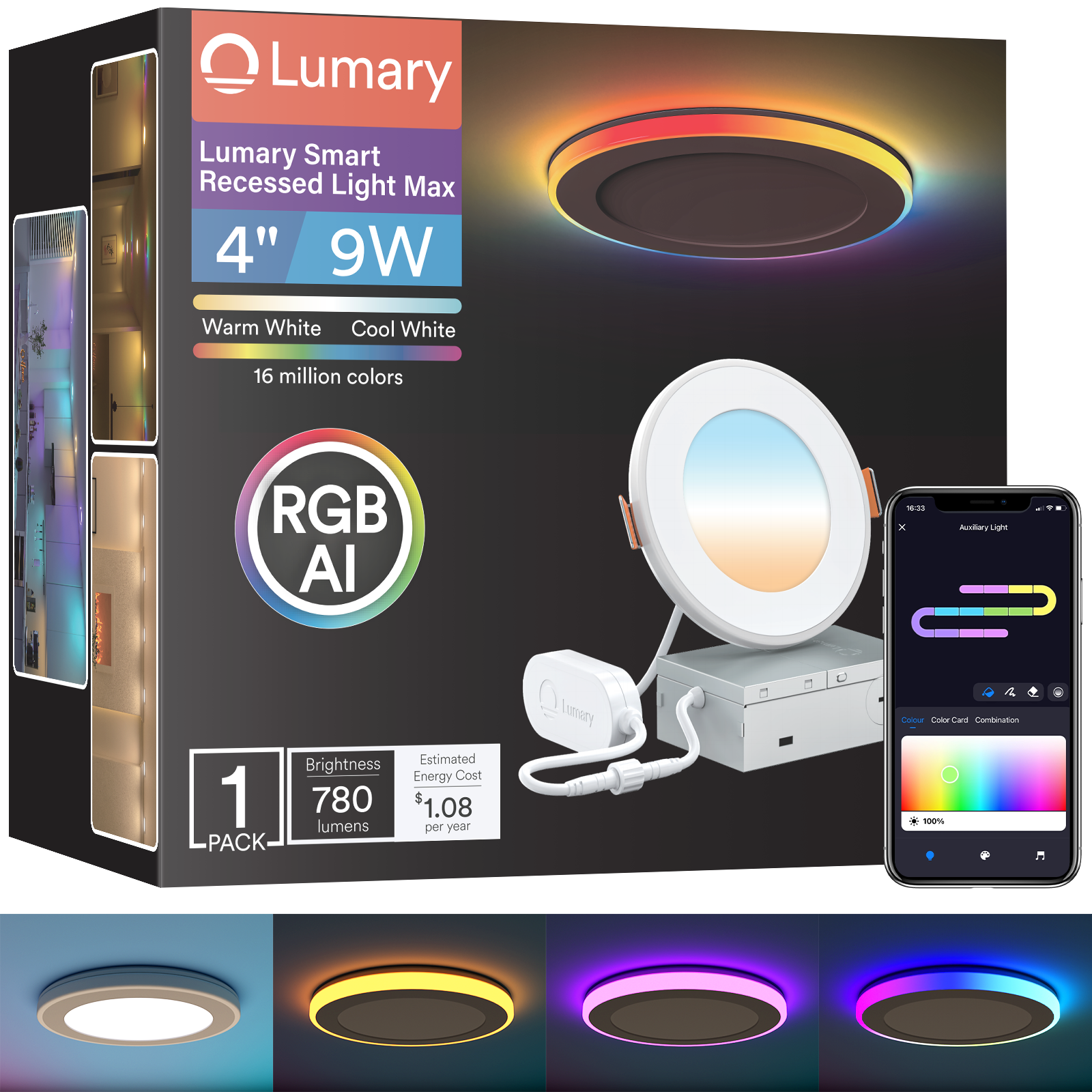
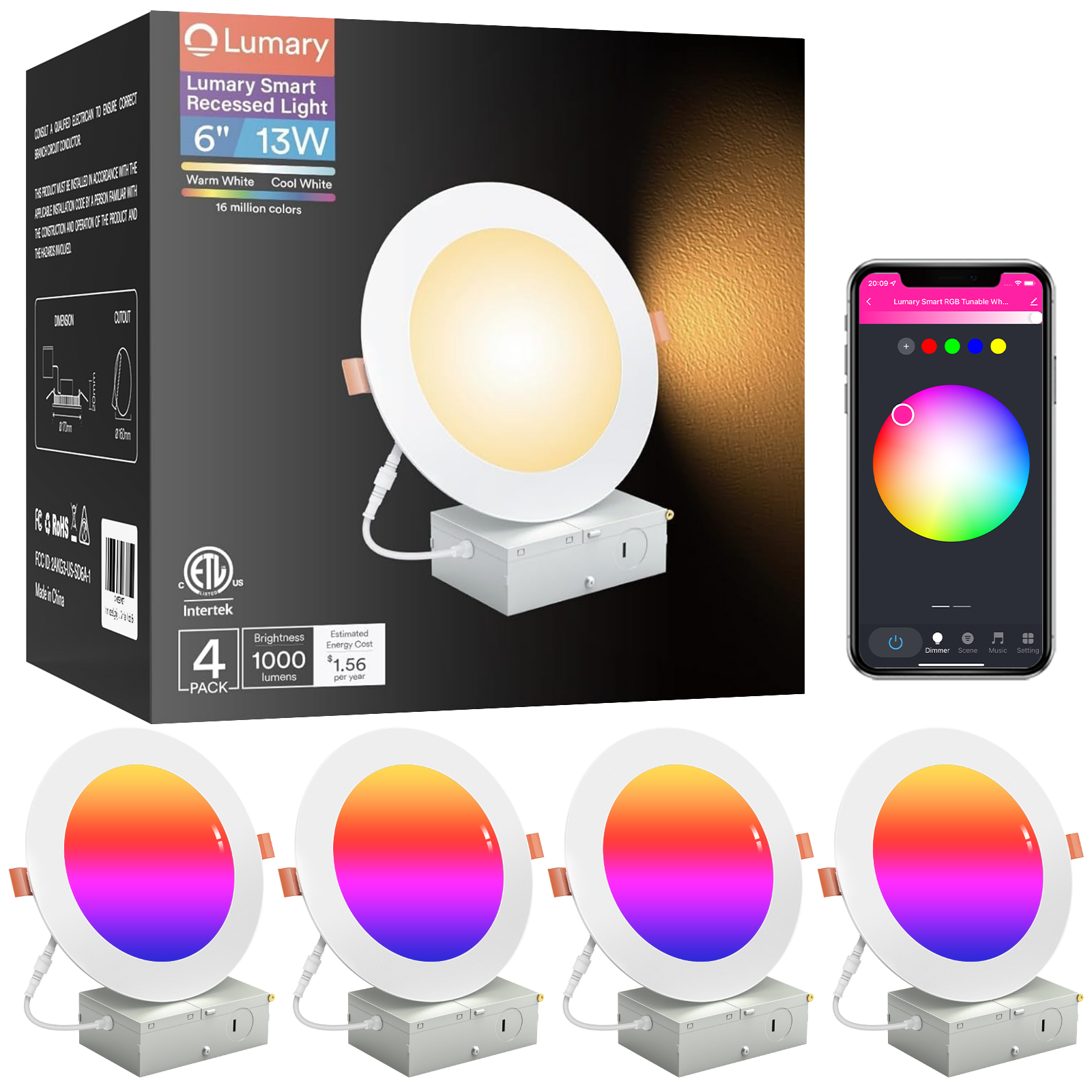
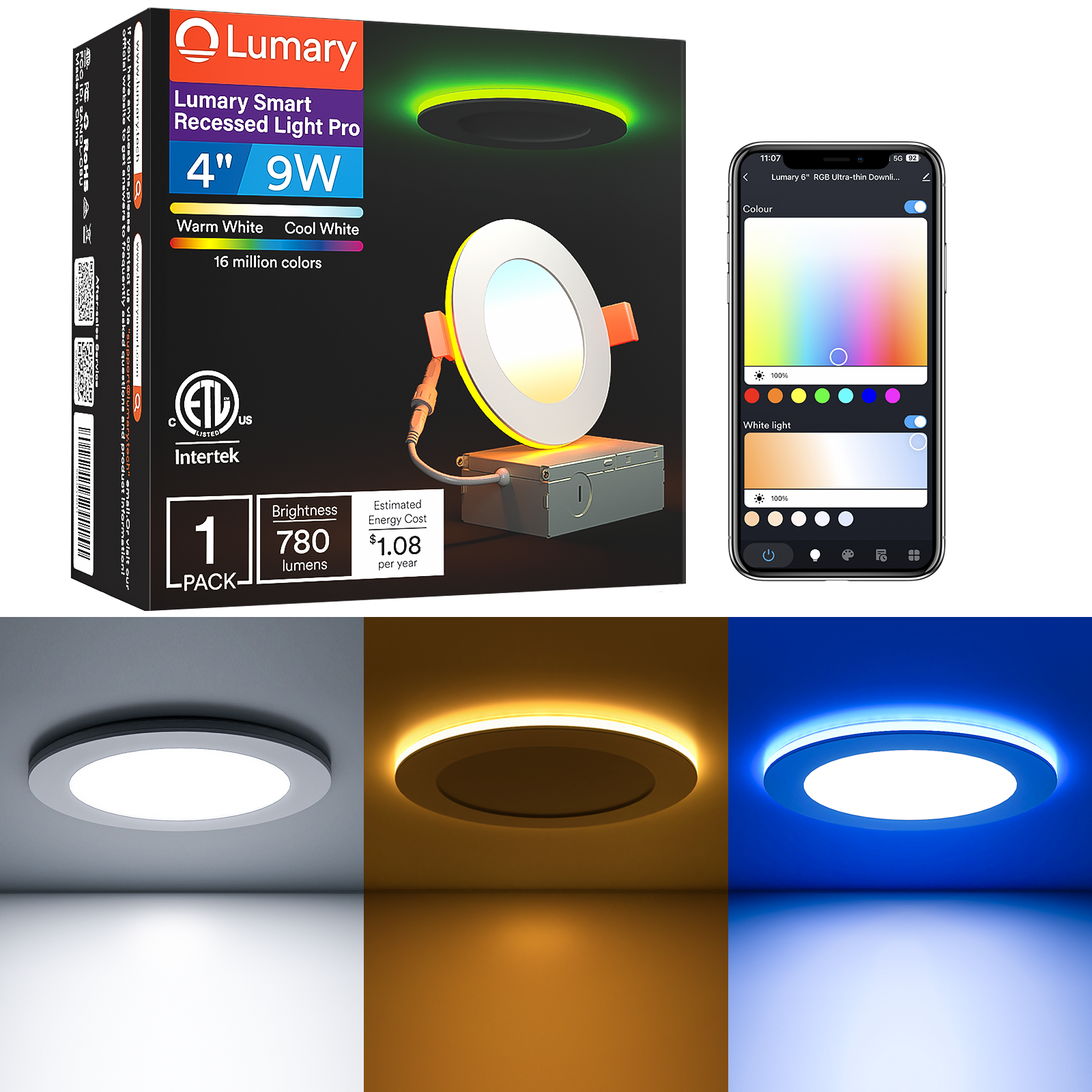
That is why a product such as the Lumary Wi-Fi Smart Canless Recessed Lighting 6 inch 4 PCS fits the “standard room” question well. It uses a 6-inch ultra-thin canless form factor, 13W power rating, up to 1100 lumens, RGBCW color output, 2700K–6500K tunable white, 1%–100% dimming, app control, voice control, music sync, grouping, scheduling, and memory function. In practical terms, it is not just a ceiling light; it is a lighting-control system built into a low-profile downlight format. (lumarysmart.com)

Product Analysis
The Lumary 6-inch smart canless recessed light is designed for homeowners who want the clean ceiling look of recessed lighting without relying on bulky can housings. The product page identifies the 4-pack model as US-SD6A-4 in white and US-SD6B-4 in black, with app, remote, and voice control, 120V input, 2700K–6500K color temperature adjustment, RGBCW light color, 1%–100% brightness control, and 16 million color options. It supports Alexa and Google Assistant voice operation, uses 2.4 GHz Wi-Fi through the Lumary App, and includes group control, schedules, shared control, memory function, and music sync. The stated design is ultra-thin, flicker-free, silent, and installed with a junction box and spring clips. (lumarysmart.com)
The most important procurement point is that this is a general-room 6-inch smart downlight, not a decorative micro-spot. The 6-inch size helps distribute light across a larger visual field, while the 1100 lm / 13W specification gives it the output class expected for ceiling-wide ambient lighting. The RGBCW structure also matters: instead of treating white light as an afterthought, the product offers tunable white from warm 2700K to cool 6500K, allowing one fixture to cover evening relaxation, morning routines, work sessions, cleaning light, and entertainment scenes. (lumarysmart.com)
| Key Buying Dimension | Common Low-Quality Performance to Avoid | Lumary 6-inch 4 PCS Technical Implementation | Long-Term Use Impact |
|---|---|---|---|
| Size and coverage | An overly small aperture creates concentrated light spots and dark room corners | 6-inch recessed format, suitable for general lighting in standard rooms | Easier to create an even ceiling light field and reduce the need for supplemental lighting |
| Brightness efficiency | High advertised brightness but insufficient real-world illumination | 13W, up to 1100 lm product positioning | Balances brightness and energy use, suitable for bedrooms, living rooms, kitchens, and similar spaces |
| White-light adjustment | White light appears too blue or too yellow and cannot match different scenarios | 2700K–6500K tunable white | Different color temperatures can be used for morning and evening, reading, movie watching, and cleaning |
| Color system | Obvious RGB color banding and limited ambience modes | RGBCW, 16 million colors, 8 scene modes | Richer color control for entertainment, holidays, parties, and kids’ rooms |
| Dimming | Low-brightness stepping or harsh nighttime glare | 1%–100% brightness adjustment | More refined for night-light, movie, and pre-sleep modes |
| Control logic | Only single-light control, with multiple lights failing to stay synchronized | Lumary App group control, schedule, and shared control | Multi-light scene management, suitable for deploying 4 lights as a group |
| Voice ecosystem | Requires manual switching and has weak smart-home integration | Compatible with Alexa and Google Assistant | Home, away, and sleep scenes can be triggered by voice |
| Sound-light linkage | Delayed or rhythmically weak music ambience | Music Sync through the app | More immersive for gaming rooms, media rooms, and party spaces |
| Installation structure | Traditional can housings take up ceiling space and make renovation more complex | Canless ultra-thin design, junction box + spring clips | Better suited for retrofit projects and low-ceiling spaces |
| Visual comfort | Low-frequency flicker, noise, or driver interference affects the experience | Product page states flicker-free and silent operation | Better suited for long-term household main-lighting environments |
| Memory and automation | Scenes are lost after the light is turned off or power is interrupted | Memory function retains last settings | No need to readjust settings repeatedly in daily use |
Seeing It Alongside Mainstream Smart Lighting Brands
In the smart lighting market, Philips Hue usually represents a mature ecosystem and multi-device automation experience; Govee is known for entertainment ambience, RGB scenes, and immersive lighting applications; LIFX is recognized for highly saturated color and Wi-Fi smart lighting experiences; WiZ leans toward easy-to-use home smart lighting; Kasa is often used in combinations of smart plugs, bulbs, and home automation devices; and eufy appears more often in home smart devices and security ecosystems.
Lumary’s positioning is more focused: it places smart lighting control, RGB ambience, tunable white light, voice control, and a canless recessed structure into one 6-inch ceiling light product. For users who are already planning to cut ceiling openings and install recessed lights, this form factor is more complete than simply replacing a bulb with a smart bulb, because it directly addresses ceiling cleanliness, lighting coverage, installation space, group control, and scene memory—issues that are the hardest to redo during the renovation stage.
In other words, Philips Hue, Govee, LIFX, WiZ, Kasa, and eufy each have mature roles in the smart home category. The advantage of this Lumary 6-inch canless recessed light is that it is not a desk lamp, light strip, or bulb replacement, but an embedded smart lighting solution designed for main lighting in a standard room.

Scenario One: Upgrading a Standard Bedroom From “One Switch Controls All Brightness” to Time-Based Lighting
The most overlooked issue in a standard bedroom is that lighting needs change completely throughout the day. In the morning, getting up calls for higher brightness and a cooler color temperature to help the space feel more alert. Before bed at night, lower brightness and warmer color temperature are needed to avoid visual overstimulation. Traditional recessed lights only offer on and off control, and at most rely on a wall dimmer; they cannot simultaneously handle brightness, color temperature, color, scheduling, and memory.
The Lumary 6-inch 4-pack works more like a “bedroom lighting environment controller.” Four lights can be installed as a group between the bed area and closet area, with brightness, color temperature, and scenes adjusted through the Lumary App. 2700K can be used for bedtime reading or relaxation, while 6500K can be used for cleaning, organizing clothes, or waking up in the morning. The 1%–100% dimming range lets you get up at night without turning on a harsh main light, while the memory function allows the lights to return to the previous setting instead of requiring you to adjust them again every time. (lumarysmart.com)
For a standard 10 × 12 ft or 12 × 12 ft bedroom, the value of a 6-inch fixture is that it reduces fragmented light spots. If smaller-aperture lights are used in insufficient quantity, the bedside area, closet edges, or room corners can easily become dark. A 6-inch downlight is better suited to handling basic illumination, while color temperature and brightness changes create emotional depth. It is not about turning the bedroom into a flashy color space; it is about allowing the room to transition more naturally between waking, organizing, reading, and sleeping.
Scenario Two: Living Room and Home Theater Lighting That Avoids the Divide Between “Only the TV Is Bright” and “The Ceiling Light Is Harsh”
The challenge of living room lighting is that the room serves as a social area, a movie space, and sometimes a reading area, gaming area, children’s activity zone, or temporary workspace. Many homes have only one central ceiling light in the living room. When it is on, the entire room is too bright; when it is off, the TV area creates a strong contrast between bright and dark, causing the eyes to constantly adjust between the bright screen and the dark background, which can become tiring over time.
Lumary’s 6-inch recessed solution is well suited as an “adjustable background lighting layer.” Four lights can be placed around the sofa area or in front of the TV wall. During movies, brightness can be reduced and warm white light can be used. During games or gatherings, RGB color scenes can be activated. For everyday hosting, neutral white or warm white can keep the space bright without feeling sterile. Music Sync allows the lights to respond to music or game audio, creating a stronger sense of immersion during parties, console gaming, or a home theater intro sequence. (lumarysmart.com)
The key buying point here is not “the more colors, the better,” but control granularity. If the main light, floor lamp, TV backlight, and recessed lights in a living room are all controlled separately, users quickly lose patience with adjustments. Lumary App group control allows multiple recessed lights to be managed as one room scene, reducing repetitive operation. For a standard living room, the 6-inch size provides coverage, while smart control provides atmosphere. The combination is what makes users willing to keep using the system over the long term.
Scenario Three: Kitchen and Open Dining Spaces That Separate Task Lighting From Ambience Lighting
The common problem with kitchen lighting is not that it is “not bright enough,” but that it is bright in the wrong way. The food-prep area needs clear, even, neutral-to-cool task lighting. The dining area needs softer, warmer light. An open kitchen also needs to coordinate color temperature with the living room. If fixed-color-temperature recessed lights are used, it is difficult to adjust the character of the space after the renovation is complete.
The value of Lumary 6-inch canless recessed lighting lies in its adjustable color temperature. The 2700K–6500K range covers everything from warm dining ambience to high-visibility task lighting. When cooking, brightness and color temperature can be increased so ingredients, knives, and sink areas are easier to see. During dinner, brightness can be lowered and the light warmed to reduce the cold, utilitarian feel of the kitchen workspace. For an open dining-kitchen area, four lights can create a basic lighting group, then be paired with a pendant light or under-cabinet lighting for layered illumination. (lumarysmart.com)
The 6-inch size is especially suitable for handling overall ambient lighting in the kitchen. A 4-inch light can provide more refined local points of light, but if budget and ceiling-opening count are limited, the 6-inch size delivers higher coverage efficiency. When buying, do not look only at how thin the fixture appears. Control method, brightness, color temperature range, and installation structure also matter. Lumary uses a canless ultra-thin design with a junction box and spring clips, making it suitable for retrofit projects that aim for a clean ceiling look. (lumarysmart.com)
Scenario Four: Gaming Rooms or Multimedia Rooms Where Sound-Light Sync Supports Immersion Instead of Creating Distraction
Gaming room lighting should not be merely “colorful.” What truly affects the experience is response logic, brightness control, and background layering. The screen itself already provides bright, dynamic visuals. If the ceiling light is too bright, it reduces screen contrast. If the environment is completely dark, long gaming sessions can cause eye fatigue. The ideal state is to reduce the main light, retain background illumination, and let color match the game or music atmosphere without directly interfering with the line of sight.
Lumary’s Music Sync and RGB scenes suit this type of space. Four 6-inch recessed lights can be installed behind the seating position, in the room’s corners, or away from the direct area above the screen to prevent light from shining directly onto the monitor. During gaming, a low-brightness color scene can be used. During streaming or voice chat, the lights can be switched to stable white light. When cleaning or organizing equipment, they can be adjusted back to high brightness. The 1%–100% dimming range is especially important because gaming rooms often need a middle state: dark enough, but not completely black. (lumarysmart.com)
This setup is also better suited for long-term room design than temporary adhesive light strips alone. Light strips are ideal for outlining a desk, wall, or monitor backlight, while recessed lights are responsible for overall visibility and the space’s baseline brightness. The Lumary 6-inch 4-pack can serve as the ceiling’s foundational layer, then work with desk lighting and monitor backlighting to create a multi-layer system. When buying, the focus should not be only the number of RGB colors, but whether the product can reliably switch among white light, colored light, low brightness, grouping, and memory.
Scenario Five: Whole-Home Renovation After Moving From Renting to Owning, With Priority Given to a Canless Structure That Reduces Rework
Many homeowners underestimate the structural cost of recessed lighting during their first renovation. Traditional recessed cans require consideration of ceiling depth, can placement, joists, insulation, and access space. Once the hole layout is poorly planned, moving light positions later can require patching holes, rerouting wiring, and repainting the ceiling. Choosing a 6-inch canless recessed light for a standard room is about finding the balance between coverage efficiency and installation flexibility.
Lumary’s ultra-thin canless design is suitable for users who want to keep the ceiling clean and reduce the amount of space occupied by the fixture body. The product page states that installation uses a junction box and spring clips, and that the product provides smart control, grouping, scheduling, and memory function. In other words, after the user completes basic wiring and ceiling openings during renovation, most daily-use behavior happens through the app, voice control, and scenes, rather than constantly replacing bulbs or adding external devices. (lumarysmart.com)
For whole-home renovation, a 4-pack is a reasonable starting point. It can be used in a standard bedroom, study, small living room, or kitchen area. If the system is later expanded to a larger space, the page also shows 8 PCS, 12 PCS, and 24 PCS options in the recommended section, making it easier to maintain a consistent appearance and control logic. (lumarysmart.com)

Professional Perspective: Who Should Buy This 6-inch Smart Canless Recessed Light?
From a hardware editor’s perspective, choosing recessed lighting should not be based only on whether it can change colors. A more reliable selection logic is to first consider the room type, then the aperture size, then brightness and color temperature, and finally whether the control system is practical enough for daily use.
The users best suited for the Lumary 6-inch 4 PCS fall into three main groups. The first group is people renovating a standard bedroom, living room, study, or kitchen who want to complete both main lighting and smart control in one step. The second group is people who have already decided to use 6-inch recessed lighting but do not want a traditional can housing and prefer a cleaner ceiling. The third group is people who want one fixture to cover warm white, cool white, RGB ambience, voice control, scheduling, grouping, and music sync.
It is especially suitable for the combination of “standard-room main lighting + smart scenes,” rather than being used only as a small-area decorative accent. The 6-inch aperture provides basic coverage, the 1100 lm / 13W specification provides main-lighting capability, 2700K–6500K handles white-light scenarios, RGBCW and 16 million colors support ambience needs, and App, Alexa, Google Assistant, group control, and schedule functions solve automation needs in long-term use. (lumarysmart.com)
FAQ
1. Should a standard room use 4-inch or 6-inch recessed lights?
For standard bedrooms, living rooms, studies, kitchens, and other spaces that need general lighting, 6-inch is usually the safer choice because it offers wider coverage and greater layout tolerance. 4-inch lights are better suited for localized accent lighting, modern minimalist visuals, or small task-lighting areas. Home Depot’s guide also notes that 6-inch fixtures are the most common size for general lighting. (homedepot.com)
2. Will a 6-inch recessed light be too bright?
The key is not the size itself, but dimming capability. This Lumary model supports 1%–100% brightness adjustment, so brightness can be adapted for cleaning, reading, movie watching, and pre-sleep scenarios. High brightness provides headroom, while low brightness provides comfort. (lumarysmart.com)
3. Why is tunable white more important than simple RGB?
Most daily lighting uses white light, not colored light. 2700K is suitable for relaxation and nighttime ambience, around 4000K is suitable for everyday activities, and 6500K is better for cleaning, organizing, and high-visibility tasks. RGB handles mood; tunable white handles quality of life. This Lumary model covers 2700K–6500K and provides an RGBCW color system. (lumarysmart.com)
4. How large of a room is one 4-pack suitable for?
The actual number of lights depends on room size, ceiling height, wall color, furniture obstruction, and desired brightness. As a rule of thumb, even lighting under an 8 ft ceiling can be planned at about 4 ft spacing, because a common layout rule estimates spacing by dividing ceiling height by two. Four 6-inch lights usually work as a basic lighting starting point for a standard bedroom, study, small living room, or kitchen area. (homedepot.com)
5. What should buyers focus on when choosing canless recessed lights?
Focus on four things: whether the aperture size fits the room, whether brightness and color temperature cover daily scenarios, whether the installation structure suits the ceiling conditions, and whether the control method is stable enough for long-term use. This Lumary model combines a 6-inch canless form factor, junction box + spring clips, 1100 lm, 2700K–6500K, RGBCW, and App/voice/group/schedule control in one product, making it suitable for standard-room lighting projects that aim to reduce later rework. (lumarysmart.com)

