




For most homes, a reliable starting point is 2700K–3000K for the living room, 2700K for the bedroom in the evening, and 3000K–3500K for the kitchen. Those are not rigid rules, but they align closely with residential guidance and with the way these rooms are normally used. ENERGY STAR residential lighting guidance lists 2700K or 3000K for living rooms and bedrooms, while kitchens can reasonably use 2700K, 3000K, or 3500K, depending on the desired appearance and task requirements. The U.S. Department of Energy similarly describes 2700K as friendly and residential, 3000K as warm and pleasing, 3500K as more neutral, and approximately 4100K as distinctly cooler and more work-oriented. ENERGY STAR’s residential room-by-room CCT guidance U.S. Department of Energy guidance on correlated color temperature
| Room | Best starting CCT | When to adjust it | Practical recommendation |
|---|---|---|---|
| Living room | 2700K–3000K | Slightly cooler during daytime activities; warmer and dimmer at night | Start at 2700K for cozy interiors or 3000K for modern, neutral interiors |
| Bedroom | 2700K | 3000K can work for dressing or morning routines; return to warmer/dimmer light before bed | Use 2700K at low brightness in the evening |
| Kitchen | 3000K–3500K | Higher output or slightly cooler white can help during detailed food-prep tasks | Start at 3000K; move toward 3500K if the room feels too warm or lacks task clarity |
| Open kitchen + living room | 3000K | Warm the living zone to 2700K later in the evening if separately controllable | 3000K is often the safest visual bridge between work and relaxation areas |
The important distinction is that color temperature and brightness are not the same thing. A 2700K light can still be extremely bright, while a 4000K light can be dim. Kelvin describes the apparent warmth or coolness of white light; lumens describe visible light output. ENERGY STAR describes lower values such as 2700K–3000K as warmer, while 4000K and above appear increasingly cooler or bluer. Its downlight criteria also treat CRI separately because color rendering describes how accurately illuminated objects appear, not how warm the white light looks. ENERGY STAR’s downlight color and CRI criteria
That distinction matters especially in a kitchen. If a 3000K kitchen feels insufficiently functional, automatically changing to 5000K may solve the wrong problem. The issue may instead be insufficient lumens, poor fixture placement, shadowing over the counters, or low-quality color rendering. ENERGY STAR’s builder guidance recommends CRI 90 for kitchens, while its suggested residential CCT range extends only to 3500K. In other words, accurate food and surface colors can be improved through good color rendering and adequate illuminance without necessarily turning the room into a cool-white commercial workspace. ENERGY STAR guidance on residential CCT and CRI by room
For bedrooms, time of day deserves even more weight than interior style. A bedroom may need relatively clear white light while getting dressed in the morning, but evening lighting should generally become warmer and dimmer. The medically reviewed Sleep Foundation guide to light and sleep recommends low illuminance and warm color temperature before sleep, while Harvard Health’s explanation of blue-enriched evening light notes that blue-rich light at night can increase alerting signals and interfere with the normal transition toward sleep. The goal is not to claim that one precise Kelvin number guarantees better sleep; brightness, duration, timing, spectrum, and individual response all matter. The practical conclusion is simpler: do not use 5000K–6500K recessed ceiling lighting at high brightness as your default late-night bedroom scene merely because the fixture can produce it.
Living rooms benefit from the same principle for a different reason. They often shift from conversation, reading, cleaning, homework, and entertaining during the day to television and relaxation at night. Lutron’s explanation of tunable-white lighting and color temperature notes that tunable white allows intensity and CCT to be adjusted independently across the day. That is more useful than selecting a single permanent Kelvin number for a multifunction room. A homeowner might therefore use 3000K at moderate output in the afternoon, then shift to 2700K and reduce brightness later in the evening.
The same strategy can work in the kitchen. Lutron describes 2700K as the warmer residential option and 3000K as slightly cooler, with the latter commonly used where a brighter visual character is desired, including kitchens. In an open-plan home, maintaining similar color temperatures across visible zones often looks more coherent than running a 2700K living room immediately beside a 5000K kitchen. Recent community discussions among lighting users echo this practical point: people frequently notice a mismatch between 3000K overhead lighting and much cooler under-cabinet lighting, particularly at night. Community feedback is not a lighting standard, but it is useful evidence of how strongly visible CCT differences can affect perceived interior cohesion. Lutron’s residential downlight CCT design guidance Recent homeowner discussion about mixing 3000K and 4000K kitchen lighting
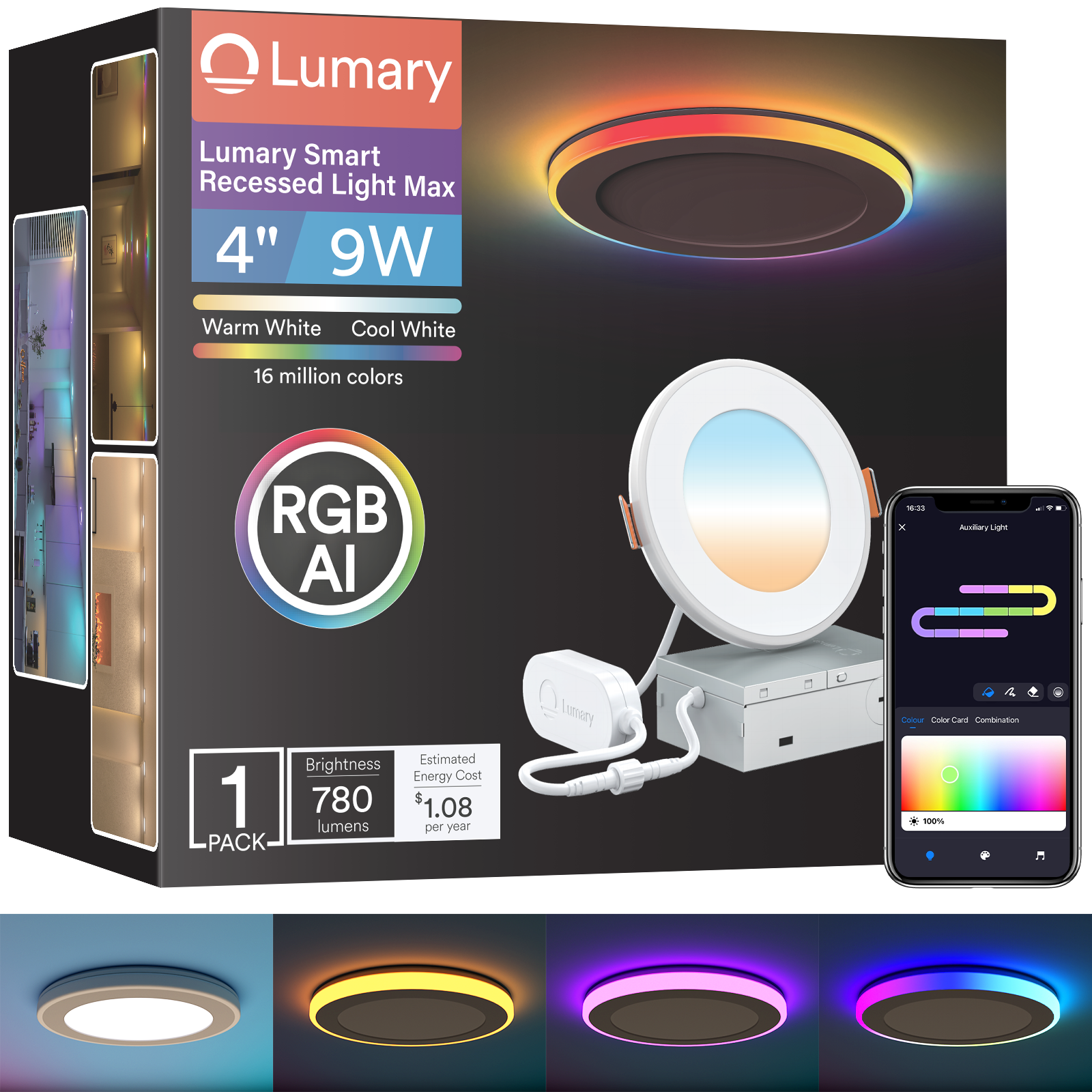
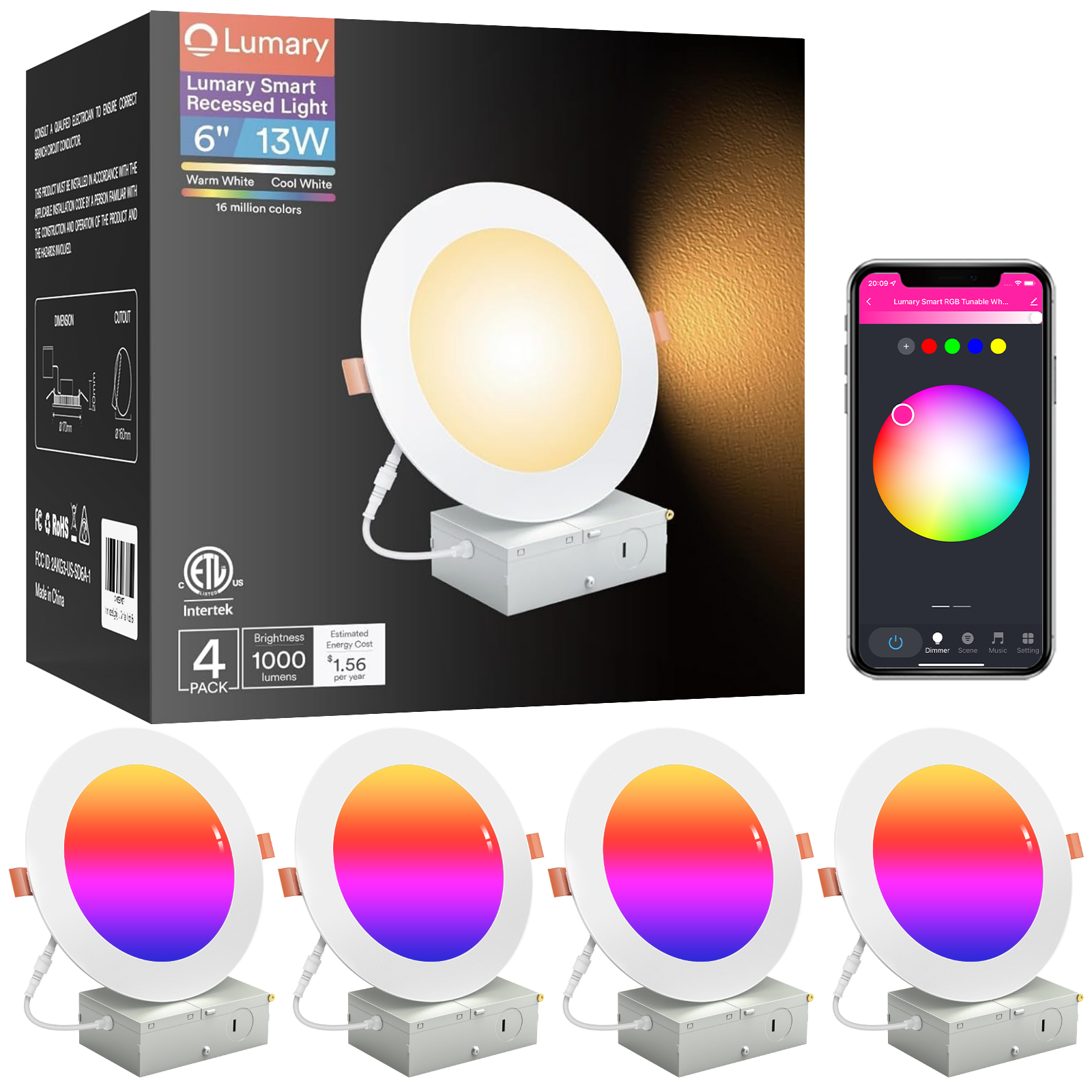
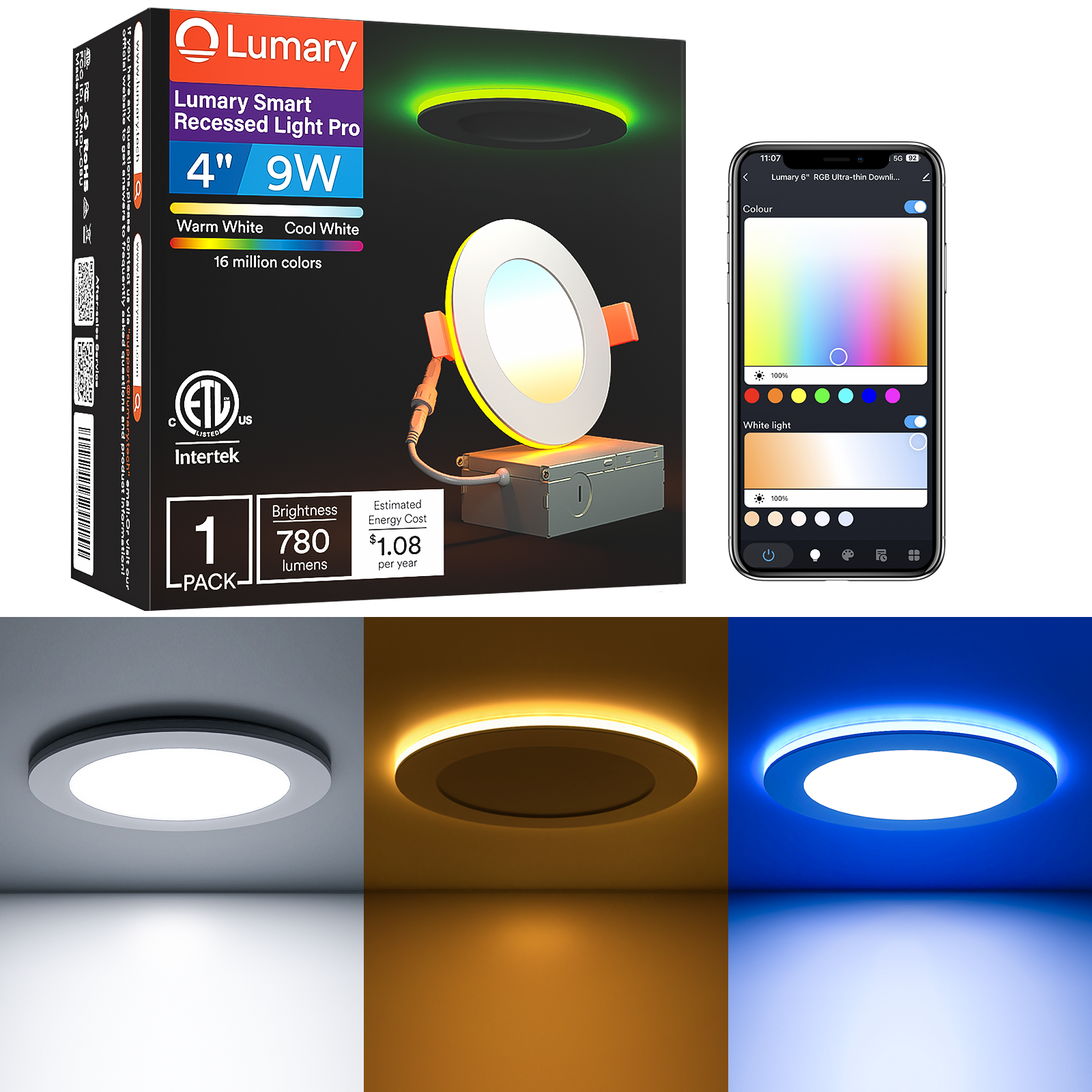
This is where a tunable-white recessed fixture can have a real advantage over a fixed-CCT downlight. The Lumary Wi-Fi Smart Canless Recessed Lighting 6-inch 4-pack offers a published 2700K–6500K adjustable white range and 1%–100% brightness control, allowing the same installed fixtures to cover warm residential lighting and temporarily cooler task-oriented scenes. The useful feature is not simply that 6500K is available; it is that you are not forced to decide between 2700K, 3000K, and 3500K permanently before installation.
Product Fit: Why Tunable White Matters More Than Maximum Kelvin
For the specific question of choosing color temperature in a living room, bedroom, and kitchen, the Lumary product has a strong functional fit because its 2700K–6500K white-light range spans all of the normally useful residential settings discussed above. Instead of choosing a fixed 3000K recessed fixture and living with that decision in every situation, the homeowner can create separate white-light states for everyday relaxation, cooking, cleaning, entertaining, or morning use. The official product page also states that multiple lights can be grouped across living rooms, kitchens, and bedrooms, and that schedules can be created through the Lumary app over 2.4GHz Wi-Fi. See the Lumary 6-inch smart canless recessed lights
Its CRI 90 specification is particularly relevant for kitchens and mixed-use living areas. CRI is an imperfect but familiar metric, yet it remains useful for basic residential comparison. ENERGY STAR’s builder material states that IES guidance calls for CRI 80 or better in home environments and values in the 90s where color is more important; its room table specifically identifies 90 CRI for kitchens. Lumary lists CRI 90 in the formal specifications, putting it at a sensible threshold for food, countertops, wood finishes, clothing, and skin tones.
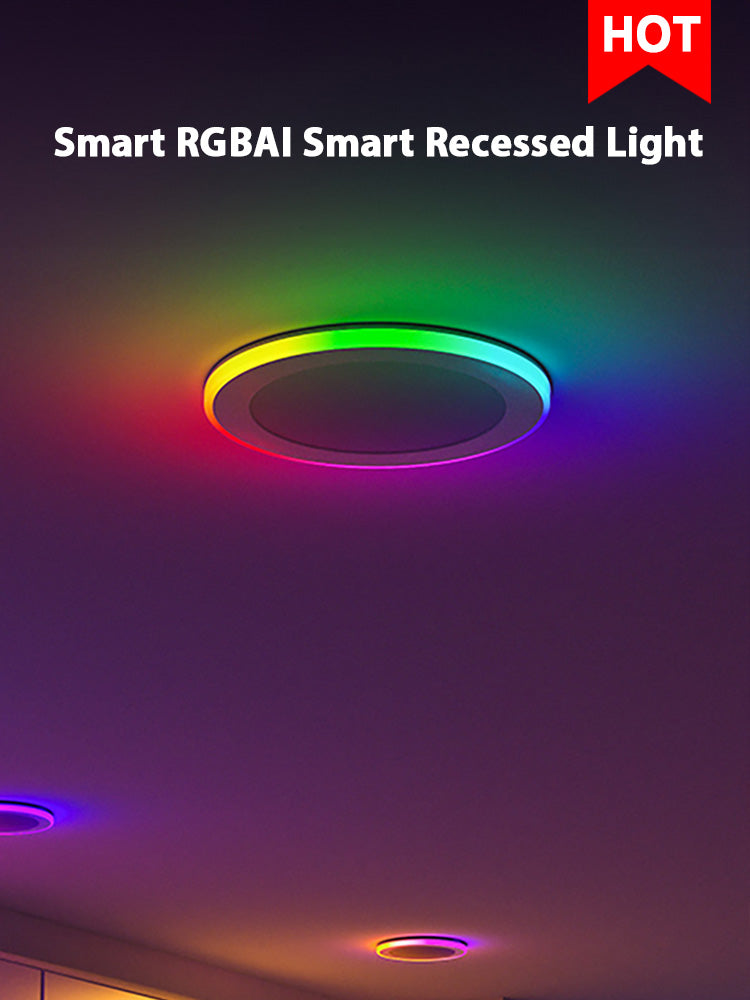
The fixture also provides 16 million RGB colors and eight scene modes, but those should not distract from the white-light decision. RGB is useful for parties, gaming, holidays, children's rooms, or accent scenes. It is not a substitute for high-quality everyday white light. In a kitchen, for example, the buyer should first establish the correct white CCT, output, distribution, and CRI. Color effects are secondary. In a bedroom, a low-brightness amber or warm-colored scene can be pleasant, but darkness remains preferable during actual sleep.
One important specification detail deserves clarification. The current Lumary product page is internally inconsistent about output: the descriptive copy states 13W and 1100LM, while the formal specifications table lists 13W and 1000 lumens. Because the structured specification field is the more conservative value, this article uses 1000 lumens per fixture for planning examples. Buyers for whom exact photometric output is critical should confirm the current rated lumen value with Lumary before finalizing a professional lighting calculation.
Verified Technical Specifications
The table below uses the official Lumary listing as the product-specification authority. Where the marketing description and formal specification field disagree, that conflict is disclosed rather than silently choosing the larger claim.
| Specification | Lumary Wi-Fi Smart Canless Recessed Lighting 6 Inch 4 PCS |
|---|---|
| Model | US-SD6A-4 White / US-SD6B-4 Black |
| Fixture type | Ultra-thin canless recessed downlight with junction box and spring clips |
| Size | 6 inch |
| Rated power | 13W |
| Published brightness | 1000 lm in formal Specs table; 1100LM in product description |
| White color-temperature range | 2700K–6500K |
| Brightness adjustment | 1%–100% |
| Color system | RGBWW |
| RGB capability | 16 million colors |
| Preset scenes | 8 scene modes |
| CRI | 90 |
| Voltage | AC 110V |
| Connectivity | Bluetooth + Wi-Fi |
| Wi-Fi requirement stated in description | 2.4GHz |
| Control | Lumary App, remote, voice |
| Voice platforms listed | Google Assistant, Alexa, Siri |
| Smart functions stated | Group control, schedules, remote control, sharing, memory function, music sync |
| Specification / compliance labels listed | FCC, ETL |
The presence of tunable white should change how the buyer thinks about the specification table. A fixed 3000K downlight asks, “Is 3000K the correct choice for this room forever?” A tunable 2700K–6500K fixture asks the more useful question, “What range of settings should I actually program for this room?” For most residential use, only part of the available range may become part of the everyday routine.
Room-by-Room Color Temperature Strategy
For a living room, start at 2700K if the room contains warm woods, beige upholstery, traditional furnishings, brass finishes, or if the priority is evening relaxation. Start closer to 3000K if the architecture is contemporary, the surfaces are white or gray, the room receives significant daylight, or the space doubles as a reading or work area. ENERGY STAR’s room table supports both 2700K and 3000K for living spaces, while a recent r/Lighting discussion shows the same range recurring in practitioner and homeowner preferences. The community discussion also makes an important design point: recessed ceiling lighting alone often feels less relaxing than layered lighting from table lamps, floor lamps, and wall sources. Lighting community discussion of 2700K versus 3000K for living rooms
With the Lumary 6-inch tunable recessed lights, a practical living-room routine might use approximately 3000K at medium brightness for daytime cleaning, homework, or guests, then return to 2700K with reduced output after dinner. If a floor lamp or decorative fixture uses a fixed 2700K lamp, matching the recessed lights to it during the evening can create a more unified composition. The most visually disruptive setup is often not choosing “the wrong” CCT in isolation, but combining multiple visibly different whites in the same sightline.
For a bedroom, 2700K is the safer default. ENERGY STAR includes both 2700K and 3000K for bedrooms, but sleep-oriented use pushes the evening preference toward the lower end of that range. Sleep Foundation guidance recommends dim, low-color-temperature light when preparing for bed, and IES discussion of biologically appropriate lighting notes that replacing cooler 6500K evening lighting with warmer 3000K lighting can substantially reduce melanopic stimulation under comparable conditions. CCT alone does not determine biological effect, but warm and dim is a much better late-evening design direction than cool and bright. IES discussion of biologically appropriate evening lighting Sleep Foundation bedroom lighting recommendations
A tunable bedroom fixture can still use cooler settings strategically. In the morning, a user may prefer 3000K or a somewhat cooler appearance while dressing or cleaning. The important thing is to avoid making the brightest cool-white setting the all-day default simply because it appears “cleaner.” Late in the evening, move back toward 2700K and reduce output substantially; during sleep, turn the ceiling lights off. The Lumary fixture's memory function can retain the previous state, while schedules allow recurring behaviors to be automated.
For a kitchen, 3000K is the best universal starting point. It is warm enough to remain residential but neutral enough that white cabinetry, stainless steel, stone, and food do not become excessively amber. ENERGY STAR’s residential table permits 2700K, 3000K, and 3500K in kitchens and specifically associates the kitchen with CRI 90. Lutron likewise characterizes 3000K as a slightly cooler residential white suitable for kitchens, bathrooms, and back-of-house spaces.
Move toward 3500K when a kitchen is very modern, heavily task-oriented, relatively dark during the day, or when occupants simply prefer a cleaner white appearance. Use 2700K when the kitchen shares an open sightline with a very warm living/dining space, especially at dinner. A homeowner may temporarily try 4000K for detailed cleaning or daytime task work, but 4000K should not automatically be treated as a “better kitchen” setting. DOE describes approximately 4100K as cool, neat, and efficient and places it more naturally in offices, classrooms, and showrooms than traditional residential environments.
CCT Is Only Half the Equation: Brightness, Lumens, and Placement
A common lighting mistake is trying to fix insufficient illumination by increasing color temperature. If the counter feels dim at 3000K, the answer may be more usable light on the counter rather than 5000K overhead. DOE explicitly distinguishes lumens from watts and CCT: lumens measure the amount of visible light, while CCT describes its apparent white color. The Lumary formal specification lists 1000 lumens per fixture, so four fixtures theoretically represent 4,000 source lumens before accounting for distribution, room geometry, surface reflectance, fixture losses, and where the light actually lands.
Recessed-light quantity therefore should not be calculated from CCT alone. Room area, ceiling height, wall and floor reflectance, spacing, furniture, daylight, countertop task requirements, and other fixtures all matter. The Illuminating Engineering Society Illuminance Selector is built around recommended maintained illuminance targets rather than arbitrary “one can every four feet” rules. For a professional remodel or a visually demanding kitchen, a lighting plan based on target illuminance and photometric data is more reliable than simply dividing square footage by fixture count.
For a simple consumer estimate, treat each nominal 1000-lumen Lumary fixture as one source in a layered system rather than assuming all 1000 lumens reach the work plane. In a living room, recessed lights may provide general illumination while table and floor lamps create comfortable visual layers. In a bedroom, the ceiling lights can handle dressing and cleaning while bedside lamps handle pre-sleep use. In a kitchen, recessed fixtures provide ambient/general lighting while under-cabinet lights can deliver focused task illumination to counters that upper cabinets would otherwise shadow.
Color temperature can then be selected after the quantity and layout make sense. A bright, well-distributed 3000K kitchen usually looks more functional than a poorly distributed 5000K kitchen with dark countertops. Similarly, a 2700K bedroom does not have to feel dim if the fixture count and output are adequate. Kelvin is about the character of the white; it is not a brightness knob.
Matching Color Temperature to Materials and Interior Style
Warm materials usually tolerate warmer CCTs gracefully. Walnut, oak, cream upholstery, beige stone, terracotta, brass, warm paint, and traditional millwork often look natural around 2700K–3000K. Cooler whites can reduce some of that warmth and make the space appear more graphic or clinical. DOE specifically notes that 2700K incandescent-style light complements wood finishes, furniture, and fabrics commonly used in homes.
Crisper interiors can tolerate slightly higher values. A white-and-gray kitchen with quartz countertops and stainless appliances may feel balanced around 3000K–3500K, whereas the same 3500K setting in a traditional cherry-wood kitchen may feel noticeably cooler. This is why selecting CCT solely from a generic internet graphic can fail: two rooms with identical dimensions can look dramatically different under the same light because of material reflectance and color palette.
CRI also changes the result. Two 3000K lights can have the same nominal color temperature and still render surfaces differently because their spectra are not identical. The Lumary fixture's published CRI 90 is a useful baseline, particularly in the kitchen. However, neither CCT nor CRI alone completely describes spectral quality, so very color-critical applications such as professional art evaluation or specialized photography require more detailed metrics than this residential product page provides.
Competitive Landscape: Other Smart Recessed Lighting Approaches
Philips Hue remains one of the strongest ecosystem-oriented alternatives. An independent Philips Hue recessed-light consensus review highlights its broad 2000K–6500K range, 1100-lumen output, full color, and Zigbee mesh architecture, with the tradeoff of a higher per-fixture cost and the practical need for a Hue Bridge when scaling to many lights. Hue is especially compelling for households already invested in its ecosystem or those prioritizing mesh responsiveness across a large number of fixtures. Lumary is more relevant when the buyer prefers direct Wi-Fi control and the supplied canless fixture architecture rather than paying for the Hue ecosystem premium.
Govee competes from the scene and entertainment side. The independent review of Govee’s 6-inch RGBIC Matter canless downlights describes 1100 lumens, a 2700K–6500K range, native Matter, and RGBIC segmented effects. That makes Govee attractive for buyers who want more expressive multi-color behavior or Matter-first integration. For the specific living-room/bedroom/kitchen CCT question, however, the core comparison is less about RGBIC and more about whether the user values Matter support versus Lumary's existing app, voice-control, group-control, schedule, and memory workflow.
Feit Electric provides a value-oriented alternative for whole-room canless installations. An independent Feit 6-inch smart canless downlight review cites 90 CRI, a 2700K–6500K range, direct 2.4GHz Wi-Fi, and Alexa/Google integration. The broader Feit smart recessed-light market is generally positioned around straightforward Wi-Fi control and aggressive multi-pack pricing rather than a highly elaborate lighting ecosystem. It is a credible comparison for homeowners whose priority is functional tunable white and basic voice control at scale.
HALO's WiZ-based smart canless platform is a stronger fit when traditional lighting-brand heritage and WiZ ecosystem compatibility are priorities. The independent HALO HLB WiZ Pro evaluation highlights its slim canless construction and broader ecosystem possibilities through WiZ Pro. HALO is worth comparing for remodels where code ratings, ceiling conditions, and professional installation criteria outweigh entertainment effects. Lumary's advantage for a more lifestyle-oriented buyer is the combination of white tuning, RGB scenes, music sync, grouping, and scheduling in one consumer-focused system.
GE Cync's Reveal wafer platform represents another Matter-oriented canless approach. A current independent whole-house smart downlight comparison identifies the Cync wafer as a slim new-construction option with a very wide white range and Matter support. That makes it relevant for buyers already building a Matter-centric smart home. The tradeoff across all these products is that protocol breadth, app polish, light quality, price, and fixture architecture do not peak in the same product. A buyer should therefore decide whether the primary problem is color-temperature flexibility, smart-home interoperability, installation type, scene effects, or whole-home scaling before comparing headline feature counts.
Real-World Application Scenarios
1. Warm Modern Living Room Used for TV, Reading, and Entertaining
Consider a 16-by-18-foot living room with an 8.5-foot ceiling, light oak flooring, warm-white walls, a gray sectional, a television wall, and six recessed-light positions. The homeowner initially thinks 4000K will make the room feel brighter. That may be true perceptually, but it would also shift the room away from the warm residential appearance normally associated with living spaces. ENERGY STAR places living rooms at 2700K or 3000K, and DOE describes 2700K as friendly and residential.
A better setup is 3000K at approximately moderate brightness for daytime cleaning or guests, then 2700K at a lower level for television and conversation. Table lamps can remain at 2700K so the ceiling and decorative lighting converge in the evening. The recessed fixtures do not need to carry the entire atmosphere; their role is general illumination and flexibility.
With the Lumary smart 6-inch recessed lighting, the homeowner could group the living-room fixtures and create repeatable app states instead of manually changing six lights. RGB scenes remain available for sports, parties, or holidays, but ordinary white-light presets would likely provide more day-to-day value.
The outcome is a living room that can feel clean and functional when needed without spending every evening under cool-white ceiling light.
2. Primary Bedroom With Morning Dressing and Late-Night Wind-Down
Imagine a 14-by-15-foot bedroom with four recessed fixtures, bedside lamps, blackout curtains, and a dressing area. The homeowner needs strong light at 7 a.m. but wants a calm atmosphere after 9 p.m. A fixed 4000K fixture would force the same visual character on both routines.
A tunable strategy solves the conflict. Morning or daytime use can move toward 3000K or another personally preferred neutral setting with higher brightness. In the evening, bring the recessed lights back to 2700K and lower the output significantly. During the final period before sleep, bedside lamps or other low-level sources can replace ceiling lighting entirely.
This follows the direction of Sleep Foundation’s guidance on bedroom light exposure, which favors dimmer, warmer light as bedtime approaches. Harvard Health also explains that blue-enriched evening light can increase alerting signals, reinforcing the idea that maximum-cool 6500K output is a poor default for pre-sleep bedroom use.
Because the Lumary recessed fixture can adjust from 2700K to 6500K and 1% to 100% brightness, the available range comfortably covers the bedroom's useful settings. The design goal is selective use of that range, not using all of it every day.
3. White-and-Wood Kitchen With Heavy Food-Prep Use
Consider a 12-by-16-foot kitchen with white cabinets, oak accents, stainless steel appliances, quartz countertops, recessed ceiling lights, pendants, and under-cabinet lighting. The owner is deciding between 3000K and 4000K because online charts often label 4000K “task lighting.”
Start the recessed layer at 3000K. ENERGY STAR explicitly lists 2700K, 3000K, and 3500K for kitchens and specifies CRI 90 in its example table. The Lumary fixture's published CRI 90 is therefore more relevant to food and surface rendering than simply pushing the CCT upward.
If 3000K feels too amber with the white cabinetry, move the whole kitchen toward 3500K and judge the materials at night, when daylight is not masking the difference. Avoid immediately mixing 3000K ceiling lights with 5000K under-cabinet strips. Recent lighting-community discussions repeatedly report that visible mismatches between warm overhead and cooler task lighting can make the same backsplash or counter look inconsistent. Community opinions vary, but that recurring observation is useful during a mock-up.
For detailed prep or cleaning, increase brightness first. If the owner still prefers a cooler appearance during daytime tasks, the Lumary lights can temporarily move upward without forcing that setting during dinner. The result is a kitchen whose functional mode and social mode no longer have to share one fixed CCT.
4. Open-Plan Kitchen and Living Room With No Visual Separation
A 700-square-foot open floor plan creates a more difficult problem because the kitchen and living room are simultaneously visible. Suppose the homeowner prefers 2700K in the lounge but wants 4000K over the island. When both zones operate at full output, the eye can perceive two different “whites” in one continuous ceiling.
The simplest baseline is 3000K across both zones. It falls inside ENERGY STAR’s suggested ranges for both rooms and creates visual continuity. During active cooking, the kitchen zone can move toward 3500K if preferred while the living room remains at 3000K. Later in the evening, the living room can fall to 2700K and lower brightness while the kitchen is mostly off.
The Lumary product's grouping capability is useful here because kitchen and living-room lights can be assigned to separate groups rather than treated as one ceiling. Schedules and scenes can then transform the space according to activity. Lumary’s smart grouping and scheduling features
This use case illustrates why tunable white is especially valuable in open-plan architecture: the system can preserve visual consistency when both spaces are active and introduce different atmospheres when only one zone is being used.
5. Whole-Home Remodel Where the Owner Does Not Yet Know the Preferred Kelvin
The last scenario is common during renovation. The homeowner must approve dozens of ceiling holes before furniture, paint, flooring, and artwork are fully installed. Choosing a fixed 2700K, 3000K, or 3500K fixture at this stage can feel arbitrary because the final visual context does not yet exist.
Tunable-white fixtures reduce that commitment risk. The homeowner can install the lighting infrastructure first, then evaluate the finished rooms after furniture and finishes are in place. Living areas might settle at 2700K, the kitchen at 3000K or 3500K, and utility areas at a cooler setting. Lutron describes this type of independent CCT and intensity adjustment as the central benefit of tunable-white lighting.
The Lumary 2700K–6500K recessed-light range fits that remodel logic well. The buyer still needs to verify fixture quantity, circuit planning, ceiling cutouts, Wi-Fi coverage, and compatibility with the intended electrical-control scheme, but the color-temperature choice can remain adjustable after construction is complete.
For a homeowner who is genuinely uncertain whether the kitchen should be 3000K or 3500K, that post-installation flexibility may be more valuable than choosing one “perfect” Kelvin number from a chart.
Editorial Assessment
For the specific problem of choosing color temperature among a living room, bedroom, and kitchen, a tunable-white recessed light is generally more useful than a fixed-CCT fixture, provided the homeowner will actually use the controls. The evidence does not support running residential rooms at the highest available CCT simply because the specification reaches 6500K. Instead, authoritative guidance repeatedly centers normal residential use around approximately 2700K–3000K, with kitchens able to extend to roughly 3500K when a cleaner task-oriented appearance is desirable.
The Lumary fixture addresses this application well. It provides a 2700K–6500K range, 1%–100% brightness adjustment, CRI 90, RGB color, group control, scheduling, app control, voice control, a canless installation design, and FCC/ETL specifications on the current listing. Those features allow the buyer to create useful room-specific states rather than buying three different fixed-white fixture families.
The main caution is not color temperature but specification discipline. The official page currently lists 1000 lumens in the formal table while describing the fixture as 1100LM elsewhere. That discrepancy should be resolved before using the fixture in an exact professional photometric calculation. The page also should be checked for the electrical-control method expected in the project; smart dimming should never be assumed to be interchangeable with any arbitrary wall dimmer unless compatibility is explicitly confirmed.
Who should buy it: a homeowner remodeling or adding 6-inch canless recessed lighting who wants to tune living room, bedroom, and kitchen lighting independently, prefers app/voice automation, and values being able to change CCT after installation.
Who should choose something else: a buyer who wants only one fixed 2700K or 3000K setting and has no interest in smart control; a Matter-first household that specifically requires native Matter; or a project where a particular professional dimming/control ecosystem is more important than RGB and app functions.
For most users of this product, the most useful presets will probably be far simpler than its maximum capability: Living Room Relax — 2700K; Living Room Day — 3000K; Bedroom Evening — 2700K at low brightness; Kitchen Everyday — 3000K; Kitchen Task — 3500K at higher brightness. That is a much more practical lighting strategy than assigning 2700K to “cozy,” 6500K to “bright,” and ignoring everything between.
Frequently Asked Questions
1. Is 3000K or 4000K better for a living room?
For most living rooms, 3000K is the safer choice, and many people will prefer 2700K at night. ENERGY STAR residential guidance lists 2700K and 3000K for living rooms, while DOE characterizes approximately 4100K as a cooler, cleaner white more typical of offices, classrooms, and similar environments. That does not make 4000K “wrong,” particularly for a very modern interior or daytime task use, but it is less likely to create the traditional warm residential atmosphere people expect during evening relaxation.
With tunable fixtures, there is little reason to make the decision permanent. Use 3000K when you want clarity and activity, then move toward 2700K and reduce brightness when the room transitions into conversation or television viewing. If decorative lamps are visible in the same room, try to keep their whites reasonably close so the room does not appear divided into different color casts.
2. Is 2700K or 3000K better for a bedroom?
Both are legitimate residential values, but 2700K is the better default for evening bedroom use. ENERGY STAR includes both 2700K and 3000K for bedrooms, while sleep-oriented guidance favors dimmer, warmer light before bedtime. Sleep Foundation’s explanation of warm evening light notes that warmer yellow/orange light is generally preferable before sleep to bright cool-toned illumination.
A useful tunable strategy is 3000K at greater brightness while cleaning, dressing, or getting ready during the day, then 2700K at much lower output in the evening. Turn the lights off during actual sleep. The color temperature is only part of the equation: brightness and timing matter substantially.
3. Should kitchen lights be 3000K, 3500K, or 4000K?
Start with 3000K. Move to 3500K if you prefer a cleaner, more neutral task-light appearance. Use 4000K only if you genuinely prefer that cooler look or have a specific daytime/task reason for it. ENERGY STAR's residential guidance explicitly includes 2700K, 3000K, and 3500K for kitchens, and it associates kitchens with CRI 90.
Before increasing CCT to solve a “dim” kitchen, verify the brightness and task-light placement. Countertops can remain dark even beneath high-CCT ceiling lights if cabinets block the beam. High-CRI under-cabinet lighting at a coordinated CCT can often improve food-prep visibility more effectively than simply making every ceiling fixture cooler.
4. Is 5000K or 6500K too cool for a home?
Not universally, because visual preference varies and some people grew up with or strongly prefer daylight-style white. However, 5000K–6500K is substantially cooler than the typical residential range identified by DOE and ENERGY STAR, and it can appear stark in warm-material interiors at night. DOE places common warm residential white around 2700K–3000K and describes higher CCTs as progressively cooler.
A tunable 6500K maximum should therefore be interpreted as flexibility, not as the recommended everyday setting. Cooler white can be useful for temporary daytime activities, demonstrations, cleaning, or personal preference. In bedrooms and relaxed evening living spaces, warmer and dimmer settings are generally the more comfortable design direction.
5. If my recessed lights are tunable, should I automatically change CCT throughout the day?
No. Tunability gives you options; it does not require constant automation. Many households will be perfectly satisfied with only two or three useful presets. For example, a living room might have 3000K “Day” and 2700K “Relax,” while a kitchen has 3000K “Everyday” and 3500K “Prep.” Lutron explains that tunable white allows color temperature and intensity to be independently adjusted for activity, comfort, and time of day, but those transitions can be as simple or sophisticated as the homeowner wants.
With the Lumary Smart Canless Recessed Lighting 6-inch 4-pack, group control, schedules, memory, and app control make those few useful states easier to repeat. The better goal is not to use every Kelvin value from 2700K to 6500K; it is to make the lighting feel appropriate without requiring the user to think about Kelvin every time they enter a room.

