




You want your outdoor lights to stay bright in any weather. They should work in storms, sunny days, and snowy nights. Picking the best exterior lighting means you need to check a few things. Look at how strong the lights are, their weatherproof ratings, energy use, and smart features. See this table for the most important things to remember:
|
Factor |
Description |
|---|---|
|
Material Durability |
Pick strong materials like aluminum so lights last longer. |
|
IP Rating |
Get IP65 or higher to keep out dust and water. |
|
Fixture Rating |
Choose lights that are certified safe for outdoor use. |
Think about your weather and where you will put the lights. Do you want string lights for cozy nights? Or do you need brighter lights for safety? Make sure your lights fit what you need.
Key Takeaways
-
Pick outdoor lights made with strong materials like aluminum, stainless steel, or brass. This helps them last in bad weather.
-
Find lights with a high IP rating, like IP65 or more. This keeps out dust and water. The lights will work well in any weather.
-
Think about why you need the lights and where to put them. This makes your outdoor area safe and nice. It also helps your space look good and be useful.

Assess Your Lighting Needs
Purpose—Security, Ambiance, Pathways
Start by thinking about what you want your outdoor lights to do for your home. Do you need bright lights for security? Maybe you want a soft glow for relaxing evenings or to highlight your garden. Path lights help guide people safely along walkways and make your yard feel organized. String lights can add a cozy touch for gatherings or parties. When you know the purpose, you can pick the right type of exterior lighting for each spot.
Tip: Check the brightness, or lumen output, of each light. Brighter lights work well for safety near your entry or driveway. Softer lights create a warm mood for patios or decks.
Placement—Entryways, Gardens, Decks
Placement matters a lot for both safety and style. Think about where people walk, sit, or gather. Good placement of fixtures along pathways, stairs, and entry points helps prevent trips and keeps your home safe. In smaller yards, use low-profile lights to avoid clutter. For bigger spaces, taller lamps can light up more area and make the space feel balanced.
-
In narrow walkways, choose compact lights for a welcoming look.
-
Use layered lighting at different heights to add depth and interest.
-
Place lights to highlight your garden’s best features and make your exterior stand out.
A smart placement plan not only keeps your home safe but also makes it look inviting. Well-placed outdoor lighting can show off your landscaping and make your home shine at night.
|
Area |
Best Lighting Type |
Why It Works |
|---|---|---|
|
Entry |
Wall or path lights |
Improves safety and visibility |
|
Gardens |
Spotlights, accent |
Highlights plants and features |
|
Decks |
String lights, deck |
Adds ambiance and guides movement |
Weather-Resistant Features
When you pick outdoor lights, you want them to last. They should work in rain, snow, and hot sun. Weather-resistant features help your lights stay strong and look nice for years. Let’s see what is most important.
Material Durability—Metal, Plastic, Glass
The material of your lights matters a lot. Aluminum, stainless steel, brass, copper, and strong plastics are common. Each one handles weather in its own way. Aluminum is light and easy to put up, but it can dent. Stainless steel does not rust and stays shiny. Brass and copper are tough and get a cool color as they age. High-density plastics do not crack easily but might fade faster.
Check this table to see how long each material lasts:
|
Material |
Durability |
Lifespan |
|---|---|---|
|
Brass |
Very durable, resists corrosion |
20+ years |
|
Copper |
Very durable, patina develops |
15-30 years |
|
Stainless Steel |
Highly durable, resists tarnishing |
15-20 years |
|
Aluminum |
Durable, can dent |
10-15 years |
|
Plastic (Polycarbonate) |
Less durable, cracks or fades |
5-10 years |
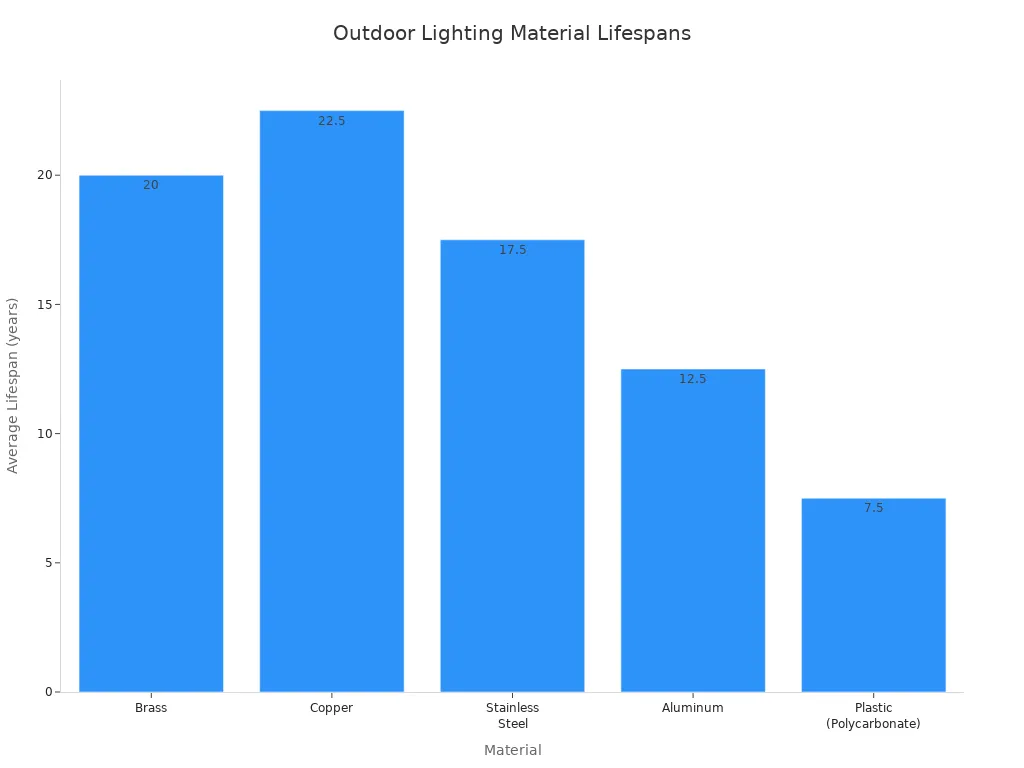
If you want your lights to look good for a long time, pick brass, copper, or stainless steel. These materials handle bad weather and keep their shape.
IP Ratings and Wet/Damp Ratings
You might see numbers like IP65 or IP66 on outdoor lights. These numbers show how well the lights block dust and water. The first number is for dust, and the second is for water. For most homes, IP65 is a good pick. It means your lights keep out dust and can handle water jets. Rain and snow will not hurt them.
Wet and damp ratings are important too. Damp-rated lights work in places with some moisture, like covered porches. Wet-rated lights are sealed tight and can go in open spots, like gardens or driveways. Here’s a quick look:
|
Feature |
Damp-Rated Fixtures |
Wet-Rated Fixtures |
|---|---|---|
|
Exposure Resistance |
Handles humidity and light moisture |
Completely sealed for direct exposure |
|
Suitable Locations |
Indoor areas like bathrooms and covered porches |
Fully exposed outdoor spaces like gardens and driveways |
|
Construction Materials |
Corrosion-resistant finishes, not waterproof |
Heavy-duty seals and water-resistant housings |
|
Safety Testing |
Tested for high humidity and light condensation |
Tested for direct water spray and snow exposure |
|
Cost |
Generally less expensive |
Typically more expensive due to robust design |
|
Design Availability |
More stylish options available |
Limited stylish options due to rugged design |
If you live where storms are strong or snow is heavy, pick lights with higher IP ratings, like IP66 or IP67. These lights can handle lots of rain and even water jets. Make sure you install them right, so water does not pool on top.
UV and Rust Protection
Sun and water can wear out your outdoor lights. UV-resistant coatings block most harmful rays, so your lights do not fade or crack. Reflective pigments help bounce away heat, so lights do not get too hot. Powder coating and anodized finishes make lights stronger and stop rust.
-
Protecting your lights from rain, snow, and heat keeps them working and looking good.
-
Rust and corrosion can ruin lights, so pick ones with strong coatings.
Here’s a table showing how UV and rust protection help:
|
Evidence Type |
Description |
|---|---|
|
UV-resistant coatings |
Modern coating technologies can reduce UV penetration by up to 99%, significantly extending fixture lifespan. |
|
Reflective pigments |
These pigments disperse solar radiation, preventing heat accumulation and minimizing material degradation. |
Lumary Smart LED Deck Lights—Built for All Weather
If you want lights that last in any weather, try Lumary Smart LED Deck Lights (6Pack). These deck lights use strong aluminum and have an IP65 waterproof rating. They work in rain, snow, and even hail. You can use them for paths, string lights, or decks. Lumary lights work in temperatures from -4°F to 122°F, so they fit any climate.
Here’s how Lumary compares to other brands:
|
Feature |
Lumary Smart LED Deck Lights |
Other Brands |
|---|---|---|
|
IP Rating |
IP65 |
Varies |
|
Temperature Range |
-4°F to 122°F |
Varies |
|
Hail Resistance |
Survived 3" hail tests |
Varies |
You get smart control with Lumary. Use your phone, remote, or voice to change brightness and color. The lights connect with Bluetooth Mesh, so you can group them and set times. They are easy to install, and the low-voltage system is safe.
Tip: If you live near water or in a sunny place, pick lights with UV-resistant coatings and high IP ratings. This keeps your outdoor lights looking good and working well.
Weather-resistant features help your outdoor lights last longer and stay nice. Pick strong materials, check IP and wet/damp ratings, and look for UV and rust protection. You will enjoy bright, safe outdoor lights for many years.

Types of Outdoor Lights
Choosing the right outdoor lights for your home can make a big difference in both safety and style. Each type of fixture has its own strengths, so let’s look at what works best for different spots around your exterior.
Wall Lights
Wall lights mount right onto your house or garage. You can use them near doors, patios, or along fences. These fixtures give steady light and help you see at night. Most wall lights use durable materials like aluminum or stainless steel, which means they stand up to rain and sun. Look for models with high IP ratings to keep water out. Wall lights work well for entryways and side doors.
Floodlights
Floodlights shine bright and cover large areas. You might use them for driveways, backyards, or to boost security. These fixtures often have tough, weather-resistant housings. They handle storms and extreme temperatures. Floodlights are great for homes that need extra safety at night. Some smart floodlights let you adjust brightness or set schedules from your phone.
|
Description and Ideal Use Case |
|
|---|---|
|
Floodlights |
High-intensity lighting for large areas, ideal for driveways and security. |
|
Pathway lights |
Low-profile fixtures for safe navigation along paths and walkways. |
|
Deck lights |
Designed for decks and stairs, enhancing safety and ambiance. |
|
String lights |
Decorative lights for creating a cozy atmosphere in outdoor spaces. |
Pathway & Deck Lights
Path lights and deck lights help you see where you walk. You can place these fixtures along walkways, stairs, or on your deck. They add safety and make your outdoor lighting look inviting. Many models use LED bulbs and weatherproof materials. Lumary Smart LED Deck Lights let you change colors, set timers, and control everything with your voice or app. These features make your exterior lighting both fun and practical.
String & Accent Lights
String lights and accent fixtures create a cozy mood for patios, gardens, or parties. You can hang them on fences, trees, or pergolas. Most string lights use weather-resistant plastic or rubber, so they last through rain and sun. Some smart string lights let you pick colors or sync with music. They turn any outdoor space into a fun spot for friends and family.
Tip: For the best results, pick fixtures made from strong materials like aluminum or stainless steel. Make sure they have a high weatherproof rating so your outdoor lights last longer.
Energy Efficiency & Power Options
LED vs. Incandescent
When you pick outdoor lights, you want them to last and save energy. LED fixtures use much less power than old incandescent bulbs. You can expect LEDs to use 40–80% less energy. They also last a lot longer. Some LED outdoor lighting can shine for 50,000 to 150,000 hours. Incandescent bulbs usually last only 1,000 to 24,000 hours. That means you will change LEDs less often, saving time and money. You also get lower electricity bills because LEDs waste less energy as heat.
-
LED bulbs can last up to 25 times longer than incandescent bulbs.
-
You will spend less on replacements and maintenance.
-
LEDs keep your exterior bright without using much power.
Solar and Low Voltage
Solar fixtures are easy to install. You do not need wires or an electrician. These lights use the sun’s energy, so you pay nothing for electricity. Solar path lights and string lights work well in sunny spots. They turn on by themselves at night. But if your yard gets lots of shade, solar lights may not shine as bright or as long.
Low voltage wired fixtures give steady, bright light. They work in any weather and do not depend on sunlight. You get more control over color and timing. These systems are safe for homes and easy for DIY projects. You can use them for decks, gardens, or walkways.
Hardwired vs. Plug-In
Hardwired outdoor lighting connects right to your home’s power. You get strong, reliable light that works every night. Plug-in fixtures are simple to set up and move. Both types can use smart features. With smart controls, you can use an app or your voice to turn lights on or off. This saves even more energy. Some smart systems let you dim lights or set schedules, cutting energy use by up to 50%.
Tip: Smart controls help you save energy and make your outdoor lights easy to manage, even when you are away.

Installation & Maintenance
Proper Setup for Weather Protection
You want your outdoor lights to last, so start with the right setup. Always choose fixtures with a high IP rating for better water and dust resistance. Seal all connections using waterproof gaskets and sealants. This step keeps water out and protects your wiring. Try to position your lights at an angle so water does not pool on top or flow directly into the housing. Regular inspection helps you spot any water getting inside before it causes trouble.
|
Recommendation |
Description |
|---|---|
|
High IP Rating |
Pick fixtures with strong water and dust protection. |
|
Sealing Connections |
Use waterproof gaskets and sealants at every joint. |
|
Proper Positioning |
Angle lights to prevent water from pooling or entering the housing. |
|
Regular Inspection |
Check for water inside and fix issues right away. |
Cleaning and Care
Keeping your exterior lights clean helps them shine bright and last longer. Wipe down your fixtures every month, especially if they face rain or dust. If you use solar or string lights, clean them monthly and give them a deep clean twice a year. Routine checks help you catch dirt or damage early. Path lights near walkways often collect mud, so pay extra attention to those.
Tip: A quick monthly wipe and a yearly deep clean keep your lights looking new and working well.
When to Replace Parts
Sometimes, you need to swap out parts to keep your lights safe and bright. Look for frayed or faulty wiring, which can be a fire risk. If you see rust or corrosion starting, replace those parts before water gets inside. Always check that your fixtures stay waterproof. If you notice any leaks or damage, fix or replace the part right away. This simple habit keeps your outdoor lighting system safe and reliable.
Recommendations & Common Mistakes
Trusted Brands & Features
When you shop for outdoor lights, always look for trusted brands. Companies like Lumary offer smart features, strong materials, and easy controls. You want lights that last through rain, snow, and hot sun. Pick fixtures with high IP ratings, like IP65 or above. This keeps your exterior safe from dust and water. Choose lights made from aluminum, stainless steel, or brass. These materials resist rust and last longer. Smart lighting lets you change brightness, set schedules, and even control your string lights with your phone or voice. Long-lasting, low-maintenance fixtures save you time and money.
Tip: Corrosion resistance is important if you live near the coast or in a humid area. Powder-coated finishes add extra protection.
Pitfalls—Cheap Materials, Poor Setup
Many people make the same mistakes with outdoor lighting. Here are some common problems and how you can avoid them:
-
Using the same bulbs everywhere. Pick bulbs that fit each area’s needs.
-
Choosing low-quality fixture materials. Cheap parts break down fast.
-
Buying cheap LED bulbs. Not all LEDs handle heat well. Go for high-quality LEDs with a warranty.
-
Using poor wire connectors. Bad connectors cause flickering or outages. Use strong, weatherproof connectors.
-
Skipping wire labels or not recording amp loads. Label wires and keep notes for easy repairs.
Note: Never use indoor lights outside. Poor installation or the wrong rating can lead to quick failures.
Key features to prioritize:
-
Durable, rust-resistant materials
-
Smart controls for easy adjustments
-
Fixtures designed for outdoor use
Choosing the right lights and avoiding these mistakes helps your outdoor lighting shine bright for years.
When you choose outdoor lights, follow these tips. Pick strong materials like stainless steel or aluminum. Make sure the lights have weatherproof and UV-resistant features. Use LED bulbs because they last longer and save energy. Try smart features so you can control your lights easily. Good string lights and fixtures help you save time and money.
|
Benefit |
Description |
|---|---|
|
Durability |
Stays working longer, so you replace them less |
|
Energy Efficiency |
Uses less electricity, so your bills go down |
|
Aesthetic Appeal |
Makes your outdoor area look nice |
|
Less Maintenance |
You change bulbs less often, so it’s easier |
|
Warranty |
Helps you feel safe about your purchase |
FAQ
How do you control Lumary Smart LED Deck Lights?
You can use the Lumary App, a remote, or voice commands with Alexa or Google Assistant. Control your lights from anywhere, anytime.
Can you change the color and brightness of these deck lights?
Yes! You can pick from over 16 million colors and adjust the brightness from 1% to 100%. Set the perfect mood for any occasion.
Are Lumary Smart LED Deck Lights safe to use outdoors in all weather?
Absolutely! These lights have an IP65 waterproof rating and tough aluminum housing. They work well in rain, snow, and hot sun.

